
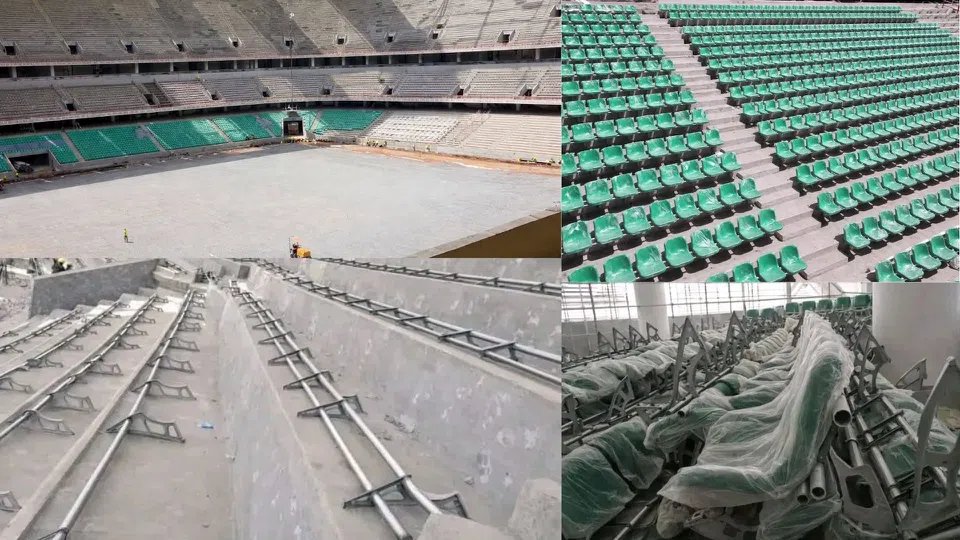

The Ministry of Sports has issued a directive to the contractors of the Talanta Sports Stadium to remove and replace recently installed seating that drew widespread criticism from the public. This decision follows several days of scrutiny over the width and comfort of the seats, which many observers claimed did not meet the expectations for a modern international sports facility.
Initial images and videos circulating from the construction site in Nairobi showed narrow, high-back plastic seats being fitted in the stands. Spectators and architectural critics pointed out that the spacing appeared insufficient for adult seating, sparking concerns that the stadium would fail to provide a comfortable experience during the 2027 Africa Cup of Nations. The project is one of Kenya’s primary venues for the continental tournament, which the country will co-host alongside Uganda and Tanzania.
The Ministry has now confirmed that the narrow seats were part of an earlier procurement batch and will be substituted with wider, more ergonomic models. This move is seen as an attempt to rectify a visible flaw in the project’s finishing stages before the Confederation of African Football conducts its final inspections. Officials stated that the project must adhere to strict international requirements to ensure the venue is fit for high-profile matches.
Construction at the Talanta Sports Stadium has been moving at a rapid pace as the government seeks to meet deadlines set by CAF. The stadium is being built as a dedicated football and rugby venue, departing from the traditional multi-purpose designs that include running tracks. This design choice is intended to bring fans closer to the pitch, a feature common in modern European and South African stadiums. However, the proximity of seating requires precise measurements to ensure that safety and mobility are not compromised.
The controversy over the seating is the latest hurdle for the Ministry as it manages a portfolio of major infrastructure upgrades. Beyond Talanta, the government is also overseeing the renovation of the Kasarani Sports Complex and the Nyayo National Stadium. These facilities are undergoing extensive overhauls, including the installation of new turf, improved lighting systems, and upgraded changing rooms to meet the Pamoja Bid commitments.
The contractor, who is working under the supervision of the Kenya Defence Forces, has been instructed to fast-track the procurement of the replacement seats. The Ministry indicated that the cost of the error would be handled within the existing project contingencies to avoid further delays to the completion timeline. There had been earlier reports that the stadium was ahead of schedule, with the structural frame and roofing works reaching advanced stages of completion.
For the Kenyan sports sector, the Talanta Stadium represents a shift toward specialized infrastructure. For years, the country has relied on aging facilities built in the 1980s. The current administration has positioned the 60,000-capacity venue as a centerpiece of its sports tourism strategy. Ensuring the facility meets the aesthetic and functional standards of world-class venues is critical for the credibility of the 2027 AFCON hosting rights.
Observers in the construction industry note that such mid-stream changes, while costly, are preferable to post-completion retrofitting. The replacement of the seats will likely take several weeks as new units are shipped and installed. The Ministry has promised more transparency regarding the fixtures and fittings being selected for the final phases of the project to prevent similar issues from arising as the stadium nears its official commissioning date.
Comments (0)
Leave a Comment
No comments yet. Be the first to share your thoughts!