
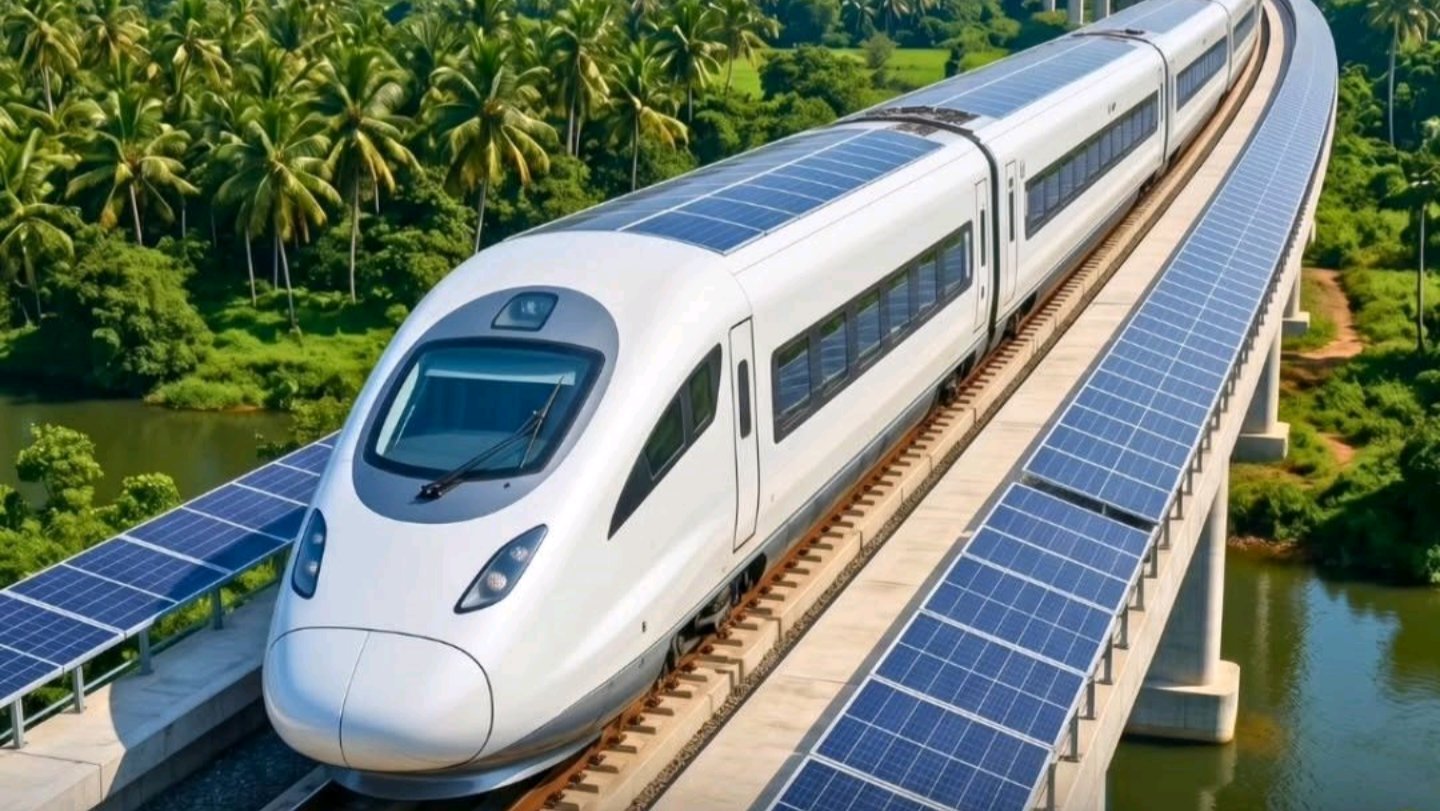

The proposed Kerala High-Speed Railway (KHSR) line could become the world's first fully solar-powered high-speed rail corridor, according to a technical proposal submitted for review. The ambitious infrastructure plan, envisioned by veteran technocrat E. Sreedharan, outlines a 473.20-kilometre double line connecting the state capital of Thiruvananthapuram to Kannur in northern Kerala.
The project, estimated to cost 60,000 crore rupees, is designed to reduce the north-south travel time between Poojapura and Mundayad to just three hours and thirty minutes. The maximum design speed for the trains is 200 kilometres per hour, while the operational speed is expected to reach 180 kilometres per hour.
A central highlight of the design is its self-sustaining energy architecture, as noted in the project overview depicted in 250105.png and 250104.png. The entire energy requirement of the transit network will be met through a dedicated, captive solar power generation system. This setup will also generate excess electricity, which will be sold back to the Kerala State Electricity Board (KSEB).
The infrastructure model is predominantly elevated on pillars, requiring a minimal construction footprint of a 20-metre-wide corridor. This design avoids the massive ground-level embankments that led to public opposition and the ultimate cancellation of the state's previous semi-high-speed SilverLine project. The proposed alignment includes 23 stations and features a 6.5-kilometre tunnel stretch within Thiruvananthapuram city.
The Delhi Metro Rail Corporation (DMRC) submitted the interim report to both the Union Ministry of Railways and the state government. The Kerala transport department has now constituted a four-member expert committee to evaluate the financial feasibility, environmental impact, and technical challenges of the corridor, directing the panel to return recommendations within three weeks.
The proposal shifts from conventional broad gauge to standard gauge, limiting the axle load to 15 tonnes instead of the usual 25 tonnes. According to the DMRC report, this modification substantially lowers initial construction and operational expenditures. Standard gauge is the international norm for high-speed rail networks, allowing the country to align with global technological upgrades.
Initially, the transit line will operate 12-coach trains with a seating capacity of 800 passengers, though the station platforms are being designed to accommodate future 16-coach setups. Daily ridership is projected at 54,400 passengers, with trains running every 20 minutes during peak commuting hours.
Financing for the 60,000 crore rupee budget relies on a combination of state and public capital. The Central and State governments are expected to contribute 36,000 crore rupees as equity in a 51:49 ratio, while the remaining 24,000 crore rupees will be raised through a massive public crowdfunding model. If authorizations are granted promptly, the report estimates the green rail corridor can be fully constructed within five years.
Comments (0)
Leave a Comment
No comments yet. Be the first to share your thoughts!