
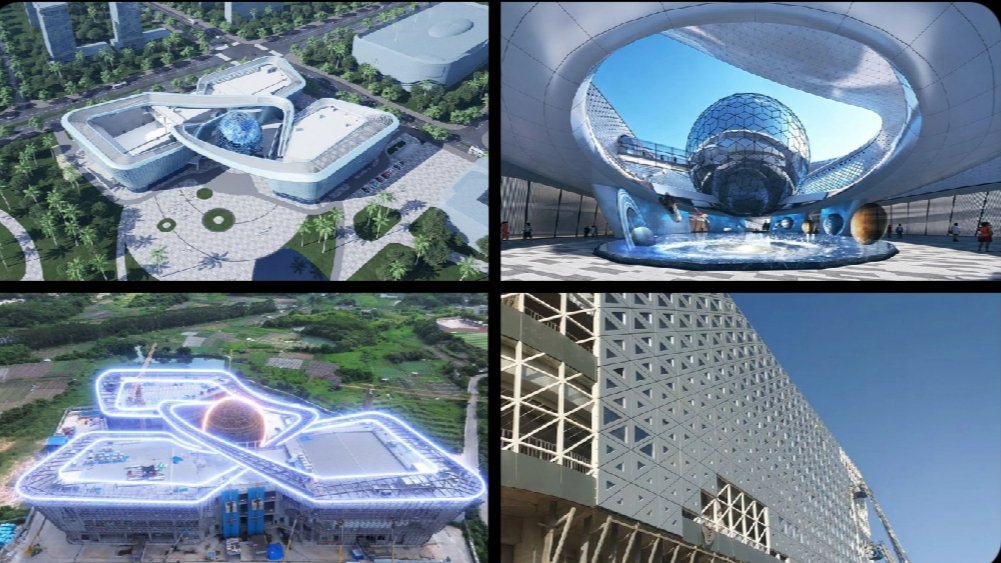

China Communications Construction Company (CCCC) has delivered another landmark project with the Su Song Museum in Xiamen. Billed as the world's largest astronomical museum, this facility stands out for its bold design and sophisticated engineering. For construction enthusiasts in Kenya, it offers valuable insights into blending technology with craftsmanship on a grand scale.
The museum features a striking floating planet installation at its core, complemented by a Möbius strip architectural element that creates an endless loop effect. These features do more than impress visitors. They demonstrate how complex forms can become reality through careful planning and execution. The project team used digital simulations to visualize every detail before breaking ground. This approach minimized errors and optimized material use, a practice that could transform how large-scale developments are handled back home.
One standout achievement involves the assembly of 10,886 custom panels. Each panel was precisely fabricated to fit the building's unique curves and contours. This level of customization required close collaboration between designers, engineers, and fabricators. In Kenya, where projects like the Nairobi Expressway and various housing initiatives demand high precision, adopting similar digital tools could reduce waste and speed up timelines.
The museum's exterior combines sleek metallic surfaces with intricate patterns that catch the light beautifully. The floating planet appears to defy gravity, suspended within an open atrium that allows natural light to flood the space. This creates an immersive experience where science and architecture merge seamlessly.
For the Kenyan construction sector, such projects highlight the importance of investing in technology. Digital twins and 3D modeling allow teams to test structural integrity virtually. This is especially useful in regions prone to seismic activity or challenging soil conditions, common across parts of East Africa. By simulating loads and environmental factors early, engineers can make informed decisions that enhance safety and durability.
CCCC's track record in infrastructure speaks volumes. The company has contributed to numerous global projects, bringing expertise in bridges, ports, and large buildings. Their work on the Su Song Museum emphasizes sustainable practices alongside innovation. Energy-efficient designs and thoughtful material selection help lower the building's long-term operational costs. Kenyan developers facing rising energy prices could benefit from studying these strategies.
The Möbius strip element adds a layer of mathematical elegance to the structure. This continuous surface without distinct beginning or end symbolizes the timeless nature of astronomical discovery. Constructing it demanded advanced parametric design software that adjusts parameters in real time. Such tools are becoming more accessible and could empower local architects to push creative boundaries in commercial and public buildings.
Visitors to the completed museum will encounter interactive exhibits housed within these innovative spaces. The layout encourages exploration, with pathways that wind around the central planet feature. This user-centered design ensures the building serves its educational purpose effectively. In Kenya, similar thinking could elevate museums, science centers, and even commercial hubs to international standards.
Challenges during construction likely included coordinating the massive custom panel installation while maintaining tight tolerances. The team achieved 1:1 assembly accuracy, meaning full-scale mockups guided the final build. This meticulous method reduces on-site adjustments and associated delays. For contractors in Mombasa, Kisumu, or Nairobi tackling complex forms, this lesson in preparation is invaluable.
Beyond the technical aspects, the project reflects a growing global trend toward experiential architecture. Buildings are no longer just shelters but destinations that tell stories and inspire awe. As Kenya continues to urbanize rapidly, incorporating such elements can create landmarks that boost tourism and national pride.
The Su Song Museum sets a high bar for what is possible when ambition meets capability. Its success stems from integrating traditional craftsmanship with state-of-the-art technology. Kenyan professionals at Mjengo Hub and beyond should take note. Investing in skills development, digital tools, and international best practices will position the local industry for greater achievements.
As the museum prepares to welcome its first visitors, it stands as more than a cultural landmark. It represents the future of construction where creativity and engineering converge. For those shaping Kenya's built environment, it serves as both inspiration and practical reference point. The floating planet and flowing architectural lines remind us that bold ideas, when properly executed, can leave a lasting legacy.
Comments (0)
Leave a Comment
No comments yet. Be the first to share your thoughts!