
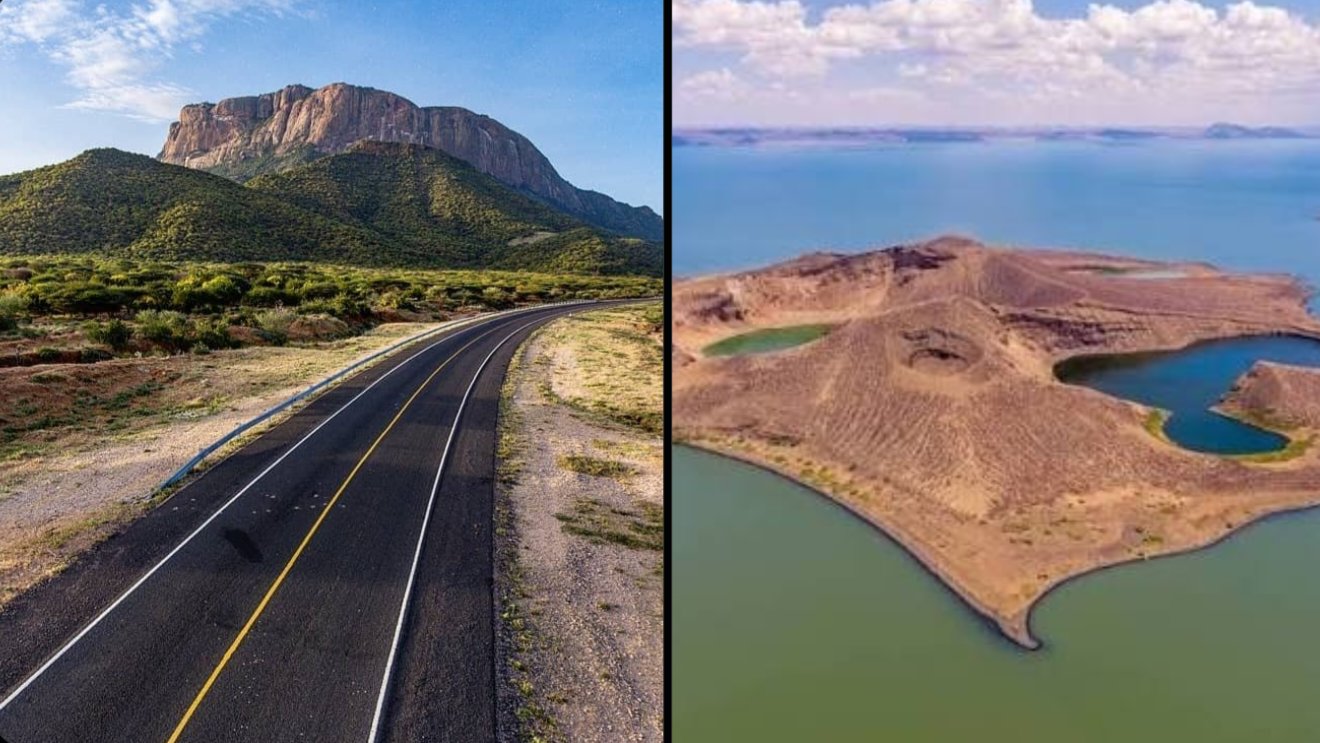

Tourism and Wildlife Cabinet Secretary (CS) Rebecca Miano has highlighted the impact of upgraded highway networks on northern Kenya. In an official update, she explained that improved road corridors have turned long, difficult journeys into manageable road trips for travelers.
The Cabinet Secretary (CS) specifically noted destinations including Mount Ololokwe, Ngurunit, Chalbi Desert, and Lake Turkana as key beneficiary zones. She stated that infrastructure investments supported by President Ruto have helped integrate these remote regions into the national economy.
A central element of this regional connectivity is the paved stretch of highway connecting Isiolo to Moyale. Overseen by the Kenya National Highways Authority (KeNHA), the 504-kilometer road forms a key part of the A2 trunk route and the Lamu Port-South Sudan-Ethiopia Transport (LAPSSET) corridor project.
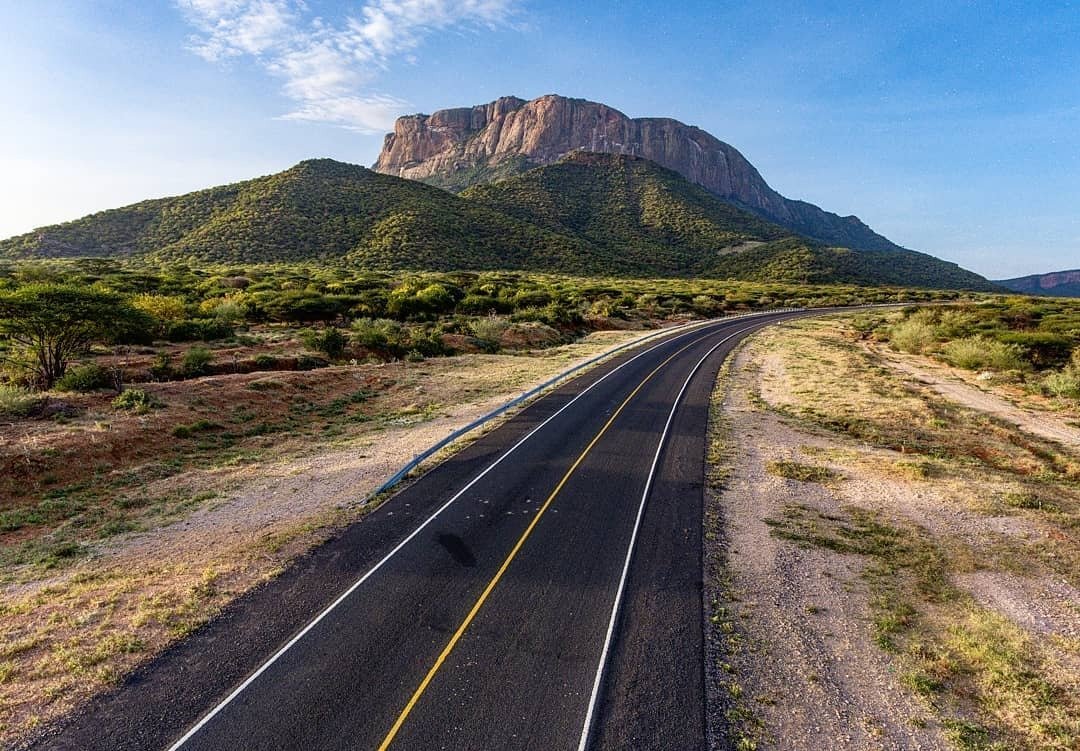
A stretch of the Northern Corridor Road. PHOTO: HANDOUT
Before the completion of tarmac paving along the route, driving through Marsabit County meant negotiating hundreds of kilometers of unpaved gravel tracks. Severe weather regularly washed out sections of the road, leaving motorists stranded for days during heavy rains.
Travelers can now cover the distance between Isiolo and the Ethiopian border at Moyale in approximately eight hours. Reduced travel times have lowered logistics costs for commercial transporters, while encouraging domestic tourists to explore northern Kenya in personal vehicles.
Hospitality operators near Archers Post and Samburu report steady increases in weekend visitors from central Kenya and Nairobi. Improved road surfaces and clearer signage have made remote eco-lodges more accessible to families, who previously avoided the region due to rough driving conditions.
The paved highway also functions as an essential international trade link between Kenya and Ethiopia. Long-distance trucks carrying manufactured goods north and livestock south move across the border with far lower maintenance costs, but operators still demand reliable roadside security.
Tourism stakeholders note that expanded road access requires matching investments in local accommodation and public amenities. Emerging destinations around Lake Turkana need better water distribution systems, electrical grid access, and structured waste management, although private investment is slowly growing.
Government agencies are focusing on secondary feeder roads that connect smaller towns to the main highway network. Engineers plan targeted upgrades for routes linking rural trading hubs, so that pastoralist communities can transport livestock and agricultural produce to urban markets faster.
Local conservancies along the corridor are leveraging improved access to expand community-based tourism programs. Residents offer guided tours and cultural showcases to visitors, who wish to experience traditional heritage while supporting local economic development along the northern circuit.
Safety monitoring along the corridor remains a priority as traffic volumes increase steadily. Engineers from KeNHA perform regular maintenance on drainage structures and bridges, while traffic police enforce speed controls along heavily populated stretches near town centers.
County officials in Isiolo and Marsabit expect commercial development along the road corridor to accelerate over the coming years. New service stations, restaurants, and repair shops have opened near major junctions, when private investors recognize expanding traffic volumes.
Sustaining these economic benefits will depend on continuous infrastructure maintenance and long-term planning. Highway administrators emphasize that preserving pavement conditions along the A2 corridor remains essential, if northern Kenya is to maintain its momentum as an accessible tourism and trade hub.
Comments (0)
Leave a Comment
No comments yet. Be the first to share your thoughts!