
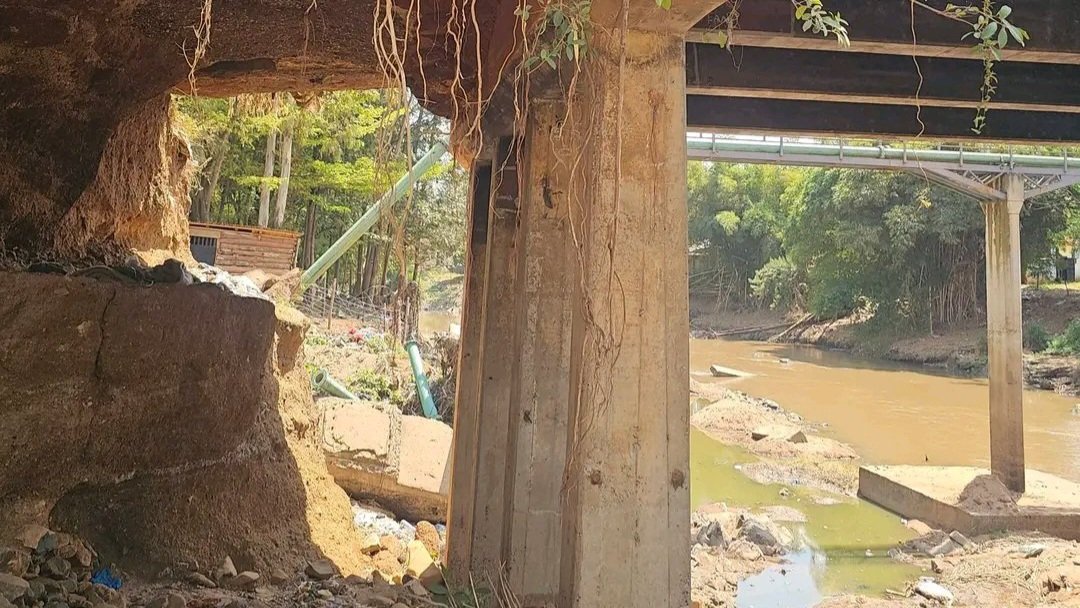

Transport operations along the busy Kisii to Migori to Isebania international trunk road faced major disruptions following structural damage on the main crossing. Engineers declared the structure unsafe after floodwaters damaged critical support sections beneath the span.
The Kenya National Highways Authority (KeNHA) issued a safety directive restricting movement across the river. Heavy downpours across the western region caused local water levels to surge rapidly, which undermined the integrity of the concrete substructure.
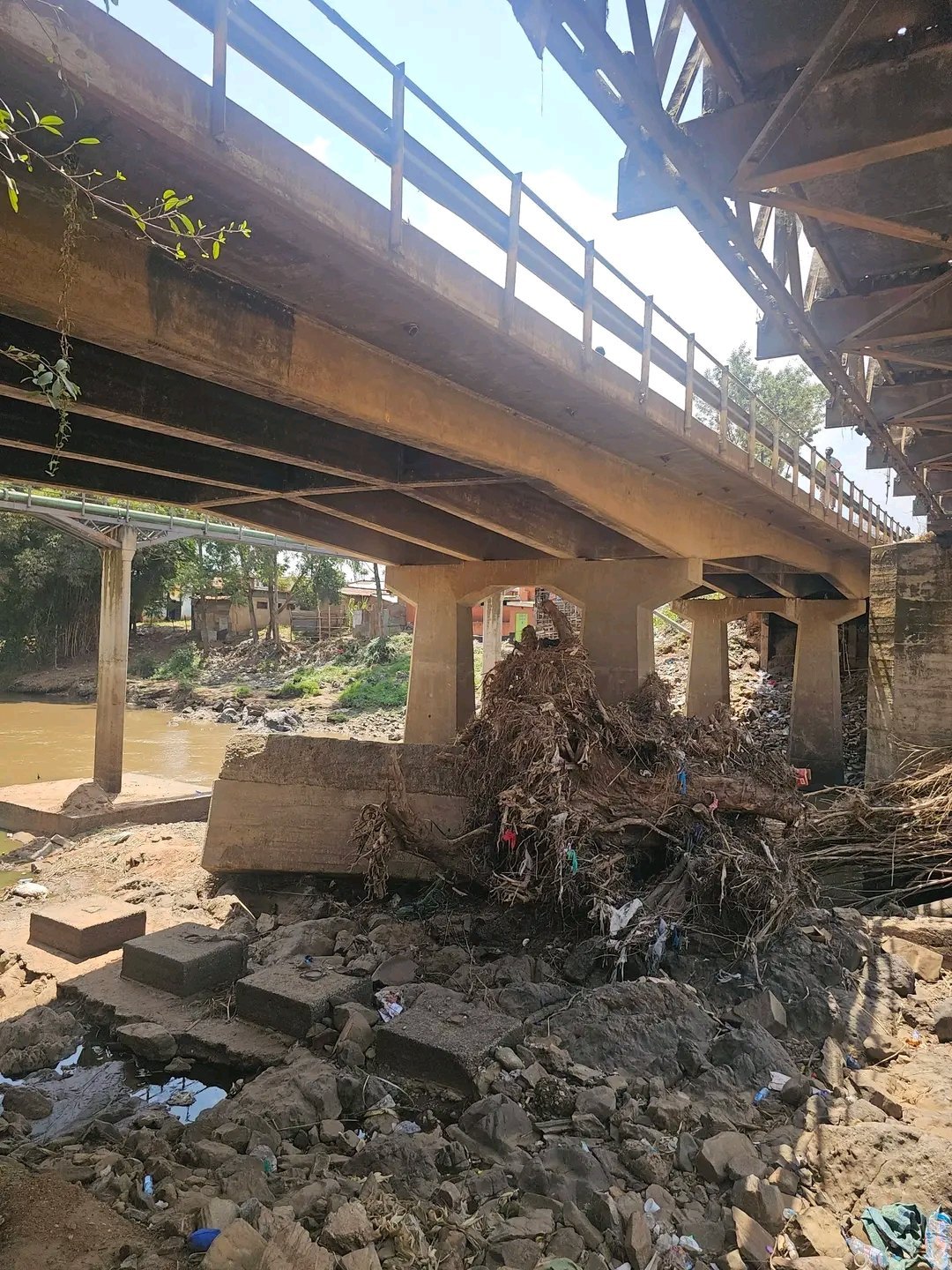
A section of the damaged corridor link in Migori County. PHOTO: Ignatius/X
Local authorities first noted severe displacement along the expansion joints near the Suna West side. Structural engineers sent to inspect the site reported visible cracking and erosion around the supporting abutments, which prompted an immediate suspension of heavy traffic.
Motorists travelling between Kenya and Tanzania must now navigate through local urban bypasses. The state roads agency directed vehicular traffic onto the Kiringi Bridge along the Migori to Kehancha road, which extends travel times considerably for commercial transit operators.
Transporters operating long-distance freight routes have expressed concern over the extended detour. The alternative route passes through narrow residential stretches, which creates bottleneck congestion during peak morning and evening travel hours.
Small business operators along the main highway corridor reported immediate drops in daily customer footfall. Towns like Sirare and Isebania rely heavily on seamless cross-border logistics, which are currently hampered by the prolonged diversion.
The closure has also affected local commuter services and pedestrian crossings. High water flows previously eroded gabion riverbank protections, which left secondary pedestrian structures suspended dangerously above the rising current.
Public transport operators are charging higher fares to cover additional fuel costs on the lengthy bypass. Local motorists reported that standard crossing times increased from a single minute to nearly half an hour, which disrupts daily economic routines.
Highway engineers continue monitoring river levels before commencing structural restoration. Complete rehabilitation works remain paused until water levels subside sufficiently, which allows technical teams safe access to the submerged foundations beneath the deck.
The state agency urged drivers to observe posted speed limits along the diversion paths. Police marshals have been posted along key intersections, where they direct heavy commercial vehicles away from the damaged bridge approaches.
Community leaders called upon government authorities to expedite emergency repair contracts. Prolonged transport disruptions threaten regional economic integration along the primary trade corridor, which links southwestern agricultural zones to cross-border markets.
Contractors are waiting for floodwaters to recede so structural reinforcement works can begin. Ministry officials indicated that permanent repairs will require replacing damaged expansion joints, reinstating upstream gabion walls, and reinforcing compromised foundation piers beneath the main bridge deck.
Comments (0)
Leave a Comment
No comments yet. Be the first to share your thoughts!