
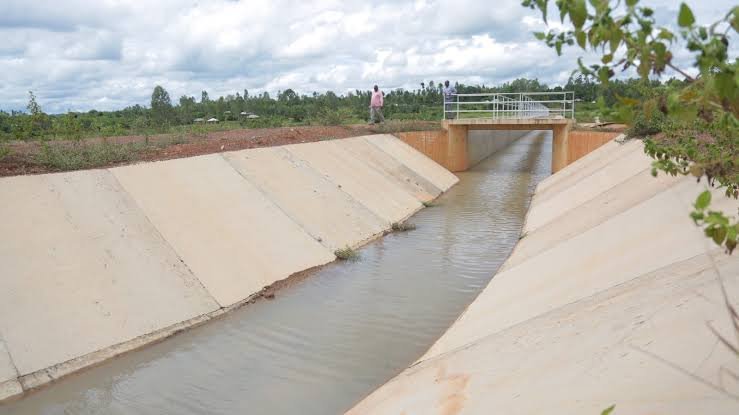

The government is seeking financial backing from the Arab Bank for Economic Development in Africa (BADEA) to revive and expand the long-delayed Galana-Kulalu food security project. Officials are targeting international development finance to scale up infrastructure across the vast agricultural scheme.
BADEA, an multilateral financing institution focused on supporting economic development, has been identified as a strategic partner for the initiative. The move comes as the state looks to restructure financing models for stalled capital-intensive developments, which faced significant hurdles in earlier implementation phases.
The revived blueprint aims to bring nearly one million acres under active cultivation through modern water delivery systems. Previous efforts to develop the site encountered operational friction and delays, leading authorities to re-evaluate execution strategies and funding avenues.
Expanding large-scale agricultural production remains a central pillar of national development plans. Securing external funding is seen as a key step toward establishing stable water distribution networks across targeted farming tracts, which need reliable supply lines to support large-scale agricultural yields.
Public infrastructure authorities continue to explore options to complete civil works, build intake points, and lay primary distribution pipes. Expanding irrigation capacity requires heavy capital investment in pumping stations, storage reservoirs, and open-channel network systems.
The proposal submitted to the institution outlines structural interventions needed to bring high-capacity water systems online. Financing negotiations are part of broader efforts to engage international lenders on infrastructure priority lists.
Large-scale land developments require robust engineering solutions to withstand environmental shifts, and long-term funding commitments ensure civil works progress without abrupt interruptions. Previous phases highlighted the importance of steady capital flow during early excavation and pipe-laying stages.
Engineers and project managers are evaluating logistical requirements to ensure initial field works proceed once funding terms are finalized. Bringing one million acres under cultivation involves heavy machinery deployment, land clearing, and soil preparation across several administrative zones.
The state hopes that successful negotiations will allow construction crews to return to the site and complete missing links in the main distribution channels. Resolving early infrastructure bottlenecks remains vital to achieving planned yield targets across the entire acreage.
If approved, the capital injection will fund both civil construction and technical oversight needed to maintain operational efficiency. Institutional lenders continue reviewing project proposals to evaluate technical viability and implementation schedules before committing resources.
Securing the requested facility would mark an important step in clearing historical development backlogs. Further details regarding timeline parameters and total loan allocations are expected as negotiations between the national treasury and multilateral representatives progress.
Comments (0)
Leave a Comment
No comments yet. Be the first to share your thoughts!