
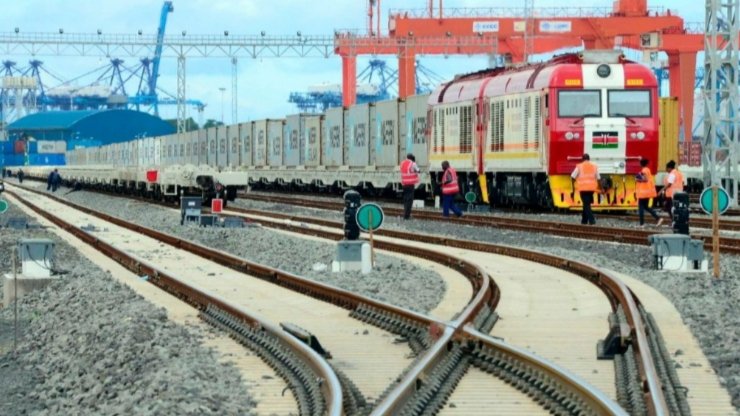

Kenya is walking a tightrope in its relationship with China following a recent Court of Appeal decision that could force the government to reveal confidential documents related to the Standard Gauge Railway project. The ruling has raised serious concerns about potential legal action, hefty fines, and strained diplomatic ties with Beijing, Kenya's biggest trading partner.43539e
The story began when transparency activists, including Khelef Khalifa, Wanjiru Gikonyo, and the Katiba Institute, took the government to court demanding full access to records about the massive SGR project. This railway, which connects Mombasa to Nairobi and beyond, was financed with over 4.5 billion dollars in loans from China Exim Bank. Launched in 2014, it remains one of Kenya's most expensive infrastructure initiatives, funded largely by taxpayers who continue to service the debt.
State lawyers had strongly opposed the disclosure, warning judges that releasing the agreements would breach strict confidentiality clauses signed with Chinese lenders. They argued that such a move could trigger lawsuits from China, damage bilateral relations, and harm Kenya's ability to secure future loans for major projects. Despite these concerns, the Court of Appeal upheld a 2022 High Court order, directing the government to hand over the documents.f6f7af
The judges emphasized that public interest in transparency outweighs any potential risks. They noted that access to information is a constitutional right in Kenya, and secrecy should be the exception rather than the rule. The court criticized the government for providing blanket refusals without properly justifying which parts of the contracts truly needed protection. Judges even suggested that officials could have released redacted versions if specific sections involved sensitive commercial or security matters.
For many Kenyans, this ruling feels like a victory for accountability. The SGR has been surrounded by questions since its inception, from procurement processes to operational costs. Activists pointed out that citizens deserve to know the full terms of loans being repaid with public money, especially after earlier court findings highlighted irregularities in how the project was awarded.
However, the decision comes with real risks. Export-Import Bank of China and other Chinese entities included confidentiality provisions in the loan agreements. Violating these could lead to penalties, legal suits, or even restrictions on future financing. Kenya's trade deficit with China reached 475.6 billion shillings in 2025, showing how deeply intertwined the two economies are. Any fallout could affect not just the railway but broader economic cooperation.
During his 2022 campaign, President William Ruto promised to publish SGR deals to promote openness. His administration did release some loan documents after taking office, but activists argued that key operational agreements remained hidden. These include details about the take-or-pay contract between Kenya Railways and Kenya Ports Authority, as well as arrangements with Africa Star Railway Operation Company, the Chinese-linked operator that receives substantial monthly payments.
The ruling could have wider implications beyond the SGR. It sets a precedent that might encourage more demands for disclosure of other confidential deals involving foreign partners in roads, energy, ports, and public-private partnerships. This may force future governments to negotiate infrastructure contracts with greater attention to transparency clauses that align with Kenya's constitution.
On the other hand, critics worry that excessive openness could make international lenders more cautious. Many countries use confidentiality to protect sensitive commercial terms during negotiations. If Kenya is seen as unable to safeguard such information, it might face higher borrowing costs or fewer favorable deals.
As the Treasury, Ministry of Transport, and Attorney General prepare to comply, the focus is on balancing accountability with diplomatic prudence. The government may need to engage directly with Chinese counterparts to manage expectations and minimize damage.
This situation highlights the challenges developing nations face when balancing sovereignty, debt obligations, and public rights. For ordinary Kenyans, the hope is that greater transparency will lead to better governance of public projects and reduce opportunities for mismanagement. Yet the path forward requires careful navigation to avoid turning a push for openness into costly international complications.
The coming weeks will be telling as authorities decide exactly how much to reveal and how to handle the delicate relationship with Beijing. The SGR was meant to transform Kenya's transport and economy. Now, its full story may finally come to light, for better or worse.
Comments (0)
Leave a Comment
No comments yet. Be the first to share your thoughts!