
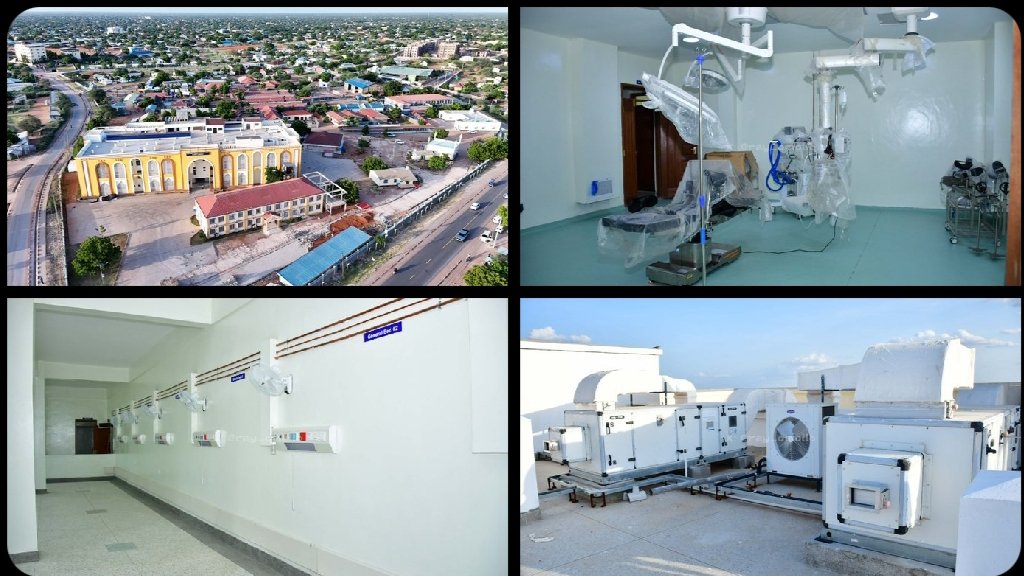

The historic Wajir Hospital has undergone a remarkable transformation, evolving from an aging colonial era medical facility into one of the most modern public hospitals in northern Kenya. The extensive upgrade marks a major milestone in improving healthcare services in the region and reflects the government’s continued investment in modern public infrastructure aimed at improving the lives of residents.
Originally constructed in 1944 by Italian Prisoners of War during the colonial period, the hospital has served the people of Wajir County for generations. For decades, the facility operated with limited space, aging buildings, and inadequate medical infrastructure. Despite these challenges, the hospital remained an important healthcare center for residents across northern Kenya. Today, however, the facility presents a completely different image, with newly developed wards, specialized treatment areas, advanced operating theatres, and modern support systems designed to handle growing healthcare demands.
The redevelopment project, supported by the State Department for Internal Security and National Administration, combines modern healthcare technology with the preservation of the hospital’s historical identity. Instead of demolishing the original structures entirely, the project integrates the new developments into the existing hospital layout, creating a connection between Wajir’s historical past and the future of healthcare in the region.
One of the major highlights of the project is the newly constructed inpatient wing located on the first floor of the facility. The ward has a capacity of 48 beds and is equally divided between male and female patients to improve patient management and comfort. The upgraded ward also includes four private amenity rooms designed for patients who require specialized treatment, isolation, or a more private recovery environment. Compared to the older wards, the new section offers a cleaner, more spacious, and more organized setting that improves both patient experience and working conditions for healthcare staff.
The second floor serves as the hospital’s critical care and surgical center. It features a fully equipped 12 bed Intensive Care Unit (ICU) and a 12 bed High Dependency Unit (HDU), significantly boosting the hospital’s ability to handle emergencies and provide specialized care for critically ill patients. These additions are expected to reduce the number of patients who previously had to be transferred to hospitals in larger cities for advanced treatment.
The hospital also includes three modern operating theatres designed to support complex surgical procedures. One of the most impressive features installed within the theatres is laminar flow technology, an advanced air filtration system that helps maintain sterile surgical environments by reducing airborne contamination. This technology remains rare in many public hospitals across the country, making the Wajir Hospital upgrade a significant achievement in Kenya’s healthcare infrastructure development.
To address the long standing water supply challenges common in arid regions, the hospital has also installed an industrial grade water purification system on the rooftop. The purification plant can produce up to 2,000 litres of medical grade water every hour, ensuring a reliable supply for operating theatres, intensive care units, and other sensitive medical departments that require sterile water daily.
Despite the extensive modernization, the hospital has retained its historical foundation and identity. The older sections remain connected to the newly developed wings, allowing services such as the Accident and Emergency unit, outpatient care, and diagnostic departments to operate efficiently within one integrated healthcare system. The transformation of Wajir Hospital is expected to greatly improve access to quality healthcare for residents of Wajir County and the wider northern Kenya region for years
ahead.
Comments (0)
Leave a Comment
No comments yet. Be the first to share your thoughts!