
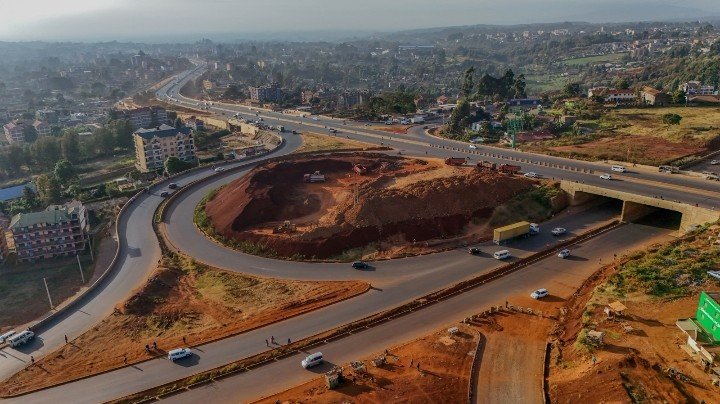

Kenya is witnessing a significant transformation in its infrastructure, with major road projects underway that are changing connectivity across the country. Among the most ambitious is the 750 kilometer highway linking Kula Mawe, Modogashe, Samatar, Wajir, Tarbaj, Kotulo, Kobo, Elwak, Garre and Rhamu, reaching up to Mandera. This project, with an estimated cost of 100 billion shillings, is currently 45% complete. Once finished, it will serve as a major route for trade, transport and movement of people in the northern and northeastern regions of the country, areas that have historically been underserved in terms of modern infrastructure.
The Kula Mawe Mandera highway is not just about laying asphalt or widening roads. It represents a step toward economic inclusion for communities along its path. Northern Kenya has faced challenges in accessing markets, healthcare and other essential services due to poor transport networks. By improving the road, local farmers, traders, and small businesses will find it easier to transport goods to larger markets, creating opportunities for growth. Furthermore, the improved highway is expected to attract investment, with businesses seeing the potential of connecting to key towns and border points more efficiently.
Equally important is the Lamu-Ijara-Garissa-Isiolo road, a 420 kilometer project costing 27 billion shillings. This project is already 50% complete, with 210 kilometers of the route tarmacked. This road will link the coastal region with the interior and is a critical component of Kenya’s plans to enhance trade routes, including those that connect to the Lamu Port. The project is expected to ease transport for both goods and people, reducing travel time and the cost of doing business. It will also improve access to essential services for communities along the route, such as schools, hospitals and government offices.
The completion of these roads is expected to have multiple social and economic benefits. For one, safer and better-maintained highways reduce accidents and vehicle maintenance costs, which is particularly important in regions where emergency services are limited. In addition, these projects create employment opportunities for local residents during construction, from unskilled labor to technical positions. This not only provides income but also equips workers with valuable skills that can be used in future projects.
The roads are part of Kenya’s broader push to improve infrastructure across the country, recognizing that good roads are vital for economic development. Improved transport networks can stimulate agriculture by allowing farmers to reach larger markets and reducing post-harvest losses. Similarly, small businesses can expand their reach, while tourism benefits from easier access to previously hard to reach destinations. The ripple effect of these road projects goes beyond the immediate areas, touching the lives of many Kenyans and contributing to overall national growth.
Moreover, these projects highlight the importance of long term planning and investment. Building major highways in regions with challenging terrain and limited previous infrastructure is not easy. It requires careful planning, collaboration with local communities, and consistent funding. The progress on both the Kula Mawe-Mandera highway and the Lamu Isiolo road shows that these challenges are being addressed, even as work continues. It also demonstrates the government’s commitment to ensuring that development reaches all parts of the country, not just urban centers.
Security and access are also important considerations. Roads like these enhance connectivity for security operations and emergency response, allowing authorities to respond more quickly to incidents in remote areas. They also encourage community interaction and integration, fostering national unity by connecting regions that were once isolated. In essence, roads are more than physical structures, they are pathways to opportunity and stability.
Kenya’s approach to development, as seen in these projects, is gradual but consistent. Each step, each kilometer of road completed, contributes to a larger vision of a connected and prosperous nation. While the work is ongoing and challenges remain, the impact is already visible. Communities along these highways are experiencing changes in their daily lives, from easier access to markets and services to increased economic activity. It is a reminder that transformation is often the result of steady effort and long term investment.
In conclusion, the Kula Mawe Mandera highway and the Lamu-Ijara-Garissa-Isiolo road are more than just construction projects; they are vital pieces of Kenya’s development journey. They enhance connectivity, promote economic growth and improve the quality of life for communities along their routes. As progress continues, these highways will become symbols of what careful planning, investment, and determination can achieve, showing that Kenya’s transformation is being built one project at a time, one step at a time.
The commitment to infrastructure development demonstrates a vision of a country where all regions are linked, opportunities are shared, and growth is inclusive. These highways are paving the way for a future where no part of Kenya is left behind, and where each new road brings communities closer together and closer to prosperity.
Comments (0)
Leave a Comment
No comments yet. Be the first to share your thoughts!