
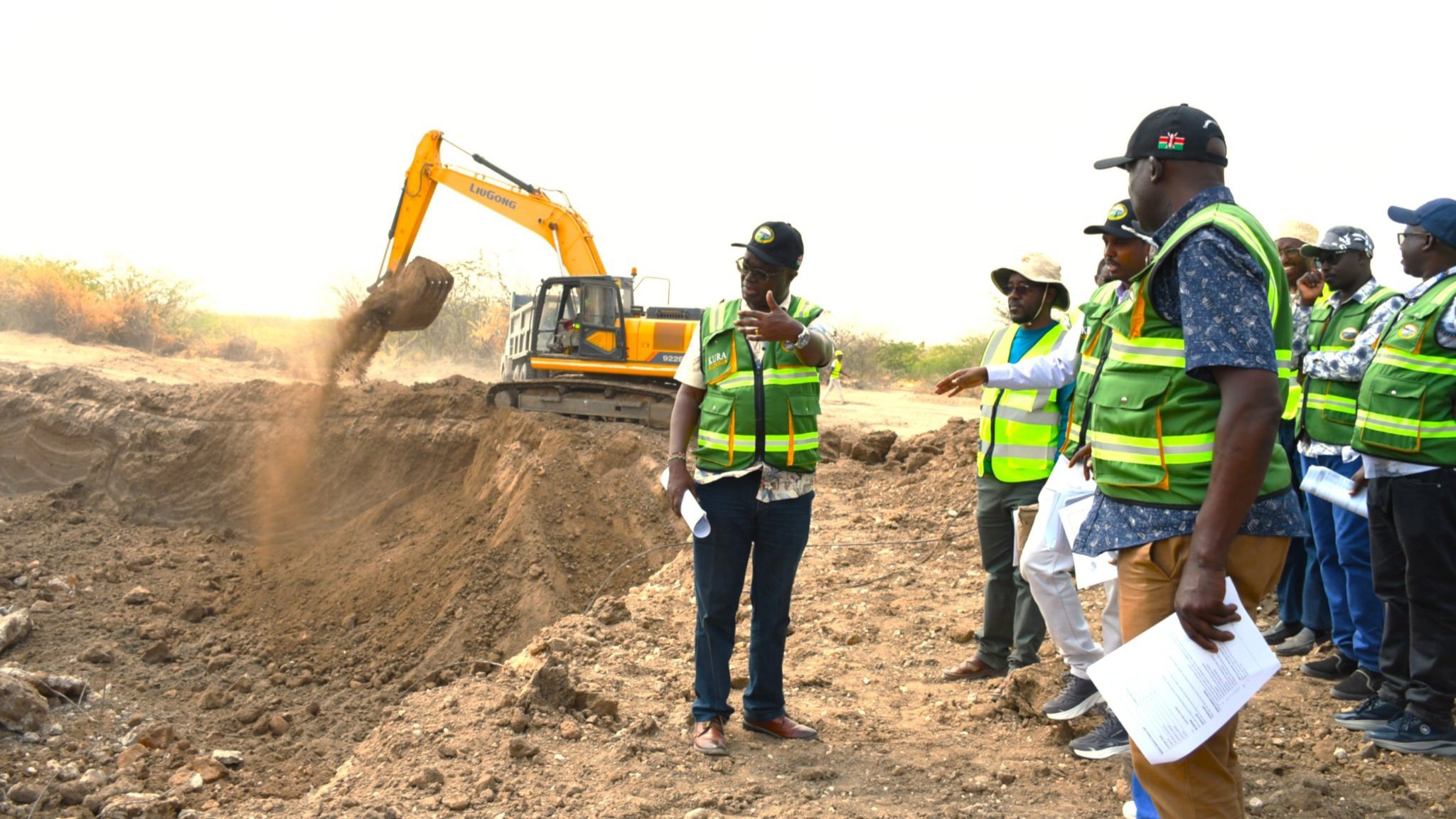

Kenya Urban Roads Authority (KURA) Director General Eng. Silas Kinoti led the board and management team on a site visit to review ongoing works. The inspection covered 10 kilometres of the Hadado road and another 10 kilometres in Griftu Town, both located in Wajir County.
Officials walked sections of the construction sites, observing equipment in operation and speaking with teams on the ground. Photographs from the visit show excavators moving earth, graders shaping surfaces, and workers in safety vests handling materials. Kinoti and his colleagues carried documents as they discussed details at various points.
Wajir County sits in Kenya's northeastern region. Its towns function as important hubs for local trade and movement across arid landscapes. Poor road conditions have historically complicated travel, especially during rainy periods or heavy livestock transport seasons.
The projects under review form part of broader efforts to improve urban connectivity in such areas. Once finished, the roads should help reduce travel times and support smoother flow of goods and people. Griftu and Hadado serve as links that connect surrounding communities to larger centres.
During the inspection, the focus remained on construction quality and timelines. KURA teams typically check alignment, drainage features, and pavement standards on such visits. These checks help catch issues early and keep work on track.
Northern Kenya has seen increased attention to infrastructure in recent years. Regions like Wajir face unique challenges, including dust, flooding risks in low areas, and the need for durable surfaces that withstand heavy truck traffic. Bitumen or paved roads offer clear advantages over earlier murram tracks.
Local residents stand to gain from better access. Markets, health facilities, and schools become easier to reach. Traders moving livestock or farm produce can operate with fewer disruptions. The county also plays a role in cross-border activities, making reliable transport routes valuable.
Kinoti has held the director general position for some time. His leadership involves overseeing multiple urban road initiatives across the country. Board members join these inspections to maintain oversight on public spending and project delivery.
The visit occurred on 17 July 2026. It comes amid ongoing work in several Wajir locations. Earlier upgrades in the county, such as shorter stretches completed in previous phases, have already shown benefits in daily mobility.
Construction images captured workers laying materials and operating machinery under clear skies. One frame shows a group examining plans near vehicles parked along a dirt section. Another depicts paving activities with several individuals bent over the works.
KURA manages urban roads outside major cities like Nairobi. Its mandate includes planning, development, and maintenance of these networks. In counties with growing towns, such projects form a core part of development strategies.
Challenges in implementation often include securing materials in remote areas and managing weather impacts. Inspections like this one allow for direct assessment and adjustments where needed.
The authority highlighted the roads' role in boosting strategic towns. Improved links can encourage investment and expand economic opportunities. For a pastoralist-heavy economy, reliable roads aid in getting products to buyers more efficiently.
As work progresses, expectations remain for completion within planned schedules. KURA has carried out similar exercises in other counties, using findings to refine approaches on future phases.
This particular inspection underscores continued commitment to infrastructure in northern Kenya. Towns like Griftu and Hadado could see noticeable changes once the full lengths reach bitumen standard.
Observers note that such developments contribute to wider national goals of balanced regional growth. With better roads, daily life and comerce gain a firmer foundation.
Comments (0)
Leave a Comment
No comments yet. Be the first to share your thoughts!