
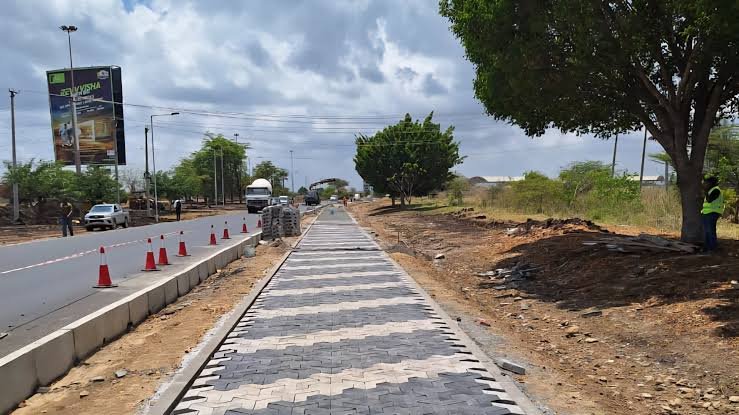

Parliament has passed a landmark legislative proposal requiring dedicated cycling lanes and pedestrian walkways to be included as standard features in future road construction projects across Kenya.
The measure shifts non-motorised transport provisions from optional project additions into mandatory statutory design standards nationwide.
Once signed into law, the legislation will directly bind state agencies, including the Kenya National Highways Authority (KeNHA), Kenya Rural Roads Authority (KeRRA), and Kenya Urban Roads Authority (KURA).
These state road agencies must build separated non-motorised transport (NMT) infrastructure, such as dedicated cycle tracks and footpaths, whenever undertaking new road construction or carrying out major upgrades on existing networks.
Sponsored by Samburu West Member of Parliament (MP) Naisula Lesuuda, the proposed law aims to ensure uniform application of pedestrian and cycling provisions in national transport infrastructure planning.
Infrastructure planners previously treated separate non-motorised facilities as flexible design options rather than mandatory statutory requirements during contract evaluations and civil works execution.
The legislation currently awaits presidential assent, where it will require a formal signature from President William Ruto to officially become law.
State agencies and contracted engineering firms will then be expected to integrate these non-motorised transit mandates into active blueprints, technical specifications, and procurement frameworks nationwide.
This legal framework establishes legally binding obligations across urban, rural, and highway development projects handled by national authorities.
Civil engineering contractors and project supervisors will need to revise standard cross-sections and corridor design templates to accommodate separated pathways, ensuring compliance with the incoming legal requirements during upcoming procurement cycles.
Transport policy experts note that enforcing dedicated non-motorised pathways aligns local road construction practices with broader international urban mobility guidelines.
By integrating non-motorised facilities directly into baseline road designs, state agencies can streamline right-of-way acquisition while avoiding costly retrofits on existing road corridors after primary construction wraps up.
Comments (0)
Leave a Comment
No comments yet. Be the first to share your thoughts!