

The Kenyan government is accelerating a sweeping urban transformation plan, which outlines the infrastructural blueprint of the capital city up to the year 2035.
Driven by intense population growth, the city is preparing for massive structural updates. Demographic projections indicate the capital will host 7.2 million residents by 2035, which places immense pressure on existing public amenities.
This population surge demands rapid adjustments in housing, employment, and public service delivery. Consequently, state planners are executing major upgrades to avoid total urban gridlock, but the success depends on swift execution.
According to official design blueprints showcased in June 2026, the state is prioritizing multi-modal transit nodes. Central to this strategy is the Nairobi Railway City, a massive 425-acre urban redevelopment project situated within the city center.
The redevelopment aims to deliver an integrated public transport system, which connects various transit modes. Additionally, it establishes a multi-use commercial and residential hub, which will change the traditional core of the capital.
Planners intend to spread economic activity away from the crowded Central Business District (CBD). By creating alternative commercial centers, the state hopes to ease congestion, although the transition requires billions in capital injection.
Beyond rail transit, aviation infrastructure forms a primary pillar of the master plan. Jomo Kenyatta International Airport (JKIA) is slated for extensive modernization, if the state overcomes ongoing legal challenges.
A constitutional petition recently filed in the High Court challenged the proposed Ksh 154 billion airport upgrade. Despite this legal hurdle, the Ministry of Transport remains committed to upgrading JKIA into a regional logistics hub.
The modernization involves expanding terminal capacities and airside infrastructure, who will handle increased cargo volumes. This expansion aligns with long-term regional trade goals, which position Nairobi as an indispensable East African transit hub.
Many of these ambitious initiatives are not entirely new concepts. Several projects scheduled for completion before 2030 originated under the previous regimes of President Mwai Kibaki and President Uhuru Kenyatta.
Current state planners are building upon those foundational blueprints to integrate modern technologies. For instance, the government is introducing Intelligent Traffic Systems (ITS) to manage vehicular flow dynamically across major arterial roads.
Smarter mobility solutions remain critical, because the current road network cannot sustain the rising vehicle numbers. Traffic management will rely heavily on automated surveillance and computerized signaling to optimize transit times.
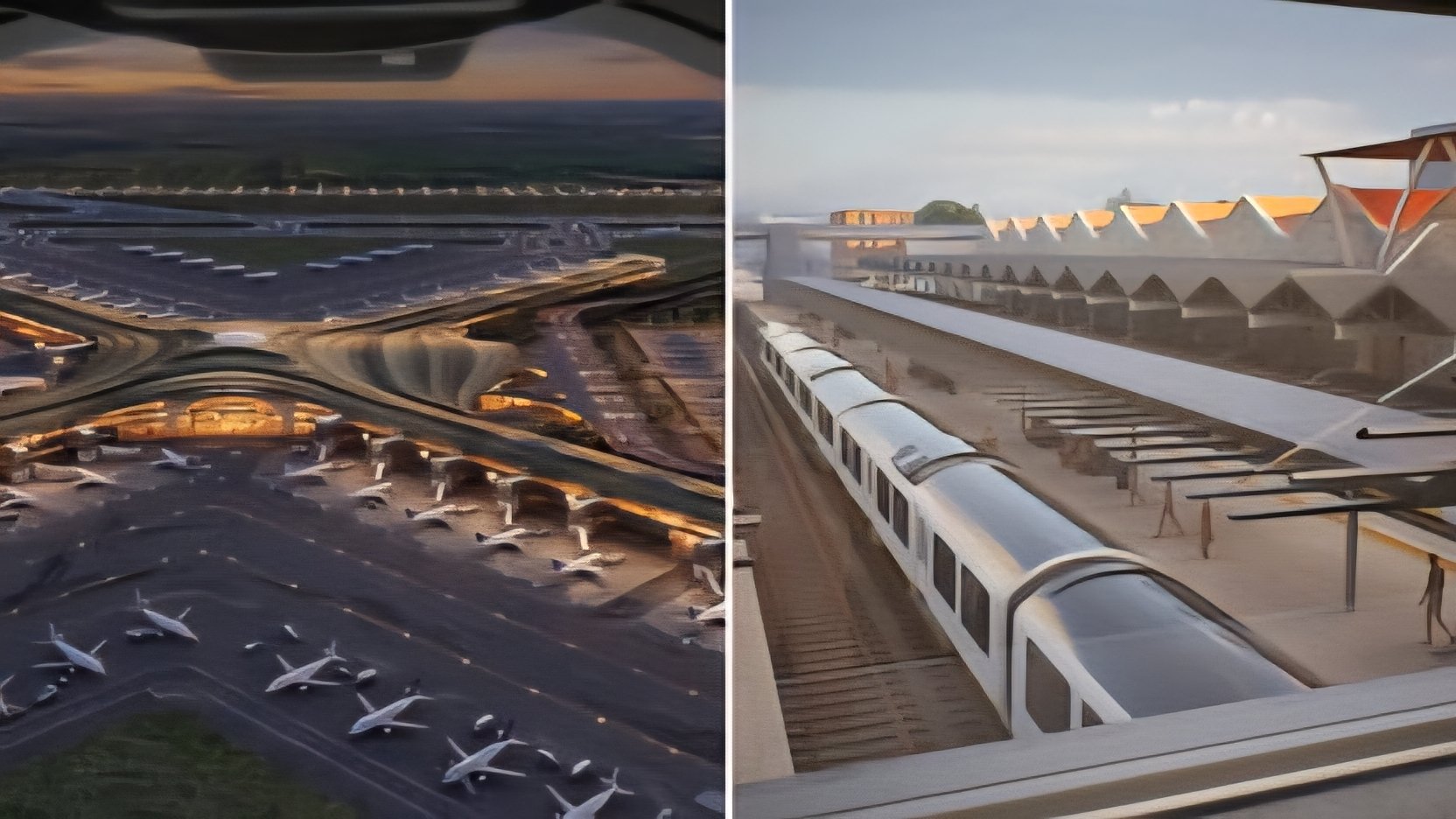
The visual framework of these upcoming changes was illustrated in architectural designs released by state agencies. File 260487.png contains a detailed photo collage showing the futuristic designs for both the airport and railway hubs.
These renderings depict a highly modernized transport network, which mirrors global logistical standards. Citizens and investors are closely watching the rollout, because these projects dictate the economic viability of the city.
Funding these mega-projects remains a central topic of discussion within construction circles. The state is exploring various financing models, including public-private partnerships, to ensure continuous development without overburdening national reserves.
The National Land Commission (NLC) and the Kenya National Highways Authority (KeNHA) are also working in tandem on surrounding corridors. Managing land acquisition for accompanying highway networks is vital, if the transport grid is to function properly.
As the 2035 timeline approaches, coordination between different transport ministries will be tested. Success will depend heavily on sustained funding, transparent procurement, and minimizing lengthy litigation that often delays Kenyan infrastructure.
Comments (0)
Leave a Comment
No comments yet. Be the first to share your thoughts!