
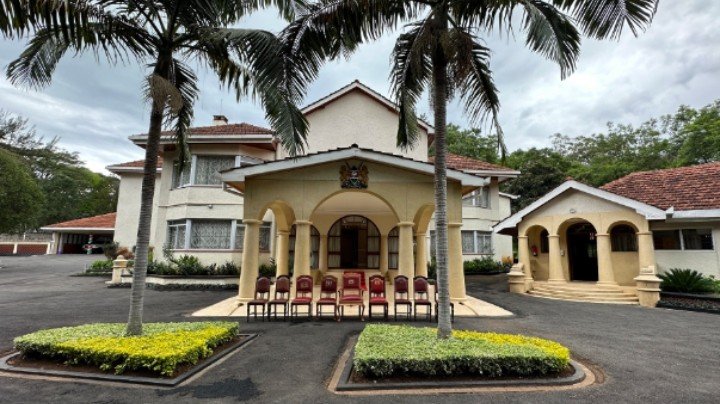

Members of the National Assembly have urged the government to consider relocating Nakuru State House, pointing to congestion, limited space for expansion, and the city’s continued growth as a major regional centre. The proposal arose during review of the 2026/2027 State House budget estimates in Parliament.
The issue was discussed before the Departmental Committee on National Administration and Internal Security when State House Comptroller Dr Katoo Ole Metito appeared to explain the proposed allocations and respond to questions from lawmakers about operations and long term planning.
Several MPs said Nakuru has changed significantly over the past decade, growing into an important transport, commercial, and administrative hub linking Nairobi with the Rift Valley and western parts of the country. This growth has increased traffic, land demand, and infrastructure pressure around government facilities.
Lawmakers explained that the State House compound, once located in a less crowded environment, is now surrounded by busy roads, businesses, and residential developments. They said the changing surroundings have created logistical and security challenges during official visits and events.
Members of the committee expressed concern that congestion around the facility could complicate traffic management, emergency planning, and security coordination whenever high-level meetings or visits take place. They noted that such challenges may increase as Nakuru continues expanding.
Some legislators argued that the discussion should not be limited to the current budget cycle but should form part of broader national planning for government installations located in rapidly growing urban areas. They said long-term thinking could help avoid higher costs in the future.
The committee heard that opportunities to expand the current compound are limited due to surrounding development and rising land values. MPs said this makes it difficult to create additional space for security buffers or new administrative facilities within the existing location.
Several members suggested that relocating the State House could provide an opportunity to design a modern facility that meets future administrative, security, and logistical needs while allowing for long-term expansion if required.
They stressed that any relocation would require careful planning, feasibility studies, and coordination across government agencies before decisions are made. Lawmakers emphasized the importance of balancing costs with long-term national planning benefits.
Dr Metito told the committee that the budget estimates under review mainly cover maintenance, staffing, and ongoing operational needs. He said relocation planning would require a separate policy process led by the executive and supported by detailed technical studies.
He noted that such a project would involve multiple institutions and would likely take time to evaluate before funds could be allocated or construction considered. The committee acknowledged that the matter requires further analysis.
During the session, MPs also discussed the symbolic role of State House facilities in different regions and the importance of maintaining regional balance in national infrastructure. They said any relocation should consider both practical and symbolic factors.
Some lawmakers said relocating the Nakuru residence should not be viewed as reducing the city’s importance but as adapting to changing urban conditions and ensuring government facilities remain functional and secure.
Others highlighted the need to consider how relocation could affect local employment, service providers, and businesses connected to State House operations in Nakuru and nearby areas.
The discussion reflected wider concerns about how public institutions respond to urban growth that occurs faster than earlier planners expected. Members said similar challenges may arise in other towns experiencing rapid development.
The committee called for closer cooperation between national and county governments to ensure infrastructure planning aligns with long-term development and urban management strategies. They emphasized the need for early planning rather than reactive decisions.
Lawmakers also urged transparency if the government begins studying relocation options. They said the public should receive clear information on potential costs, timelines, and expected benefits of any future decision.
Dr Metito assured the committee that State House would provide additional information if the executive initiates formal studies on the proposal. He reaffirmed the institution’s commitment to accountability and cooperation with parliamentary oversight.
The committee is expected to include its observations in the final report on the State House budget estimates for the 2026/2027 financial year. The recommendations will inform future discussions on planning and resource allocation.
While no immediate decision has been made, the debate signals growing interest in aligning national government facilities with the realities of expanding cities and evolving infrastructure needs across the country
Comments (0)
Leave a Comment
No comments yet. Be the first to share your thoughts!