
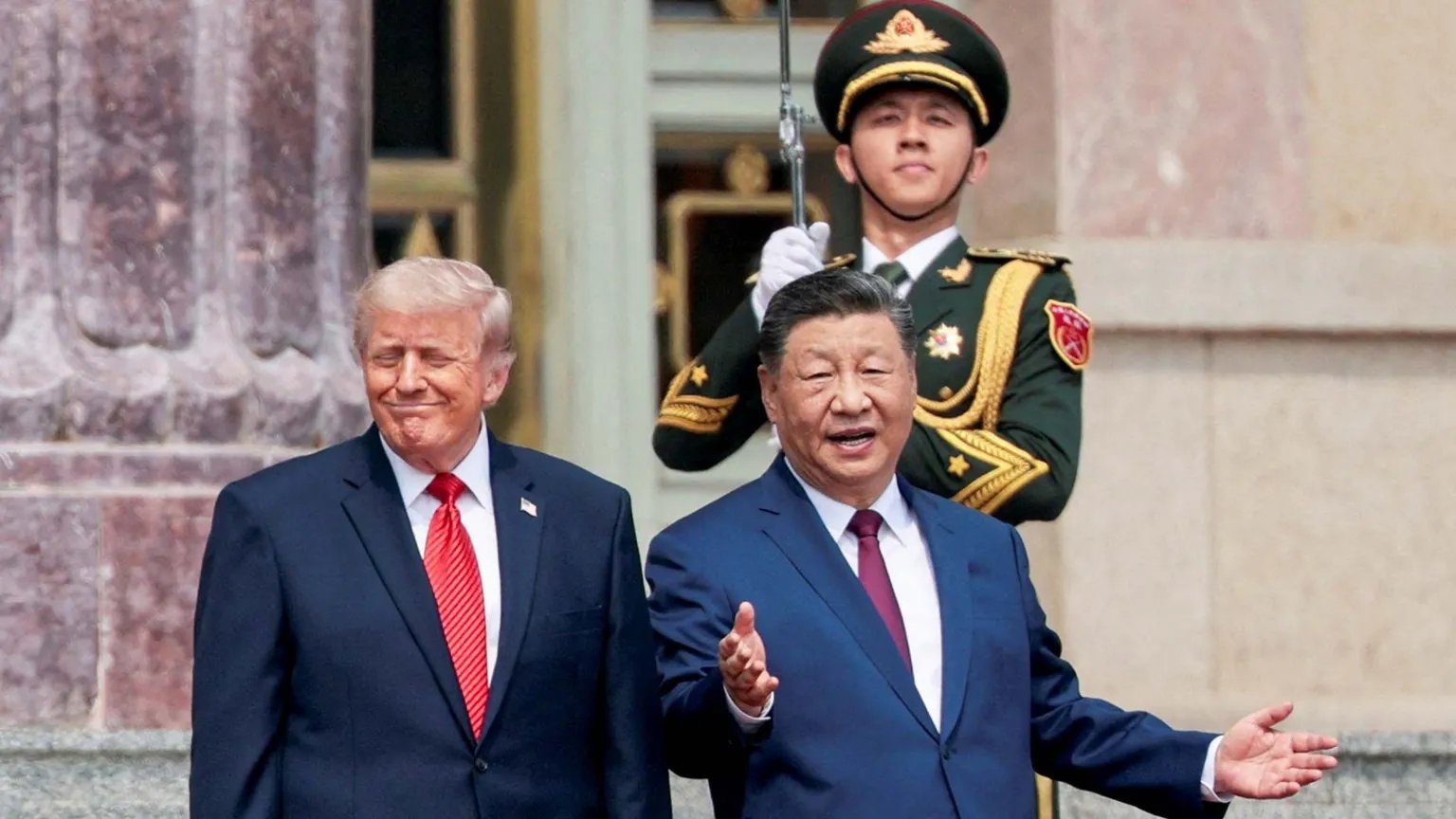

President Donald Trump began a high-stakes state visit to China on 14 May 2026, marking the first time a sitting United States (US) president has traveled to the country since his own previous visit in 2017. The visit comes at a time of heightened geopolitical friction, with both nations looking to manage a complex relationship defined by trade imbalances and competition over global influence.
Upon his arrival, President Trump was greeted with a formal welcome ceremony at the Great Hall of the People. During the subsequent talks, Chinese President Xi Jinping emphasized a desire to stabilize bilateral ties and suggested that 2026 could serve as a turning point for cooperation. The meeting follows a period of significant economic shifts, including a previous agreement in 2025 that saw a reduction in tariffs.
A central component of the discussions involves the proposed establishment of a Board of Trade (BOT). This new mechanism is intended to formalize and rebalance trade flows by overseeing the implementation of purchase commitments and identifying priority goods for import and export. The administration hopes this will bring more predictability to an economic relationship that has long been characterized by volatility.
President Trump is accompanied by a delegation of high-level business executives, highlighting a shift toward commercial deliverables. Among the major deals under consideration is a potential order for 500 Boeing 737 Max aircraft, which would represent one of the largest aerospace agreements in recent years. Discussions are also expected to cover the supply of rare earth elements and market access for Chinese electric vehicle manufacturers.
The global context of the summit remains significant for the construction and infrastructure sectors. China continues to expand its international presence through the Belt and Road Initiative (BRI), while the US has increasingly adopted transactional diplomacy and protectionist measures. Many nations in Africa and Southeast Asia are monitoring the summit closely, as the outcome may dictate the flow of infrastructure investment and the stability of global supply chains.
Security concerns also featured prominently during the first day of the visit. President Trump indicated that China has pledged to assist in opening the Strait of Hormuz and promised not to provide military equipment to aid Iran in its current conflict. Meanwhile, officials from the US State Department maintained that policy regarding Taiwan remains unchanged, despite the subject being a recurring point of contention during the talks.
As the summit continues, the focus remains on whether these discussions can translate into concrete economic outcomes. For the global construction industry, the potential for renewed cooperation on large-scale projects and trade frameworks could offer a needed degree of certainty. However, analysts suggest that the visit is more about managing a rivalry than resolving the deep-seated structural issues between the two superpowers.
Comments (0)
Leave a Comment
No comments yet. Be the first to share your thoughts!