
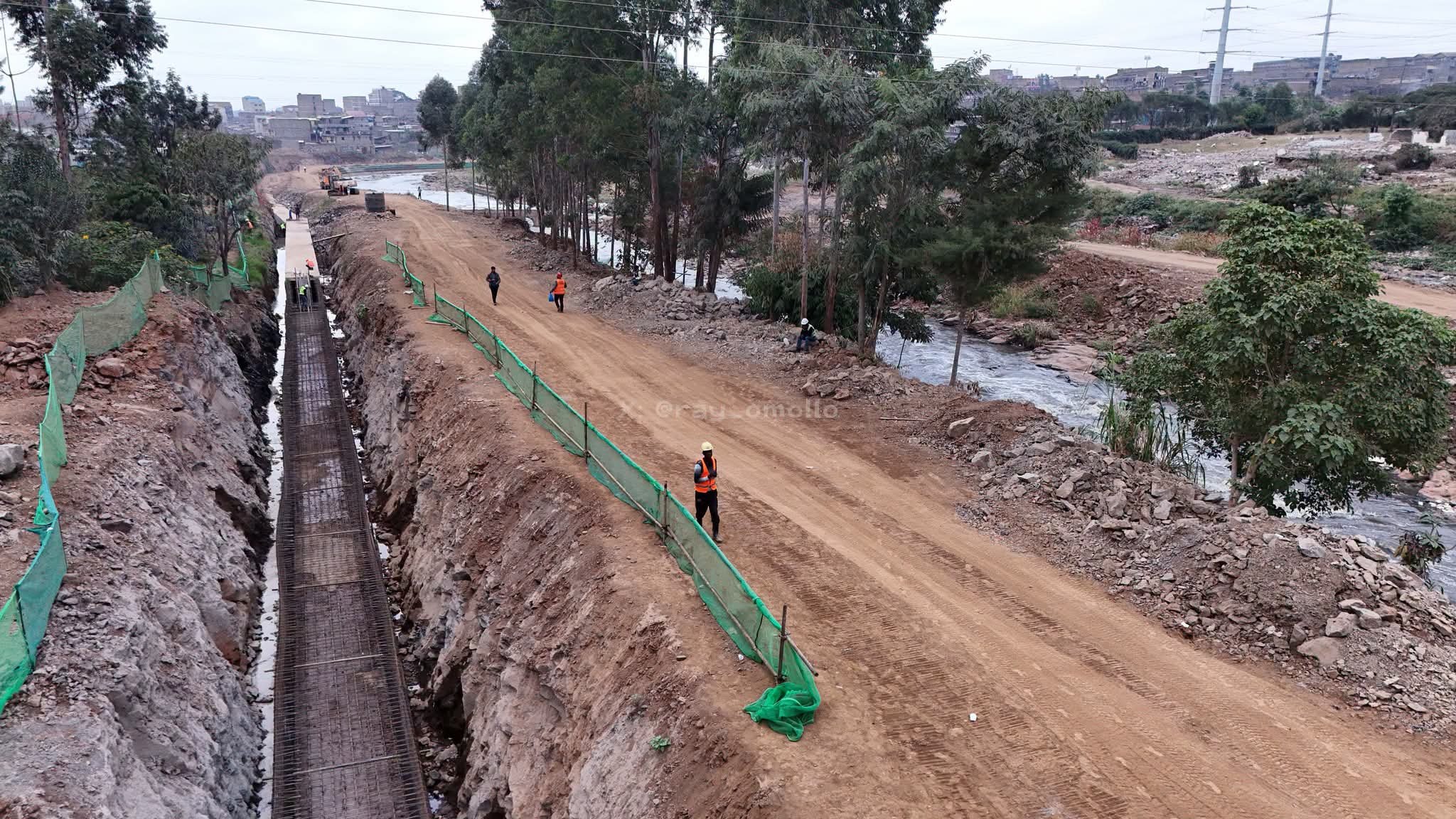

The Nairobi River Regeneration Programme continues to record steady progress in upgrading sewerage infrastructure in Nairobi. Significant works have been completed in Lucky Summer and Baba Dogo areas within Ruaraka Constituency.
A 27-kilometre trunk sewer line is been casted along the Nairobi River corridor. This interceptor system diverts wastewater away from the river and surrounding neighbourhoods, addressing long-standing pollution challenges.
The upgraded network boasts a treatment capacity of 60 million litres per day. Once fully operational, it will substantially reduce pollution levels, improve sanitation standards and help restore the health of the Nairobi River ecosystem.
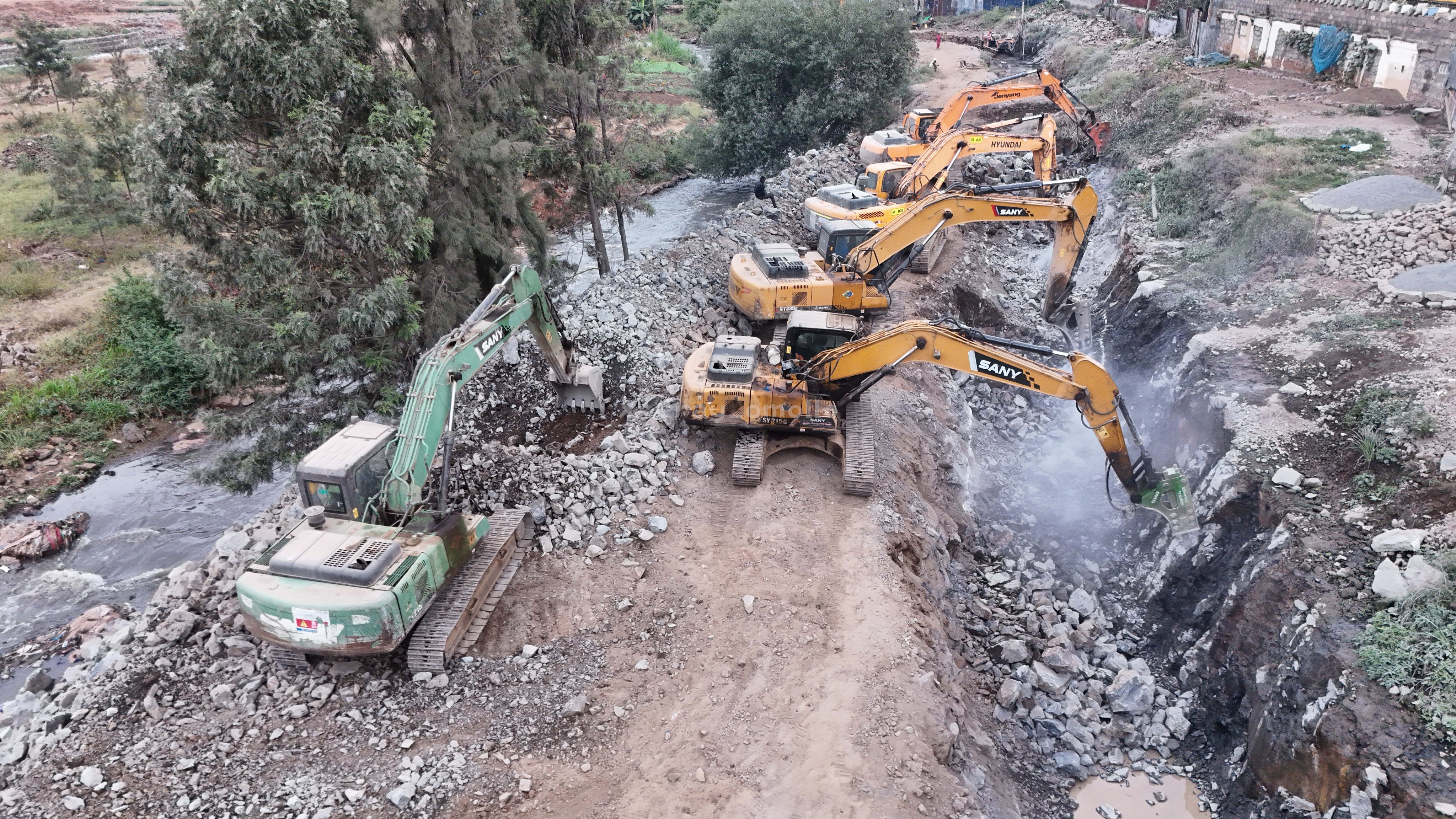
Machinery on the ground /Handout
Parallel to the engineering works, the ClimateWorX Mtaani Initiative has generated employment for more than 45,000 youth and women. Participants have been involved in river clean-up exercises, drainage maintenance and environmental restoration activities.
The initiative highlights the integration of infrastructure development with community empowerment. It provides direct income opportunities while contributing to the overall objectives of cleaning and protecting the Nairobi River.
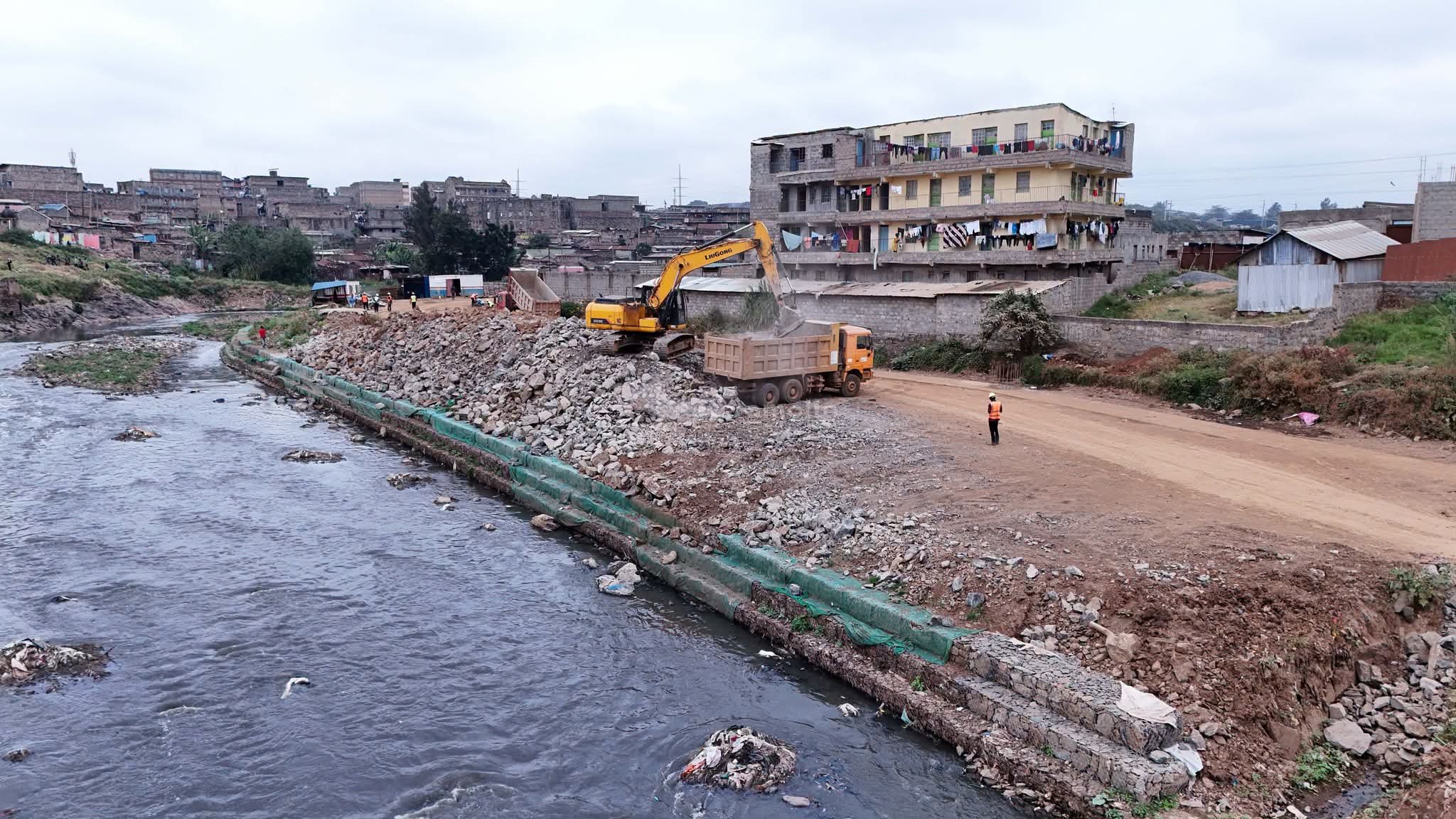
Nairobi River, July 1 /Handout
The State Department for Internal Security and National Administration has played a central coordination role through the National Government Administrative Officers. NGAOs have facilitated community mobilisation and supported smooth implementation of the ClimateWorX Mtaani activities.
Nairobi’s rapid urban expansion has placed heavy strain on existing sanitation systems. Projects such as this trunk sewer upgrade are critical to managing wastewater flows in densely populated informal settlements and residential areas.
The Nairobi River has suffered decades of pollution from untreated sewage and other waste. The new casted trunk sewer lines represent a major step toward separating wastewater from the natural watercourse.
Construction teams have deployed heavy machinery to excavate trenches and install the trunk sewer mains along the riverbank. The works have required careful engineering to navigate the challenging urban and riverside environment.
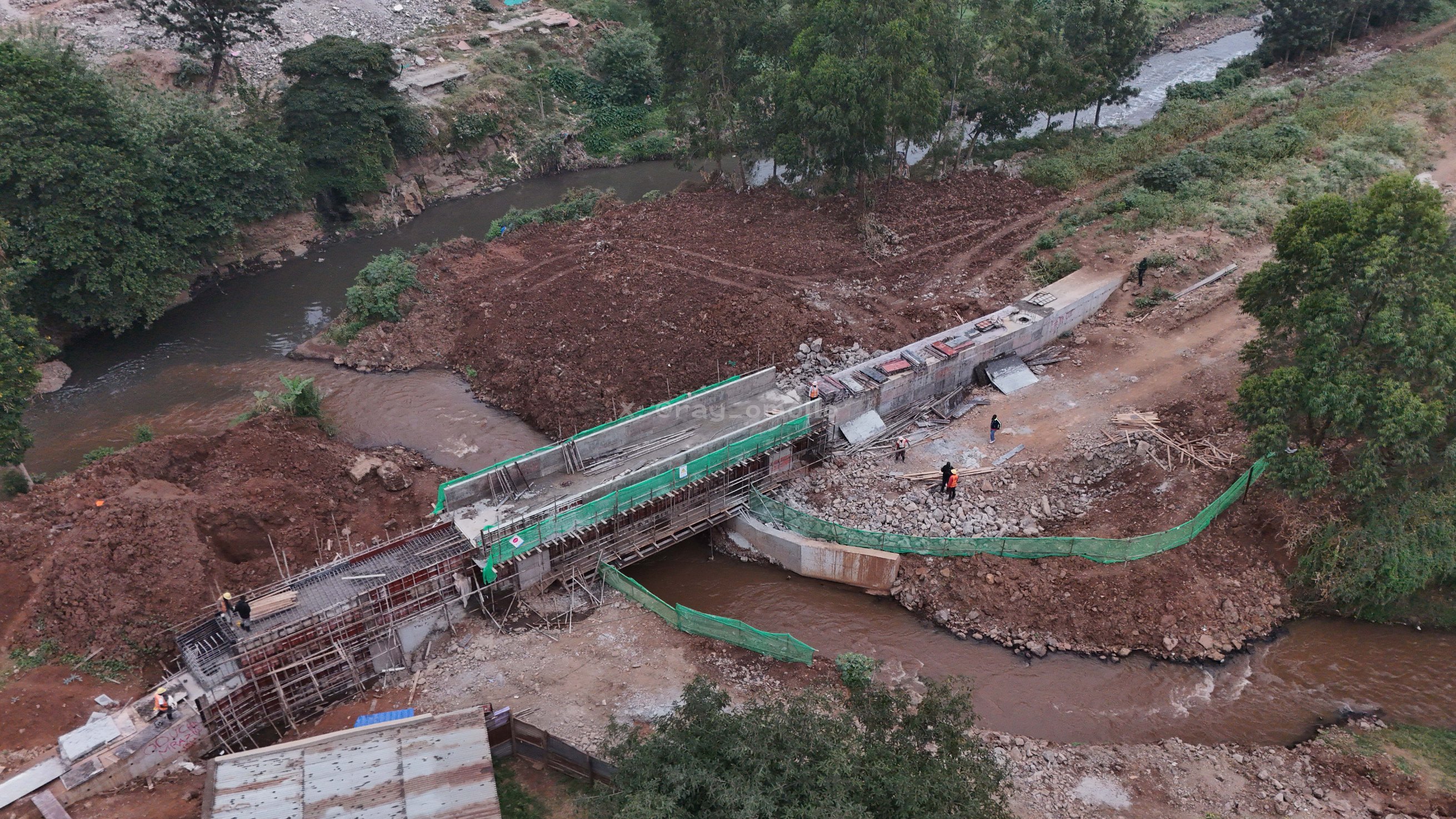
Sewer bridge/Handout
Local communities stand to benefit from reduced flooding and better sanitation once the system is commissioned. The project also aims to improve public health outcomes in areas previously affected by poor waste management.
The ClimateWorX Mtaani programme has gone beyond job creation. It has fostered greater environmental awareness among participants and encouraged collective responsibility for maintaining cleaner waterways.
Effective coordination between national agencies, county government and local residents has been key to the progress achieved so far. Such partnerships are essential for the success of large-scale urban regeneration initiatives.
The Nairobi River Regeneration Programme is tackling interconnected challenges of pollution, unemployment and infrastructure deficit. Continued investment in similar projects will be necessary to fully rehabilitate the river system.
Further sections of the sewer network and related restoration activities are expected to advance in the coming months. Authorities have indicated that sustained efforts will be required to achieve comprehensive improvement along the entire river corridor.
Comments (0)
Leave a Comment
No comments yet. Be the first to share your thoughts!