
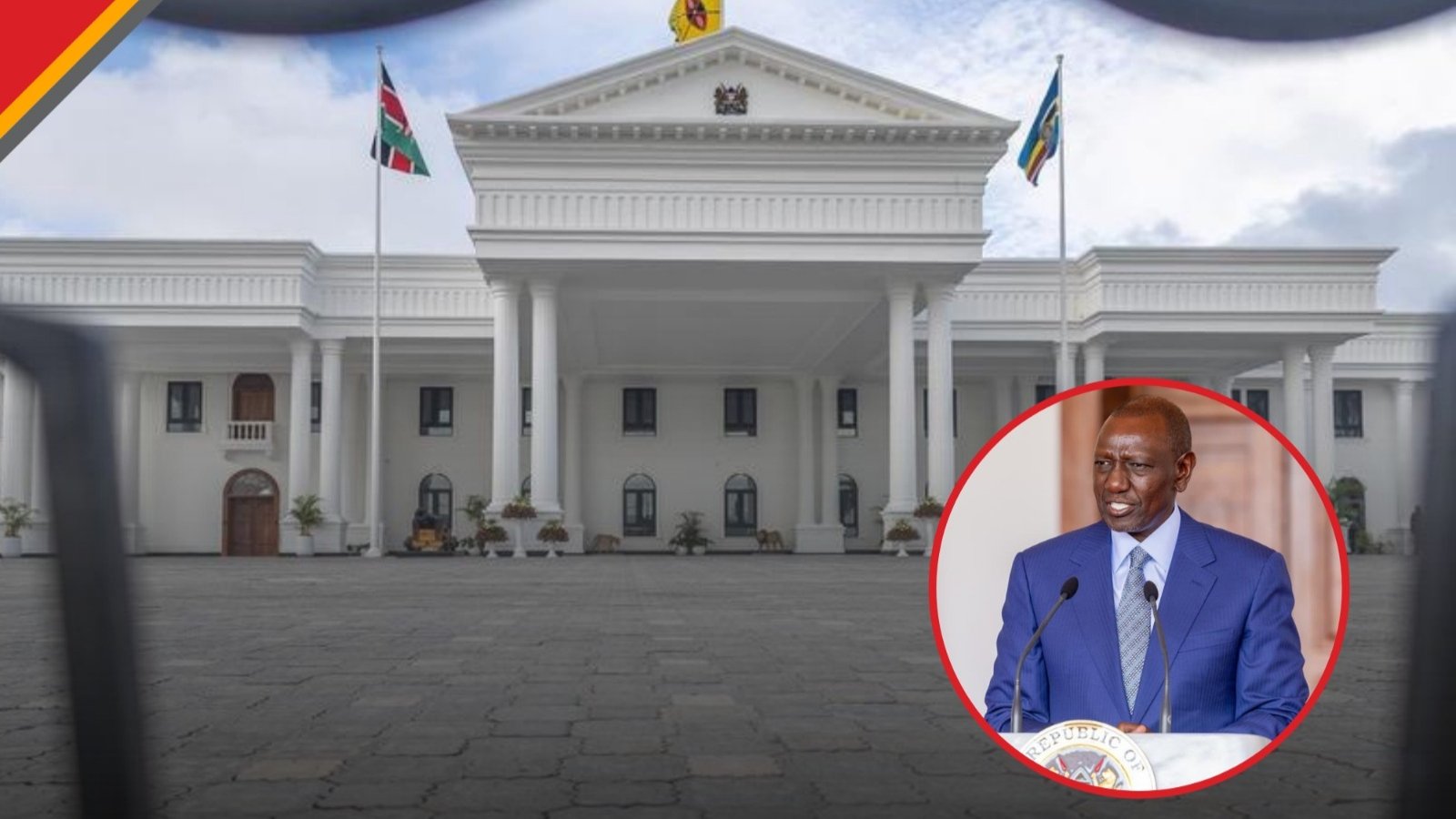

President William Ruto announced Thursday that a section of the perimeter wall at State House Nairobi will be demolished. The order follows a notice from a multi-agency team reclaiming riparian reserves.
Speaking at the Nairobi County Assembly, Ruto said the boundary wall along the Kirichwa Kubwa River falls within protected riparian land. He quoted the notice directly. “State House has received a notice that part of the State House boundary wall along the Kirichwa Kubwa River falls within the riparian reserve. And it must come down,” he told county leaders.
Ruto promised immediate action. “They have told me at least 15 metres from the high mark. I promise you that wall will come down,” he added. He assured the assembly the directive would be carried out without delay.
Riparian reserves form protected strips of land next to rivers and waterways. Kenyan regulations limit construction in these zones to reduce environmental damage and help manage water flow.
The president linked the issue to broader problems in Nairobi. Environmental degradation and unchecked land encroachment have made flooding more severe in recent years, he said.
His statement fits into an ongoing citywide operation. A multi-agency team has stepped up efforts to clear illegal structures from wetlands and riverbanks. The goal is to restore natural waterways that have been narrowed or blocked.
Nairobi Governor Johnson Sakaja has taken a firm line on the same problem. In March he ordered the immediate demolition of illegal structures along riverbanks. He blamed restricted waterways for the city’s persistent flooding.
Sakaja spoke in Westlands on March 18. He said county teams had received an action report from the Infrastructure committee and had begun implementation. Officials would target any buildings that narrowed rivers into narrow culverts unable to handle heavy rains.
The governor also pointed to illegal dumping and failure to follow approved building plans as factors that worsen the crisis. He called for stricter accountability across the board.
State House itself now falls under the same scrutiny applied to other properties. The presidential residence sits in central Nairobi, and its perimeter wall had stood for years before the latest review.
The demolition order underscores that no structure is exempt when riparian rules are involved. County and national agencies continue joint inspections across the capital.
Work on removing the affected wall section is expected to proceed in the coming days. Officials have not yet released details on contractors or exact timelines beyond Ruto’s assurance of swift compliance.
The move comes amid heightened public concern over Nairobi’s flooding. Heavy rains have repeatedly exposed weaknesses in the city’s drainage and land-use controls.
Ruto’s remarks at the county assembly served both as policy statement and public signal. Compliance with environmental law applies equally at the highest levels of government.
Sakaja’s earlier comments in late March reinforced the same message. He told reporters outside the Senate building that the city needs sustained funding and enforcement to keep rivers clear.
The joint pressure from national and county levels appears aimed at changing long-standing patterns of encroachment. Whether the State House case sets a precedent for other high-profile sites remains to be seen.
For now the focus stays narrow. One stretch of wall along the Kirichwa Kubwa River will be taken down to restore the required buffer. The rest of the State House compound remains untouched.
Construction observers in Nairobi will watch closely how the demolition is executed. It marks a rare instance where presidential property enters the wider riparian reclamation drive.
Comments (0)
Leave a Comment
No comments yet. Be the first to share your thoughts!