
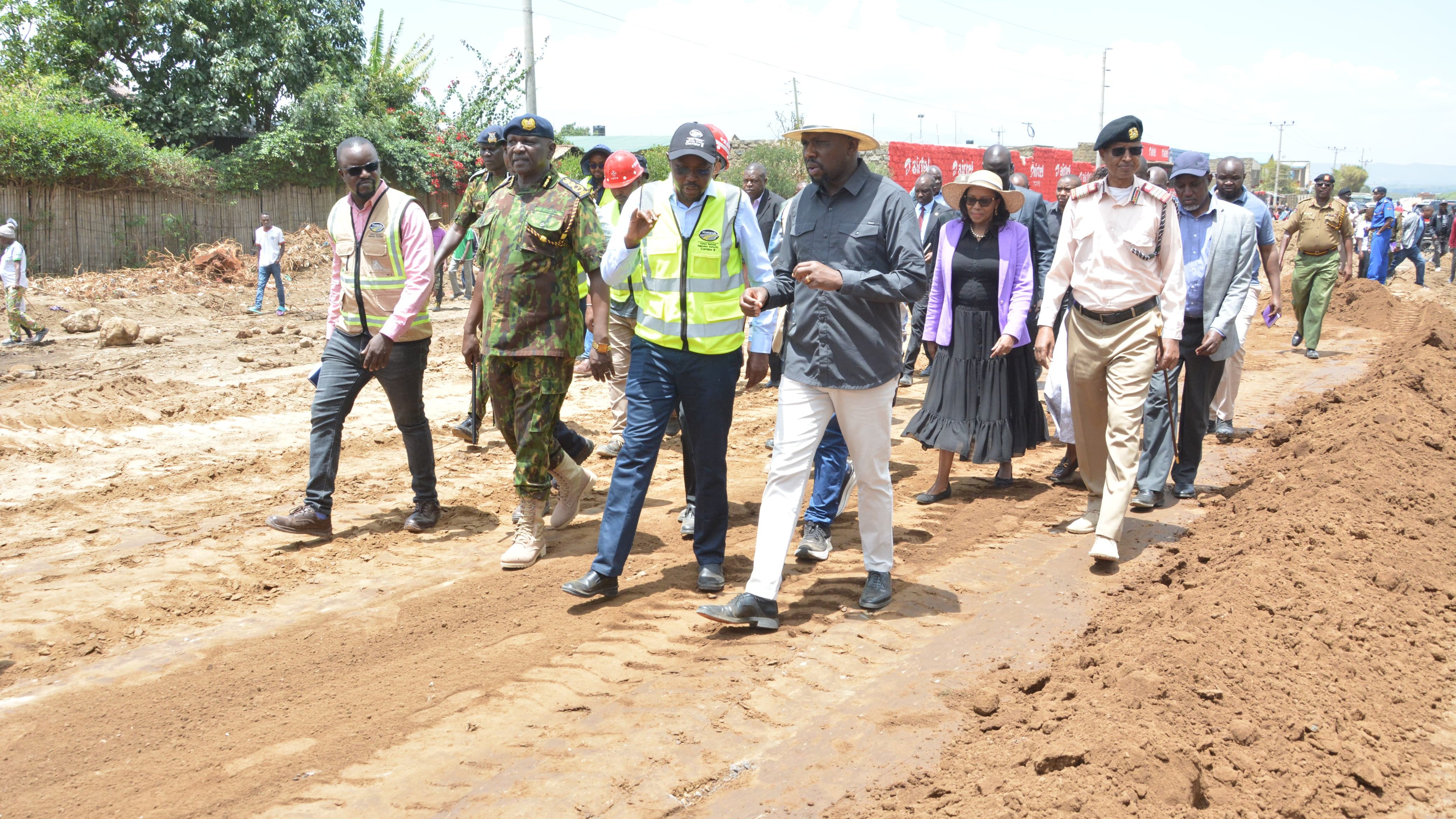

The government has initiated a comprehensive security deployment along the Northern Corridor to safeguard the Sh200 billion Rironi–Mau Summit road project. Interior Cabinet Secretary Kipchumba Murkomen confirmed that additional personnel are now stationed at key sections of the highway to protect construction equipment and oversee traffic flow as contractors move to the site.
The deployment follows the official commencement of works on the 233-kilometer stretch, which is being developed through a public-private partnership involving the China Road and Bridge Corporation (CRBC) and the National Social Security Fund (NSSF). During an inspection tour in Naivasha on Wednesday, Murkomen noted that security teams will work on a 24-hour basis to monitor alternative routes and diversions provided by the Kenya National Highways Authority (KeNHA).
Construction activity is currently concentrated in several segments, including a five-kilometre stretch at Rironi and another five-kilometre section in Gilgil. The project, which has an estimated completion date of June 2027, involves upgrading the existing two-way single carriageway into a dual carriageway. Specifically, the Rironi to Naivasha section will be expanded to four lanes, while the high-traffic Naivasha to Nakuru segment is designed to feature six lanes.
Traffic management has become a priority for the ministry, particularly with the upcoming World Safari Rally championship scheduled for next month. The government expects the new security measures to prevent the "agonising gridlock" that often characterizes this route. Beyond traffic control, the presence of security forces is intended to deter the vandalism of road furniture and the theft of construction materials, which have historically plagued large-scale infrastructure projects in the region.
Local leaders, including Nakuru Governor Susan Kihika, accompanied the Interior Secretary during the site visit. The provincial administration has expressed optimism regarding the economic impact of the project, noting that Naivasha and Mai Mahiu towns are positioned for growth as the highway cuts through these commercial hubs. The project is expected to create approximately 10,000 jobs, with a focus on local youth and women.
While the primary objective of the upgrade is to improve the movement of goods and passengers between Nairobi and Western Kenya, the road has also been a major safety concern. The National Transport and Safety Authority previously identified sections such as the Salgaa stretch as among the most accident-prone in the country. The current design includes 15 interchanges, 41 underpasses, and eight footbridges to mitigate these risks.
The project is being implemented under a Design, Build, Finance, Operate, Maintain, and Transfer (DBFOMT) model. The private consortium will finance the construction and manage the road for 30 years, recovering costs through a tolling system. This represents a shift in how the state handles major arterial routes, moving toward a model where users pay for the maintenance of high-capacity infrastructure.
KeNHA has already issued notices regarding temporary lane closures and the removal of unauthorized billboards to facilitate the works. Motorists are advised to follow the directions of traffic marshals and use designated diversions as the contractor scales up earthworks along the corridor.
Comments (0)
Leave a Comment
No comments yet. Be the first to share your thoughts!