
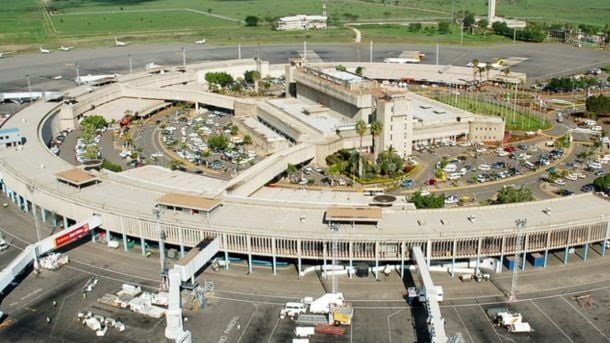

The government moved quickly to find contractors for the long-awaited upgrade of Jomo Kenyatta International Airport. On Tuesday the State Department for Aviation and Aerospace Development published the tender for a design and build contract that deliberately excludes smaller firms.
Only companies able to show access to at least Sh100 billion in liquid assets or a confirmed line of credit can take part. They must also prove an annual turnover of Sh95 billion or more. On top of the money test, bidders need to have delivered at least one similar project in East Africa valued at Sh100 billion or higher, including testing and commissioning.
The restrictions aim to guarantee the works move fast. Officials want construction to start straight away and reach practical completion inside three years. The chosen contractor will first tackle the existing main terminal, lifting its annual capacity from 7.5 million passengers to 12 million.
At the same time the contractor must design and deliver an entirely new terminal able to handle roughly 22 million passengers a year. A fresh runway measuring 4.5 kilometres long and 60 metres wide will complete the package, built to accept the largest aircraft currently in service.
This approach marks a clean break from the earlier plan. The previous agreement with India’s Adani Group followed a public-private partnership model under which the developer would have built and operated the facility for a set period. That arrangement has now been set aside.
Kenya Airports Authority acting chief executive Mahamud Gedi spelled out the change last week at a stakeholder meeting. “The government of Kenya is going to fund this project through a government funding model, not through a PPP as was previously decided,” he said.
Money will come directly from the state, including by securitising the Air Passenger Service levy. The Sh18.5 billion collected annually from that charge will back a Sh154.8 billion bond issue earmarked for the airport works. The final project cost has not been released.
JKIA remains Kenya’s busiest airport and the main entry point for most international visitors and cargo. Its current layout has struggled with rising passenger numbers for several years, creating delays at check-in, immigration and baggage halls. The new capacity should ease those pressures once both terminals and the runway are operational.
The tender documents leave no room for joint ventures that dilute the financial strength test. Every bidder must meet the thresholds in its own right or as lead partner in a consortium that satisfies the same rules.
Construction experts expect the shortlist to draw interest from large regional and international firms already active on roads, ports and power projects across East Africa. Local contractors with the required balance sheets may also team up with bigger overseas players to satisfy the experience clause.
Once the contract is awarded, the contractor will operate under tight timelines. The main terminal upgrade comes first so existing operations suffer minimal disruption. Work on the new terminal and runway will follow in parallel where possible.
The shift to direct government funding gives the state full control over the schedule and specifications. It also removes any future revenue-sharing obligations that would have applied under the old PPP structure.
Passengers and airlines will watch the next few months closely. Bid submission deadlines have not been published in the initial notice, but the department is expected to move the process forward rapidly.
Comments (0)
Leave a Comment
No comments yet. Be the first to share your thoughts!