
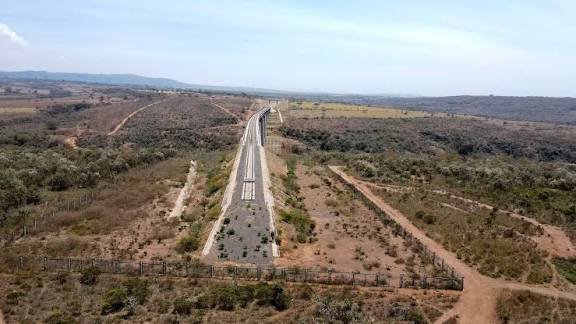

Several rural towns in Rift Valley and western Kenya stand to gain new transport infrastructure as the government advances plans for the Naivasha-Kisumu standard gauge railway extension.
The proposed Phase 2B line measures 263.7 kilometres and will connect to the existing Nairobi-Naivasha SGR terminus. It will run through Narok, Bomet, Sotik, Sondu and Ahero before reaching Kisumu. The route crosses Narok, Bomet, Kericho, Nyamira and Kisumu counties.
An additional 8.69-kilometre branch will link the main line to the revamped Kisumu Port on Lake Victoria.
Four commercial and logistics hubs form a central part of the blueprint, located in Narok, Bomet, Sotik and Kisumu. These facilities aim to handle freight, warehousing and value-addition activities tied to rail transport. The project includes 25 stations in total: six intermediate stations at Narok town, Mulot, Bomet, Sondu, Ahero and Kibos, alongside 18 passing stations.
A new depot at Kisumu station will manage locomotive servicing, inspections, repairs, fuelling and washing. Three water supply stations are planned for Narok, Kibos and Kisumu, while a 33kV power system will support operations through new substations at Murtoto, Narok, Bomet, Sondu and Kisumu.
Freight trains on the extension are designed to operate at speeds up to 80 kilometres per hour, with passenger services reaching 120 kilometres per hour. The blueprint describes the line as a corridor supporting natural resource development, industrial activity and daily passenger movement in western Kenya.
The extension builds on the existing Mombasa-Nairobi SGR and aims to improve connections toward Malaba and beyond to Uganda, with longer-term potential reach into South Sudan, Rwanda and the Democratic Republic of Congo.
Comments (0)
Leave a Comment
No comments yet. Be the first to share your thoughts!