
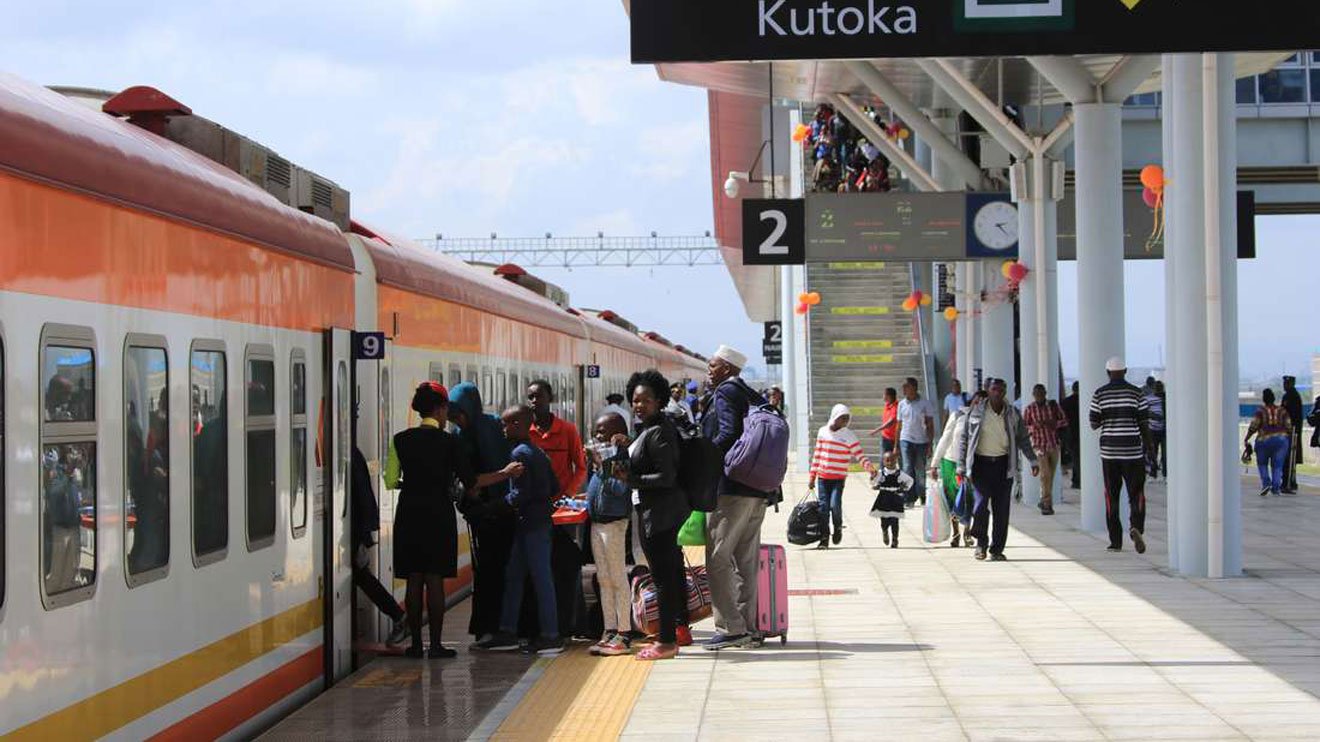

The National Treasury has allocated an additional Sh14 billion for the extension of the Standard Gauge Railway from Naivasha to the Malaba border via Kisumu. This fiscal adjustment, contained in the latest supplementary budget estimates, raises the total allocation for the project in the current financial year to Sh30 billion, up from the Sh16 billion initially approved.
This funding surge aligns with recent commitments from the executive to advance the railway beyond its current terminus at Suswa. The project, which covers Phases 2B and 2C, is intended to provide a modern rail link from the hinterland to the Ugandan border, eventually connecting with Uganda's own standard gauge railway development starting in Tororo.
The additional Sh14 billion will be sourced through tax revenues under the Appropriation-in-Aid category. By utilizing these internal funds, the government keeps the financing separate from the Consolidated Fund, which is typically reserved for broader expenditures like value-added tax and income tax. This move comes as the Ministry of Roads and Transport shifts toward utilizing the Railway Development Levy to support major infrastructure works.
Technical designs for the Naivasha to Kisumu and onward to Malaba sections indicate a significant engineering undertaking. The plan includes the construction of 79 railway bridges totaling 43 kilometers, eight tunnels spanning over 14 kilometers, and 376 culverts. Once operational, the line will feature 26 stations, including a major terminus in Kisumu West and several intermediate stops in regions such as Narok, Bomet, and Ahero.
Groundbreaking for the extension is scheduled for late March 2026, with preliminary site activities already underway. Kenya Railways has confirmed that a key priority for the newly allocated funds is the compensation of land owners along the 264-kilometer corridor. The corporation seeks to acquire more than 5,000 acres to secure the right-of-way for the main line and an 8.68-kilometer branch line to the Kisumu Port.
Logistical efficiency is the primary driver for the expansion. Currently, cargo transported via the SGR must be transferred to trucks at Suswa, a bottleneck that increases transit costs for regional traders. By extending the tracks to the border, the government expects to lower freight costs and improve the competitiveness of the Northern Corridor.
The project is also designed to integrate with maritime transport on Lake Victoria, providing a multi-modal link for goods destined for Tanzania, Rwanda, and South Sudan. The Treasury's decision to front-load capital for this project suggests a focus on completing the railway loop to strengthen Kenya's position as a regional logistics hub.
Comments (0)
Leave a Comment
No comments yet. Be the first to share your thoughts!