
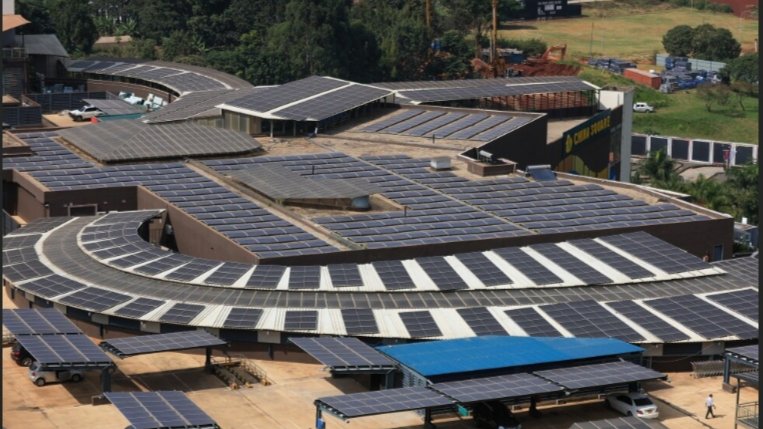

NAIROBI, Kenya — Africa’s largest economies are accelerating plans to build more domestic solar manufacturing capacity. Industry analysts say the shift reflects industrial ambition and unease over dependence on imports from China, which dominate the global market.
Ethiopia, South Africa, Morocco and Nigeria have stepped up efforts to localise production of solar equipment. This ranges from module assembly to more advanced stages, according to experts tracking the sector.
China is expected to keep its leading role in making solar cells and other key components. Its exports of such equipment have risen sharply, driven in part by surplus capacity at home.
Chinese renewable energy investment and related construction projects in Africa reached $66 billion between 2010 and 2024, according to the think tank ODI Global. Analysts note that growing economies and energy shortages in places such as Zambia create strong demand for Chinese output.
South Africa’s utility Eskom plans a 1-gigawatt solar manufacturing facility. The move aims to capture more value from the country’s expanding solar market and respond to changing electricity demand.
In Nigeria, local assembly capacity has grown from about 120 megawatts to roughly 300 megawatts over the past two years. Annual solar imports, mostly from China, place the country near South Africa’s level of demand.
South Africa already ranks as the continent’s largest importer of solar equipment, taking in more than 3 gigawatts each year, largely from China. Analysts view this scale of demand as a strong base for localised production.
Rising rooftop and distributed solar systems in South Africa are reducing national grid demand. This is squeezing utilities’ revenues and prompting interest in diversification into manufacturing.
Benjamin Clarke, policy director at the Africa Solar Industry Association, described the increased interest in solar power as a significant shift. He noted that nations pursuing manufacturing tend to already possess industrial capacity and strong domestic demand.
More than 10 million solar kits were sold across Africa in 2025, reaching an estimated 148 million people. Sales rose about 10 percent from the previous year, with notable growth in East and West Africa.
Africa currently has virtually no commercial-scale solar cell manufacturing. Most new factories therefore assemble imported Chinese components rather than produce high-value upstream materials.
Morocco has doubled its production capacity to roughly 1 gigawatt a year. Egypt is developing projects with gigawatt-scale capacity, adding further momentum to the regional push.
The result is a complicated form of energy self-reliance. Africa is building more solar capacity and beginning to manufacture more equipment locally, yet China remains central to the technology and supply chains that make the transition possible.
Comments (0)
Leave a Comment
No comments yet. Be the first to share your thoughts!