
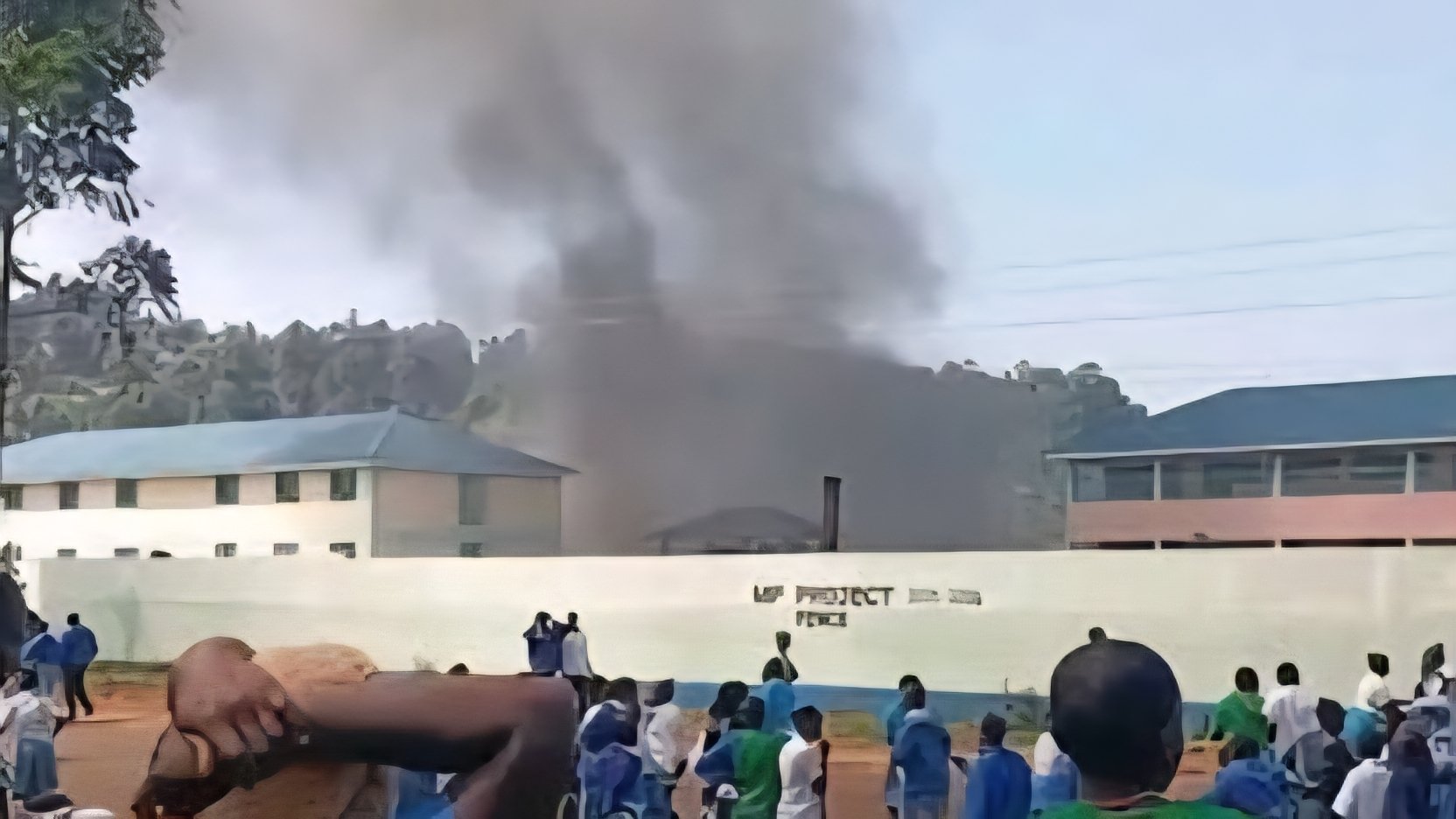

Tensions in Kenyan learning institutions escalated into open unrest on July 7, 2026, when students clashed with teachers and set a dormitory on fire. The incident adds to a disturbing pattern of structural damage and safety crises across the country's educational infrastructure.
Eyewitnesses reported a thick plume of dark smoke rising from the burning facility, as the confrontation unfolded within the school compound. Emergency response teams and local security personnel were deployed to contain the property destruction, and restore order among the rioting learners.
The destruction of the institutional building comes amidst heightened national concerns regarding the structural safety and capacity limits of boarding facilities in the country. Observers note that recurring fires frequently expose severe gaps in emergency exits, and safety compliance.
Earlier in 2026, a devastating inferno at Utumishi Girls Academy (UGA) in Gilgil resulted in the deaths of 16 students and injuries to dozens more. That tragedy led to the temporary closure of the institution, and a phased reopening under strict security guidelines.
Following that incident, Ministry of Education (MOE) officials and public works inspectors faced intense pressure to review building compliance certificates. Investigators in the Gilgil case eventually approved murder charges against several minors suspected of deliberately starting the blaze.
The persistent nature of these fires highlights ongoing structural vulnerabilities within school blocks, where congestion often complicates evacuation protocols. Architectural experts have repeatedly warned that many older dormitories lack adequate fire-retardant materials, and modern suppression systems.
In response to the recurring crises, the Kenya National Bureau of Standards (KEBS) and local county planning departments have been urged to enforce stricter building codes. Many institutions continue to struggle with overcrowding, which strains existing electrical networks and emergency infrastructure.
National assembly representatives have previously called for a comprehensive audit of all boarding school facilities to identify high-risk structures. The continuous reliance on timber trusses and congested dormitory layouts remains a primary concern for structural engineers monitoring public safety.
While local authorities launch formal investigations into the latest outbreak of school unrest, school management boards face immediate logistical challenges. Rebuilding damaged infrastructure requires substantial capital, forcing institutions to seek emergency allocations, or rely on community contributions.
The rising frequency of arson cases in schools has prompted architectural firms to advocate for fireproof compartmentalization in new designs. Incorporating independent escape routes and flame-resistant barriers is increasingly seen as essential for protecting student life, and public infrastructure.
Security officers remain stationed at the affected institution, as investigators document the extent of the structural damage. The incident underlines the urgent need for a systematic overhaul of safety enforcement mechanisms within Kenya's institutional building sector.
Public works engineers emphasize that structural assessments must look beyond visible fire damage to evaluate foundational integrity. Intense heat can weaken concrete pillars and steel reinforcements, making complete demolition and reconstruction necessary in severe cases.
The financial strain of replacing destroyed facilities places a heavy burden on taxpayers, and institutional development budgets. Stakeholders continue to push for the mandatory installation of automated fire alarms and overhead sprinkler systems across all public boarding institutions.
As structural debris is cleared, the immediate focus remains on securing alternative accommodation for the displaced student population. The incident serves as a stark reminder of the fragile state of institutional infrastructure safety across the country.
Comments (0)
Leave a Comment
No comments yet. Be the first to share your thoughts!