

A version of this article appeared on Bloomberg Businessweek.
The British automotive landscape is undergoing a swift shift, as an imported Chinese vehicle challenges local traditions.
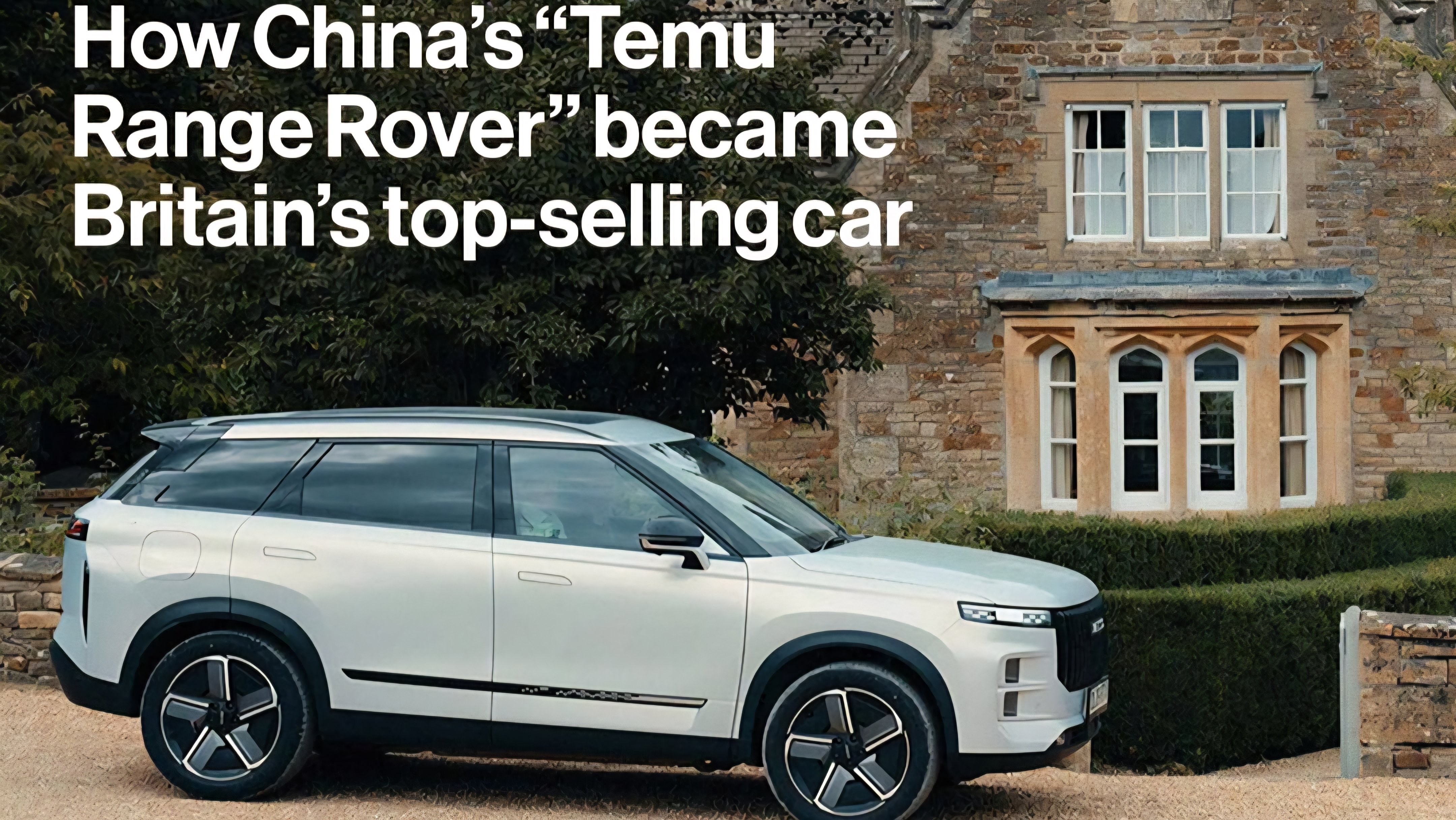
The Jaecoo 7, which is a sport utility vehicle (SUV) manufactured by Chery Automobile Co. (Chery), has rapidly climbed the sales charts in the United Kingdom (UK). Buyers have embraced the vehicle, which has now outpaced domestic luxury alternatives.
British drivers are purchasing this model in high numbers, which led to it becoming the top-selling car in the country during March. Local motorists and social media commentators have given the vehicle a distinct nickname, calling it the Temu Range Rover.
This moniker reflects its aesthetic resemblance to premium British models, but it highlights the significantly lower price tag. The entry-level petrol variant costs approximately 30,000 pounds, which is far less than the local competition.
A comparable Range Rover Evoque manufactured by Jaguar Land Rover (JLR) starts at around 45,000 pounds, which represents a massive price gap. Budget-conscious consumers find this massive difference highly appealing, especially during tough financial times.
The Chinese model includes premium features such as a sunroof and heated front seats as standard equipment. These components are usually expensive optional extras on British luxury vehicles, which adds to the value proposition.
Furthermore, the vehicle comes with an extensive seven-year warranty, which provides peace of mind. Land Rover only offers a three-year warranty coverage, which makes the imported option seem much more reliable to prospective buyers.
This shifting consumer preference is creating ripples through the local manufacturing sector, which faces intense pressure. Nissan Motor Co. (Nissan) is currently exploring an agreement to share its massive factory in Sunderland with its Chinese rival.
The two automotive companies have signed a non-binding memorandum of understanding, which could alter local production schedules. Under this proposed arrangement, the assembly of Chery vehicles could commence at the British plant by 2027.
Nissan will maintain ownership of the facility, and it will remain the direct employer of the industrial workforce. This potential collaboration follows a decision by the Japanese manufacturer to consolidate its production onto a single assembly line.
Data from the Society of Motor Manufacturers and Traders (SMMT) shows the scale of this market disruption. In April, the market share of Chery brands reached 6.7 percent, while the long-established Japanese manufacturer dropped to 2.7 percent.
Beyond the shores of the British island, these dynamics are causing anxiety within the broader European Union (EU). European policymakers are discussing regulatory changes, because they want to protect their domestic automotive factories from foreign dominance.
The proposed measures could restrict key subsidies for any passenger cars manufactured outside the trading bloc. This presents a critical threat to British factories, because the continental market remains their primary destination for automotive exports.
Despite these political discussions, individual buyers remain focused on the immediate financial benefits of the imported models. The high-volume sales achieved by the new entry indicate that market realities are overriding historical brand loyalties.
Comments (0)
Leave a Comment
No comments yet. Be the first to share your thoughts!