
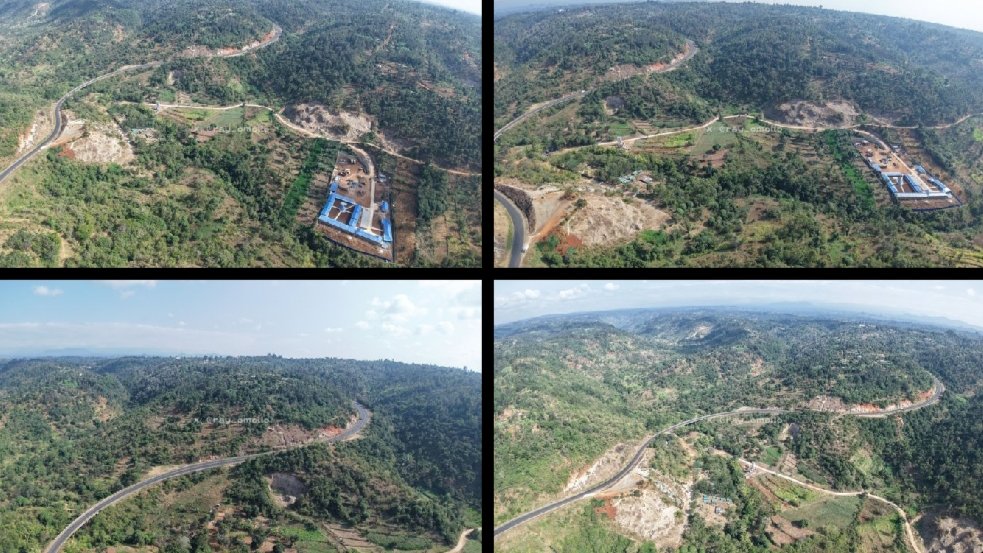

Construction has advanced into the active phase on the replacement of the Nithi Bridge, long known as one of Kenya’s deadliest road accident blackspots. The original structure, built and commissioned in 1985 during the administration of President Daniel arap Moi, claimed hundreds of lives over nearly four decades.
The project is being implemented by the Kenya National Highways Authority. Site possession has been completed, the contractor has mobilised and site facilities have been established.
Works involve a complete realignment of the notorious section of the Makutano–Embu–Meru Highway. The new alignment measures 2.77 kilometres and features a gentle 1.2 percent gradient designed to improve vehicle control, particularly for heavy trucks and buses.
An 880-metre viaduct will soar approximately 100 metres above the valley. The elevated structure is intended to eliminate the dangerous descent and sharp bends of the existing crossing.
The upgraded corridor will also include enhanced crash barriers, wider carriageway separation and pedestrian walkways. These features are expected to significantly improve safety along the section.
Principal Secretary for Internal Security and National Administration Dr Raymond Omollo said the State Department continues to support implementation through coordination of national government structures, stakeholder engagement and road safety awareness.
The intervention by the current administration is presented as a permanent solution to a longstanding hazard. The original bridge had earned the grim nickname “The Killer Bridge” because of the high number of fatal accidents recorded there.
No revised completion date was provided in the latest update. Progress is currently focused on the early construction phase following mobilisation of the contractor and establishment of site facilities.
The combination of a milder gradient and a high-level viaduct directly addresses the geometric deficiencies that contributed to the high accident rate. Safety elements such as barriers and walkways form part of the comprehensive redesign.
Local and national authorities are coordinating to ensure smooth execution. The project sits on a key inter-county route linking Meru, Embu and the wider Mount Kenya region to the rest of the country.
Further updates are expected as earthworks and structural construction gather pace. The viaduct’s height and length make it one of the more significant bridge replacements currently under way in Kenya.
Heavy commercial traffic has long been vulnerable on the old alignment. The new design prioritises control and visibility for trucks and buses that previously struggled with the steep descent and tight curves.
Pedestrian facilities are included to improve safety for non-motorised users who also use the corridor. Wider separation of carriageways is intended to reduce the risk of head-on collisions.
The State Department’s involvement reflects the broader government interest in reducing road fatalities on known blackspots. Coordination with KeNHA and local administration is ongoing as the works proceed.
Comments (0)
Leave a Comment
No comments yet. Be the first to share your thoughts!