
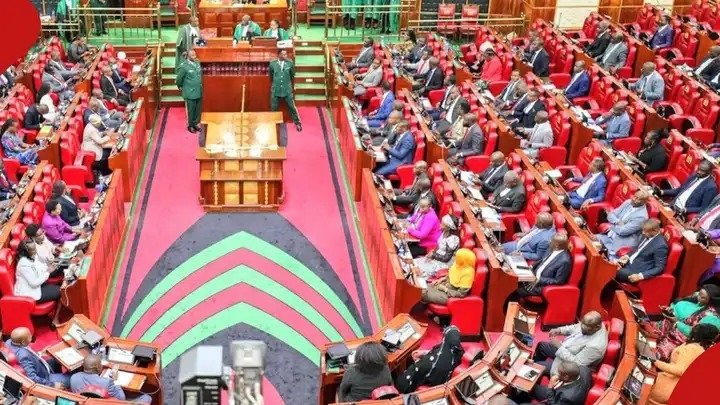

Kenyan MPs have rejected proposals to ease salary taxes under the Finance Bill 2026. The National Assembly Finance and National Planning Committee made the decision after public consultations.
Molo MP Kuria Kimani chairs the committee. Its report recommends changes that lower the bill’s projected additional revenue from KSh 120 billion to KSh 98.5 billion.
The rejection of PAYE adjustments is widely seen as unfavourable for workers. It leaves salaried employees in construction and other sectors without relief from current tax bands.
Experts from the Institute of Certified Public Accountants of Kenya, Kenya Bankers Association and others had called for exempting those earning below KSh 30,000 monthly. The committee noted these views but kept the existing structure.
Under current rules the first KSh 24,000 faces 10 percent tax. Higher portions attract 25, 30, 32.5 and 35 percent rates up to and beyond KSh 800,000 monthly. This maintains the full burden on take-home pay for engineers, supervisors and artisans.
In contrast the committee rejected several other Treasury proposals that could have raised costs elsewhere. This includes plans to reclassify inputs from zero-rated to exempt VAT status.
Retaining zero-rated treatment allows manufacturers to claim full refunds on raw materials. The decision covers components for solar batteries, lithium-ion products, electric vehicles and mobile phones.
Such protections help hold down prices for technologies used increasingly on construction sites and in green infrastructure. The committee warned that reclassification would have increased costs for assembled goods and even farm-to-mill transport.
Animal feed and pharmaceutical inputs also keep zero-rated benefits. These stabilise supply chains linked to building projects.
MPs further rejected a 60 percent deemed dividend distribution threshold. This spares companies that retain profits for reinvestment from being taxed as if profits were distributed. Construction firms often rely on retained earnings for equipment purchases.
A proposed excise duty on mobile devices was completely removed. Lawmakers prioritised support for local manufacturing over the new levy.
The committee also watered down plans for computerised pre-populated tax returns. Taxpayers will have safeguards to review and object to automatic filings.
These outcomes arrive as the government eyes a KSh 4.82 trillion budget for the 2026/27 fiscal year. The lower revenue forecast may push borrowing higher.
For the construction industry the PAYE rejection represents a clear negative for labour costs and worker disposable income. Yet the blocking of VAT reclassifications, excise duties and deemed dividends offers relief on material inputs and business cash flow.
Kuria Kimani said the committee sought balance between revenue mobilisation, taxpayer protection and economic growth. The process drew from over 100,000 Kenyan submissions. Parliament now faces final debate on the report.
Comments (0)
Leave a Comment
No comments yet. Be the first to share your thoughts!