
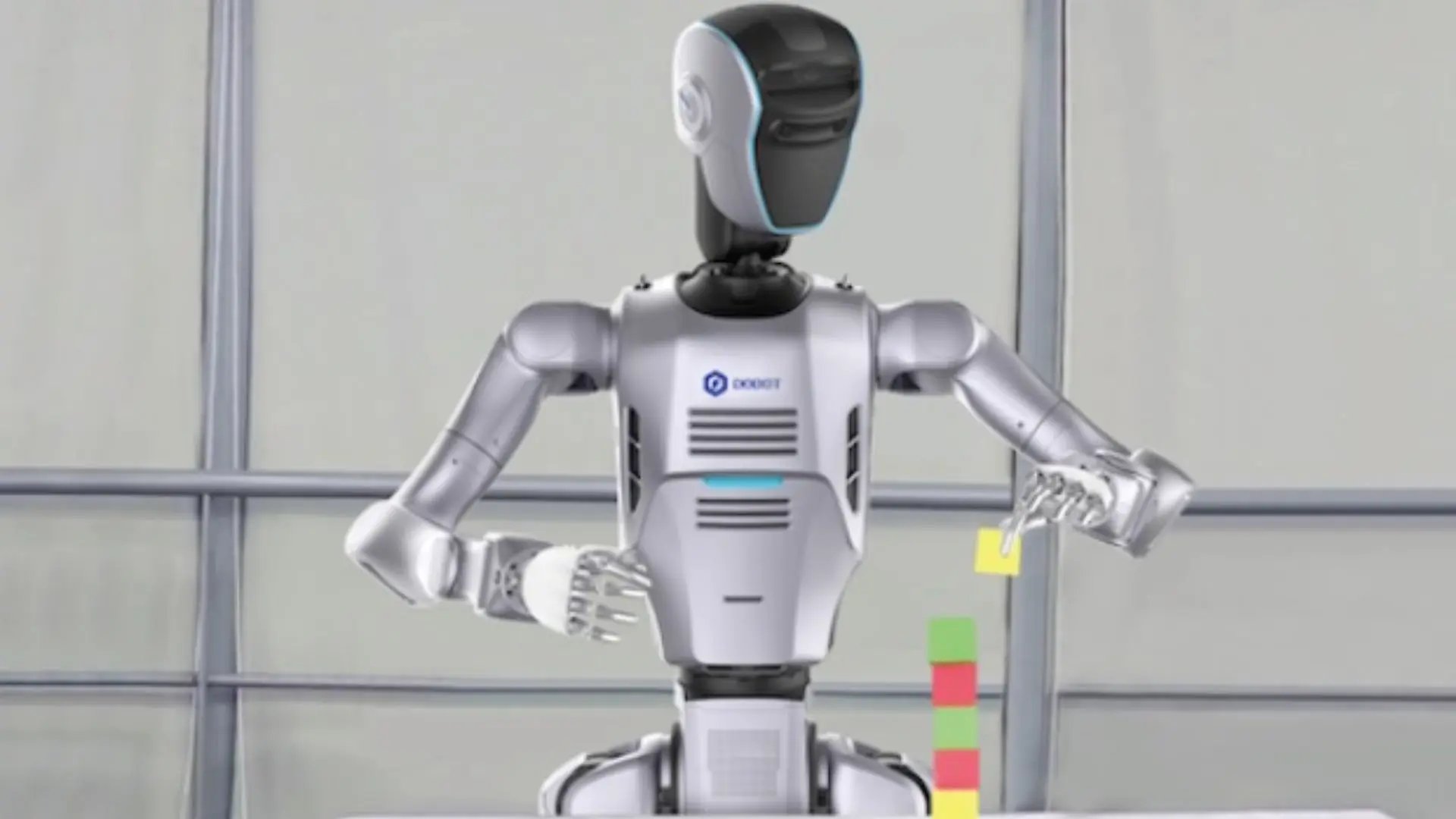

Robotics manufacturer DOBOT has introduced its newest humanoid system, named LUMO, during a global product reveal. The unit stands 1.3 meters tall, and it is designed to operate across multiple unstructured environments.
Company engineers built the machine around an integrated Artificial Intelligence (AI) model that processes vision, voice, and motion inputs simultaneously. This setup allows the unit to adjust its movements when traversing varying surfaces like sand, lawn, and cobblestone.
The launch follows earlier demonstrations of the company's Atom platform, which showcased remote manipulation abilities using Virtual Reality (VR) teleoperation. That system completed complex tasks including cooking, while operators controlled movements from distant locations.
Unlike traditional indoor industrial units, LUMO operates across domestic spaces, commercial shopping malls, and educational campuses. Built-in navigation systems help the machine calculate paths around moving obstacles, which keeps operations quiet during night hours.
The development arrives as construction firms evaluate field robotics for site monitoring and survey work. Unstructured terrain capabilities remain essential for automated machinery intended for active job sites, where ground conditions change continuously.
Field testing videos released alongside the announcement show the compact frame negotiating uneven ground without external tethering. The unit uses a self-developed software architecture, which processes environmental data to maintain balance across shifting slopes.
Contractors in major infrastructure projects increasingly look toward mobile sensing hardware to track daily progress. Systems that combine multi-terrain mobility with AI vision offer potential applications for perimeter inspections, site security, and material inventory checks.
While earlier humanoid designs required flat concrete flooring, new gait control algorithms allow two-legged systems to navigate rougher surfaces. Developers designed the chassis to withstand minor impacts, which helps prevent structural damage during unexpected falls.
The manufacturer confirmed that the system incorporates multimodal sensors capable of interpreting human vocal commands and visual cues. Operators can issue direct instructions or program specific route patterns depending on operational demands.
In educational and institutional settings, the platform provides interactive assistance and automated patrols. The dual-arm configuration allows basic handling of lightweight items, which expands potential utility beyond simple visual surveillance tasks.
Industry analysts note that rapid advancements in embodied AI algorithms have shortened hardware development cycles significantly. Robotics firms now release commercial iterations faster, as software updates continuously improve balance and task accuracy.
Earlier tests with the Atom unit demonstrated how VR interface controls enable precise motor execution across long distances. That teleoperation baseline helped developers refine control loops now implemented in LUMO's autonomous navigation suite.
The compact 1.3-meter stature reduces risk during close-quarters interaction with human workers on busy project sites. Reduced weight profiles also extend battery endurance, which allows longer operational cycles between charging station docking intervals.
As automation spreads across logistics, facility management, and construction inspection, versatile locomotion becomes a primary requirement. Firms aiming to deploy robotic monitors require platforms that handle stairs, ramps, and unpaved access paths seamlessly.
The manufacturer plans to rollout initial units to select institutional partners for real-world deployment evaluations. Feedback from these trials will inform future production runs, as developers refine gait performance across specialized commercial sites.
The transition from fixed factory arms to mobile, multi-environment humanoids marks a deliberate shift toward flexible automation. Further performance metrics and commercial availability details are expected in upcoming technical briefings from the manufacturer.
Comments (0)
Leave a Comment
No comments yet. Be the first to share your thoughts!