
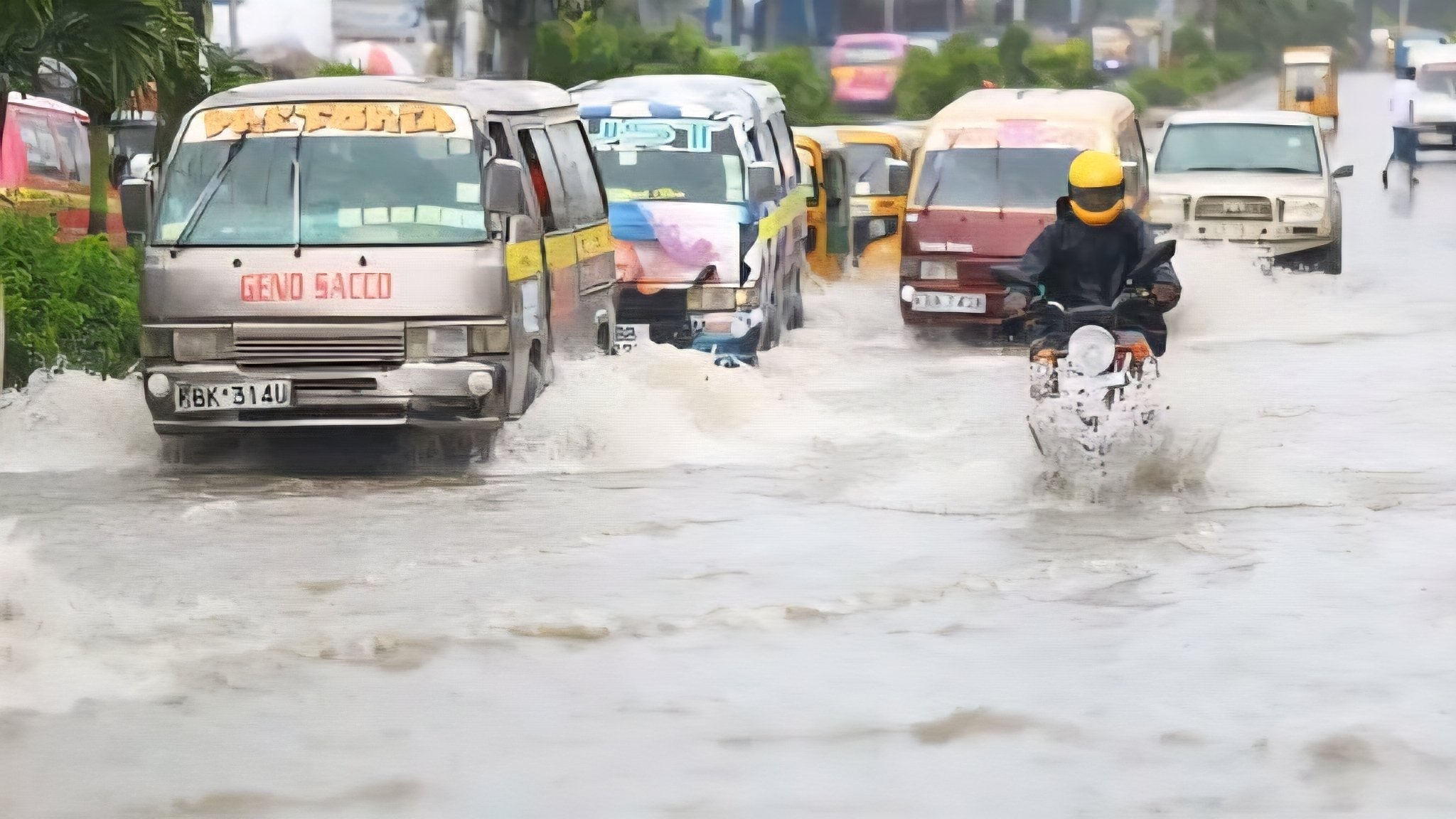

Kenya is entering a period of heightened weather risk as forecasts point to a potentially very strong El Niño event in the latter part of 2026.
The Kenya Meteorological Department has assessed an 81% probability of a very strong El Niño. There is a 97% likelihood that the event could persist into early 2027.
Above-normal rainfall is expected to increase from October. This raises concerns over flooding and the disruptions that often accompany it.
Weather and disaster-risk experts have warned that heavy rainfall could produce flash floods and riverine flooding. Lake backflow is also a concern, particularly around Homa Bay, Kisumu and Nakuru where water levels are already high.
The expected conditions present risks that extend beyond the environment. Flooding can damage roads, bridges and drainage systems, cutting transport links and restricting access to affected communities.
Infrastructure such as power lines, buildings and communication networks is vulnerable when water levels rise quickly. Evacuation centres and public facilities may come under pressure as people seek temporary shelter.
Emergency and security teams could face increased demand during sudden-onset flooding. Supply chains and business operations risk disruption where key corridors become impassable.
A principal concern is the possibility of rapid flooding overwhelming local response capacity. This is especially true where communities receive warnings late or lack practical evacuation arrangements.
Accurate forecasts alone do not guarantee safety. Warnings must reach exposed populations in time and be understood clearly enough to prompt action. The current gap in last-mile communication remains a vulnerability.
Security and business continuity teams are advised to begin pre-season preparedness now, before the expected October escalation.
Priorities include identifying flood-prone routes and facilities, reviewing alternative transport corridors, and mapping vulnerable staff and assets. Emergency communication arrangements should be checked. Locations where flooding could rapidly affect access or operations need to be identified early.
The situation remains forecast-dependent and subject to further updates from the meteorological department. Monitoring will continue as the seasonal outlook is refined.
The developing El Niño is best treated as a forward-looking operational risk that requires early preparation. Waiting for heavy rainfall to begin before activating contingency measures leaves less room for effective response.
Low-lying areas, river basins and communities around vulnerable lakes face the highest exposure. Road networks that already struggle with drainage in normal seasons are likely to come under greater strain.
Construction sites and incomplete infrastructure works may also face delays or damage if water levels rise sharply.
The combination of elevated rainfall probability and existing infrastructure challenges in several regions underlines the need for coordinated readiness across agencies and operators.
How well warnings are communicated and how quickly practical measures are put in place will influence the scale of disruption once the rains intensify.
Kenya has experienced the impacts of strong El Niño events in previous cycles. The current forecast places renewed focus on the ability of roads, drainage and other built systems to cope with sustained above-normal rainfall.
Preparedness efforts started now can reduce the pressure on response systems later in the season.
Comments (0)
Leave a Comment
No comments yet. Be the first to share your thoughts!