
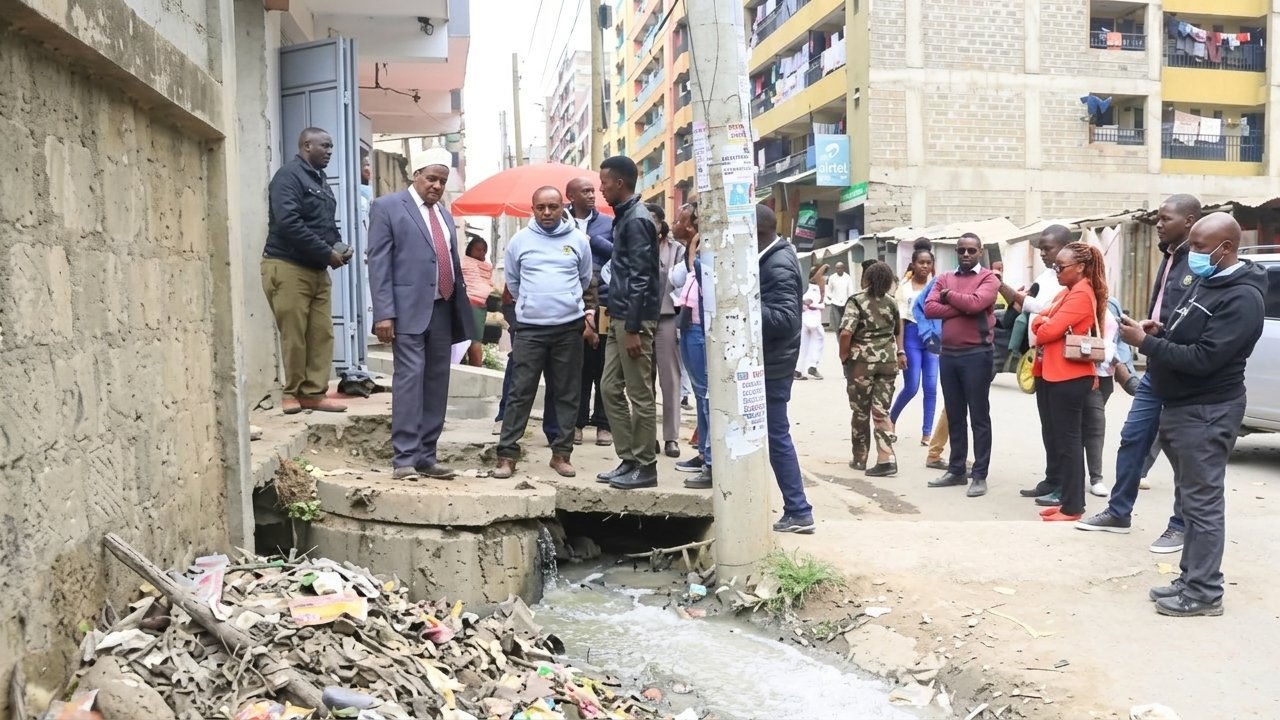

Thousands of residents in Nairobi’s Pipeline Estate have been told to prepare for major changes after government agencies received orders for immediate action on environmental and infrastructure problems.
The National Environment Management Authority convened a multi-agency meeting on Tuesday at the Deputy County Commissioner’s office in Embakasi South.
A survey followed to assess conditions across the estate. It identified traffic congestion, unplanned development and poor road infrastructure as key concerns.
Inadequate solid waste management, poor drainage systems, food safety risks, sewerage challenges and an abandoned quarry site also featured among the findings.
The survey came after a directive from Head of Public Service Felix Koskei, channelled through Environment Principal Secretary Festus Ng’eno.
All relevant agencies must now undertake corrective measures within their mandates and develop longer-term interventions for the estate.
NEMA said the coordinated effort will bring national and county bodies together to improve living conditions, environmental management and public safety.
The Authority has also engaged Producer Responsibility Organisations. These groups play a role in managing post-consumer waste under the Extended Producer Responsibility Regulations of 2024.
Pipeline Estate lies nine kilometres from Nairobi’s central business district in Embakasi South. It is home to more than 200,000 people and ranks among the city’s most densely populated neighbourhoods.
The area consists largely of tightly packed multi-storey buildings, many offering single-room units that serve low-income earners and people who have moved from rural areas in search of work.
Years of rapid and largely unregulated construction have left roads, drainage and other infrastructure unable to keep pace with the growing population.
Residents have long reported persistent traffic jams, limited water supply, irregular waste collection, blocked drains and overflowing sewers, particularly during heavy rains.
The combination of dense housing, strained services and the newly flagged food safety risks has placed the estate under closer official scrutiny.
Officials inspected the area as part of the survey process. Photographs released by NEMA show teams moving through the estate and examining sites linked to waste and drainage.
The presence of an abandoned quarry adds another layer of concern in an already constrained urban setting.
Immediate corrective steps are expected from the agencies involved, though the precise form and timing of those actions remain to be detailed.
Longer-term plans will need to address both the physical infrastructure deficits and the environmental pressures that have accumulated over years of unplanned growth.
For residents, the survey and subsequent directive mark a shift from long-standing complaints to a formal multi-agency response.
How quickly the identified problems of roads, drainage, waste and sewerage are tackled will determine the practical impact of the new instructions.
The engagement of Producer Responsibility Organisations points to a focus on waste streams that affect both the environment and public health in the densely built neighbourhood.
Pipeline Estate’s location close to the city centre and its role as affordable housing for large numbers of workers make the condition of its infrastructure a matter of wider urban concern.
The findings underline the strain that rapid, unregulated building places on basic services in high-density residential areas.
Agencies now face the task of translating the survey results into visible improvements on the ground.
Comments (0)
Leave a Comment
No comments yet. Be the first to share your thoughts!