

A version of this article appeared on LinkedIn by Interesting Engineering.
Global defense procurement trends show massive new investments in heavy armor, despite heavy battlefield losses. Data from the United States military reveals thousands of armored platforms destroyed recently, but international armies continue ordering upgrades rather than abandoning heavy vehicles.
Images of burning T-72 and T-90 platforms alongside Western Leopards and Abrams vehicles initially suggested that heavy armor was obsolete. However, procurement registries indicate that nations are buying and upgrading systems to retain battlefield dominance.
Modern engineering desks face unprecedented vertical pressures from low-cost aerial technology. For decades, designers focused on horizontal threats from opposing cannons or an Anti-Tank Guided Missile (ATGM), building thick front shells.
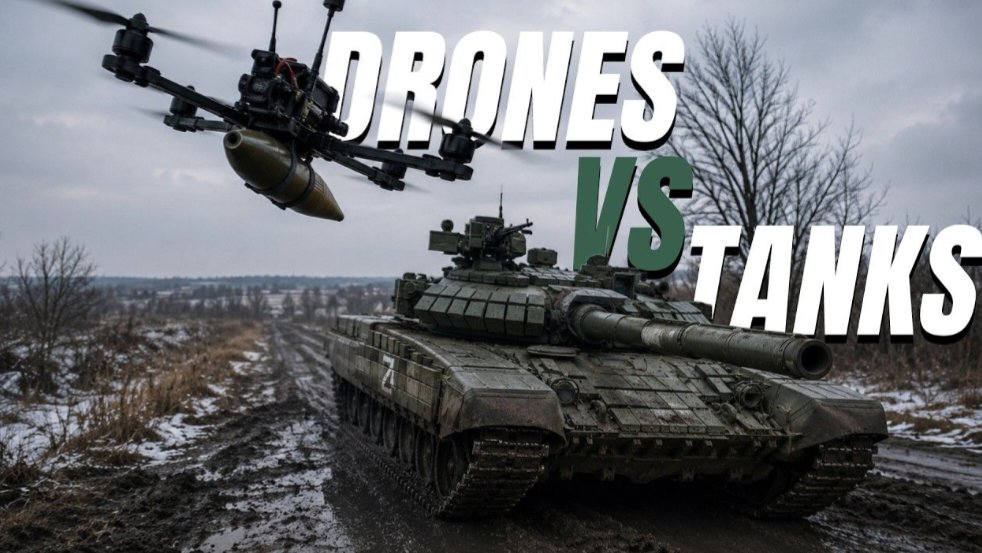
Cheap First-Person View (FPV) drones now bypass traditional defenses by striking vulnerable top turret plates or rear engine decks. A five-hundred-dollar drone can disable multi-million-dollar systems, although this pressure is forcing rapid design evolution.
Loitering munitions hover over targets before diving vertically, which completely disrupts conventional defensive design models. Furthermore, overhead quadcopters feed real-time Global Positioning System (GPS) coordinates directly to artillery batteries with live video feeds.
The development of the American M1E3 variant illustrates this shifting design philosophy. Rather than simply adding heavy steel plates, manufacturers install advanced thermal imagers and comprehensive sensor networks, but they focus on creating a digital nervous system.
These networks connect each vehicle to a broader defensive web, allowing crews to receive reconnaissance data from remote aerial units. Modern platforms operate beneath a coordinated protective canopy of short-range air defense, if deployed correctly.
Vehicles also incorporate an Active Protection System (APS) designed to intercept incoming projectiles before impact. Western manufacturers utilize platforms like the Trophy system, but alternative packages are being tested to counter miniature aerial threats.
Future vehicle concepts include dedicated counter-drone jammers and directional weapons built into the chassis. Designers are modifying existing warning sensors, so they can detect small Unmanned Aerial Vehicle (UAV) systems approaching from high angles.
Russian design bureaus altered their manufacturing lines to produce the updated T-90M Proryv tank. Early variants suffered severe losses due to exposed ammunition storage and inadequate situational awareness, but the newer model features a heavily reworked turret.
Field workshops now install steel screens and improvised roof cages to shield crews from vertical attacks. These physical modifications look basic, but they clearly show that modern combat personnel fear overhead threats far more than frontal strikes.
Similar survival adaptations appear across international borders. Western crews apply specialized thermal camouflage netting, while Russian units bolt on physical metal grates, because concealment has become vital for survival on modern battlefields.
Armored tactics have changed to emphasize shorter movements between covered positions. Crews park under heavy cover and move in rapid bursts, because any open field is treated as a highly lethal zone.
**Battlefield Operational Sequence:**
* Aerial scouts deploy first to locate hidden defensive lines.
* Fixed-wing systems map active weapon emplacements.
* Heavy units advance only after receiving clear aerial intelligence.
Battalions no longer advance blindly, when scout drones must fly ahead to map enemy ambushes. Heavy armor units wait for clear aerial intelligence, before executing short bounds across contested terrain.
New manufacturing programs like the European Leopard 2A8 and the South Korean K2 incorporate advanced battle management software. These systems allow constant communication with artillery units and command posts, if synchronization is required.
The main tank gun remains the primary tool for destruction, but aerial eyes now guide its targeting. Modern turrets function as armored data hubs rather than simple weapons mounts.
Heavy mobile cannons remain indispensable for breaking through fortified positions or holding key intersections. Military commanders continue to purchase heavy armor, although the vehicles must adapt rapidly to survive an environment filled with flying predators.
Comments (0)
Leave a Comment
No comments yet. Be the first to share your thoughts!