
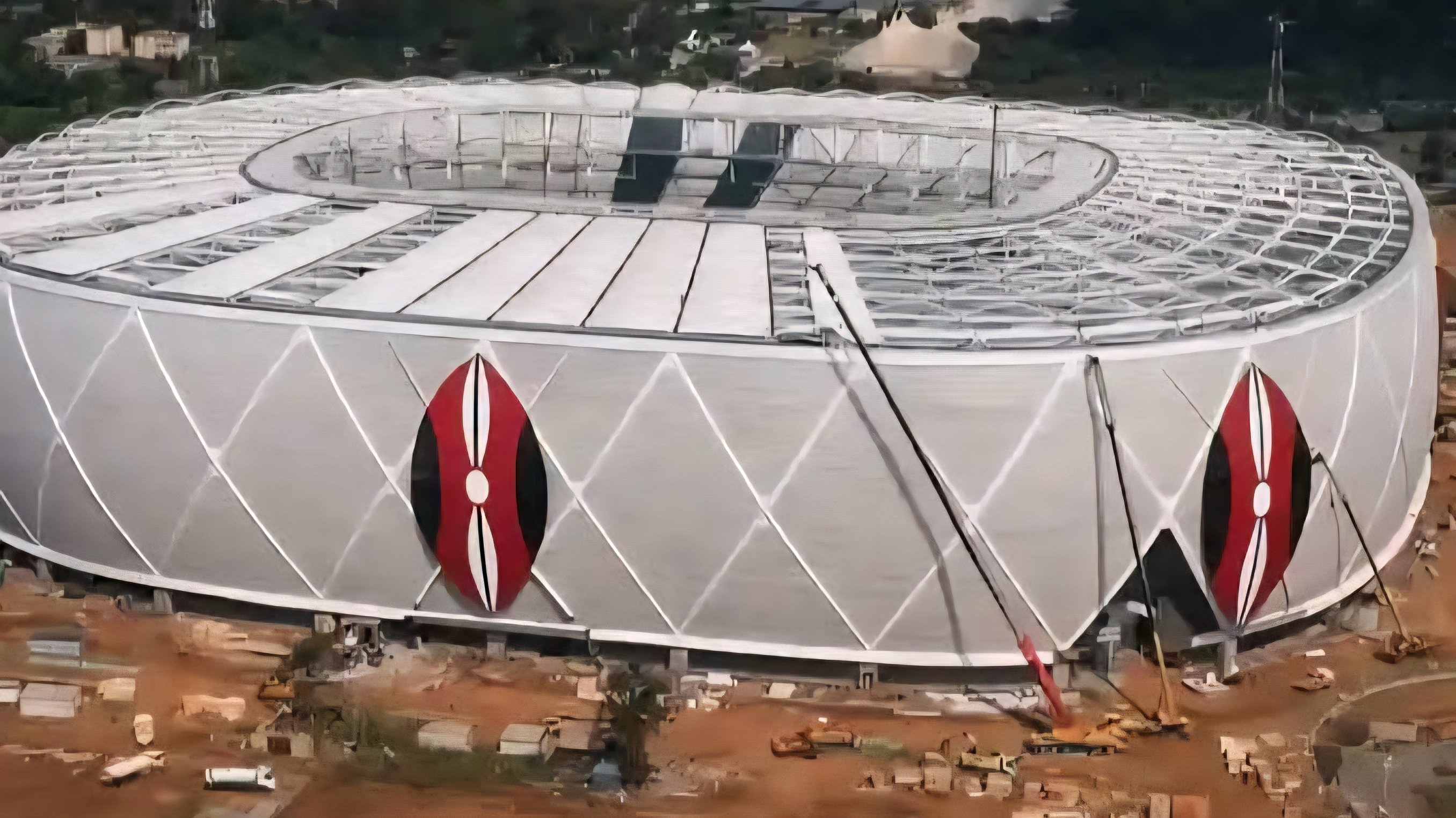

The Ministry of Sports has detailed the construction timelines for the stadiums expected to host the 2027 Africa Cup of Nations, confirming that the Kenyan government is working against a December 2025 deadline. Principal Secretary Peter Tum informed the National Assembly’s Sports and Culture Committee that the state is currently managing three major projects simultaneously to ensure compliance with CAF requirements.
The Talanta Sports City project in Nairobi remains the centerpiece of this development. Unlike the renovations of existing facilities, this is a purpose-built stadium designed specifically for football and rugby. Construction began earlier this year following a ground-breaking ceremony led by President William Ruto. The Ministry has indicated that this facility must be completed by December 2025 to allow for test events and final inspections by continental football officials.
Kasarani Stadium, which has been closed to the public for several months, is undergoing a total overhaul. The work involves the replacement of the seating areas, upgrades to the lighting systems, and a complete redesign of the changing rooms and media facilities. According to the updates provided to Parliament, the contractor is tasked with returning the stadium to a functional state that meets international standards by the end of next year.
The status of Nyayo National Stadium has been a point of contention for local football stakeholders. While the facility was recently used for preliminary continental matches, it still requires extensive upgrades to its floodlights and VIP sections to be cleared for AFCON matches. The government plan involves a phased renovation that balances the need for construction progress with the current demands for a venue to host local and international fixtures.
Funding for these projects has been channeled through various departments, with the Kenya Defence Forces playing a supervisory and implementation role in some of the sites. This involvement is intended to fast-track the procurement and construction phases, which have historically faced delays in large-scale public infrastructure projects. The Principal Secretary noted that the budget is being monitored to ensure that the heavy investment results in facilities that can be maintained long after the tournament concludes.
Beyond the three primary venues in Nairobi, the government is also looking at the regional requirements for training pitches. CAF regulations dictate that every host stadium must be supported by at least two nearby training grounds of similar turf quality. This has initiated discussions regarding the upgrade of smaller pitches in the capital and potentially other regions, though the primary focus remains on the main competition venues.
The 2027 tournament will be a joint hosting effort between Kenya, Uganda, and Tanzania. This tripartite arrangement puts pressure on each nation to meet the infrastructure benchmarks at a similar pace. While Uganda and Tanzania have also commenced work on their respective stadiums, the Kenyan Ministry of Sports is aware that any significant delay in Nairobi could impact the viability of the entire Pamoja Bid.
Members of the parliamentary committee questioned the Ministry on the sustainability of these stadiums. In response, the secretariat indicated that the design of the Talanta Sports City includes commercial spaces intended to generate revenue outside of match days. The goal is to avoid the creation of white elephants that become a drain on the national treasury once the three-week tournament ends.
The upcoming months will be critical for the Ministry as they move from the foundation and structural phases at Talanta Sports City to the fit-out stages. Regular inspection tours by CAF delegates are expected to commence in early 2025 to monitor the progress of these sites. For now, the focus remains on the December 2025 completion date, leaving the government a little over 20 months to deliver three world-class venues.
Comments (0)
Leave a Comment
No comments yet. Be the first to share your thoughts!