
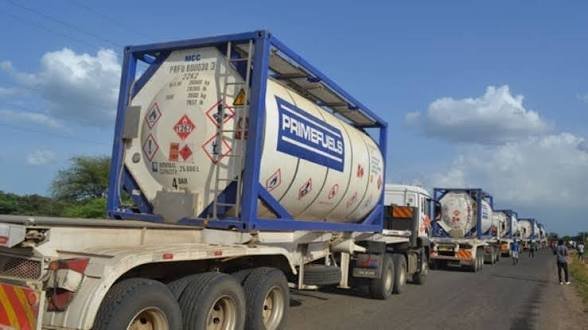

Rising fuel prices across the country have triggered a series of policy adjustments and fiscal interventions aimed at stabilizing the domestic economy.
Recent data from the Energy and Petroleum Regulatory Authority (EPRA) indicates sustained volatility in refined petroleum import costs, placing pressure on critical transport and commercial sectors.
To counter the escalation, President Ruto confirmed that government spending targeted fuel stabilization programs and temporary tax relief.
The Value Added Tax (VAT) on petroleum products underwent a temporary reduction, alongside direct allocations from the Petroleum Development Levy Fund (PDLF) to keep pump prices from spiking further.
The economic strain is particularly visible across logistics networks, where high diesel prices directly increase operational expenditures.
According to data from the Kenya National Bureau of Statistics (KNBS), commercial transport and supply chains remain highly sensitive to fluctuations in imported fuel costs, driving up retail prices for industrial inputs.
Political figures and civil society groups have expressed concerns over the long-term sustainability of temporary price-smoothing mechanisms.
Several opposition leaders have demanded greater transparency regarding the precise calculation formula utilized by EPRA, urging structural reforms to mitigate external oil market shocks.
Moving forward, policy discussions center on expanding strategic petroleum reserves and funding grid infrastructure improvements.
While short-term state support has offered brief periods of relief to transport operators and civil contractors, permanent stability requires systematic reform across energy importation and distribution channels.
Comments (0)
Leave a Comment
No comments yet. Be the first to share your thoughts!