
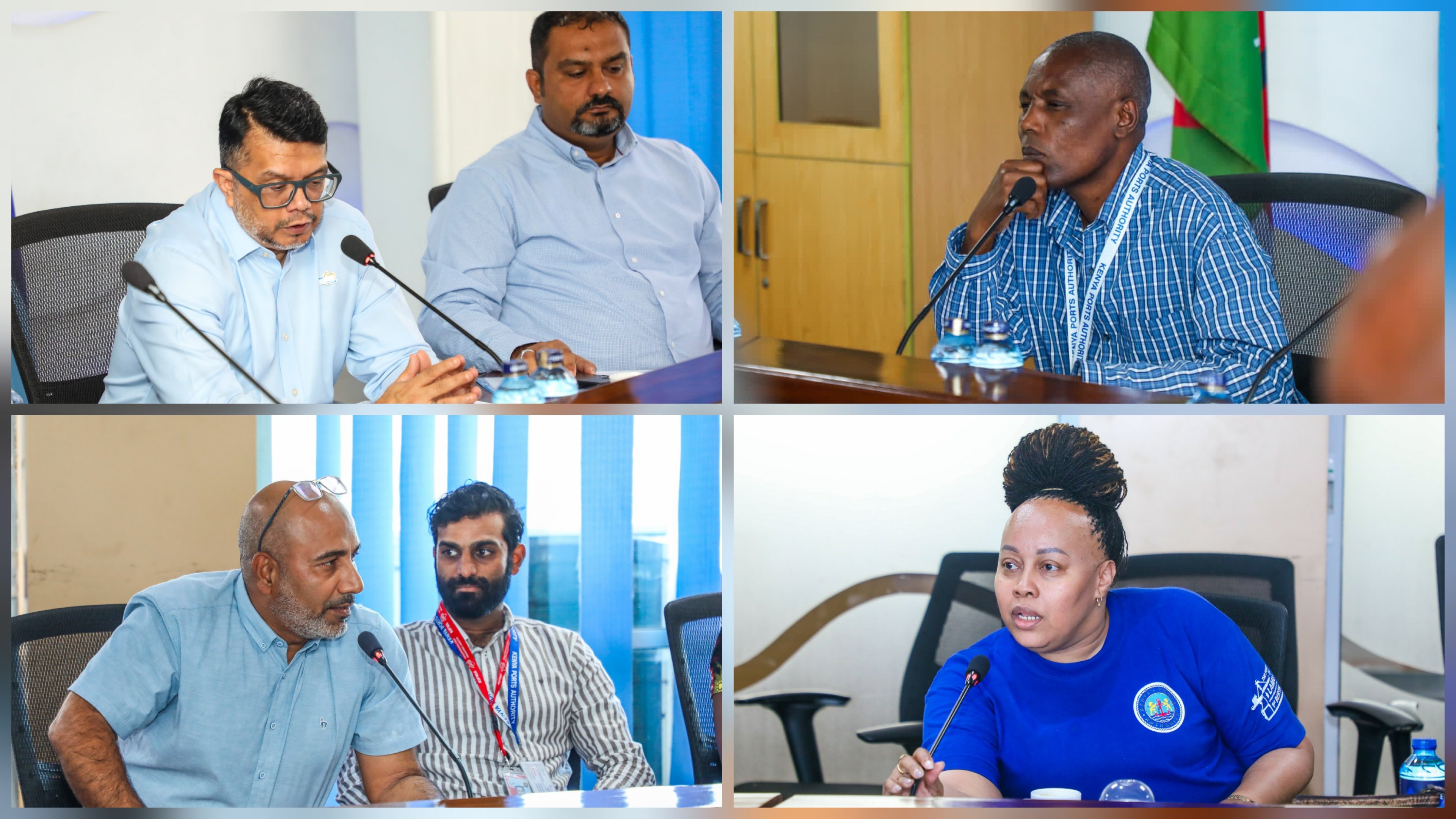

A delegation from the Kenya Association of Manufacturers (KAM) has held discussions with the Kenya Ports Authority (KPA) leadership at the Port of Mombasa, pledging to deepen collaboration to enhance the facility's overall operational efficiency.
The commitment was delivered by Mr Rashid Mohamed, a KAM board member and the Chairman of the Infrastructure Committee, during a formal visit to the coastal maritime hub.
The meeting was chaired by KPA General Manager of Finance and Commercial Services, Mr Geoffrey Kavate, who represented the Chief Executive Officer, Capt. William Ruto.
Discussions centred on ongoing port infrastructure expansion, operational efficiency, and the strengthening of stakeholder relations.
Mr Kavate underscored that the authority would continue engaging industry players and addressing their concerns.
He added that KPA remains committed to maintaining a strong partnership with manufacturers, noting that increased cargo volumes at the facility are closely linked to the performance of the manufacturing sector.
On his part, Mr Rashid commended the ongoing infrastructure improvements at the port, but he called for sustained collaboration to address logistical bottlenecks affecting supply chains.
Manufacturers depend heavily on seamless port operations, from cargo handling to clearance timelines, Mr Rashid said.
He noted that the strides made by KPA are encouraging, adding that manufacturers are ready to work together to ensure these gains translate into lower costs and improved competitiveness.
Mr Rashid said manufacturing remains a key pillar of Kenya’s economy, contributing to employment and gross domestic product while supporting regional trade.
The board member further added that the sector’s performance is closely tied to the efficiency of logistics corridors, particularly the Port of Mombasa, which handles millions of tonnes of cargo annually and serves several land-linked countries.
The manufacturing sector relies heavily on these gateways to remain competitive globally.
A reliable port system directly translates to stable production schedules, which prevents unnecessary factory downtime and product shortages in consumer markets.
Infrastructure delivery remains a significant focal point for public agencies, given that maritime logistics capacity dictates the broader economic pacing for commercial enterprises across East Africa.
Streamlining clearance processes and investing in heavy berth infrastructure are considered critical steps to maintaining regional market leadership.
Sustained engagement between state agencies and industrial sector representatives is expected to guide upcoming terminal upgrades and transport link integrations.
Both organisations indicated that future technical committees would continue tracking efficiency metrics to eliminate remaining friction points along the transit pipeline.
Comments (0)
Leave a Comment
No comments yet. Be the first to share your thoughts!