
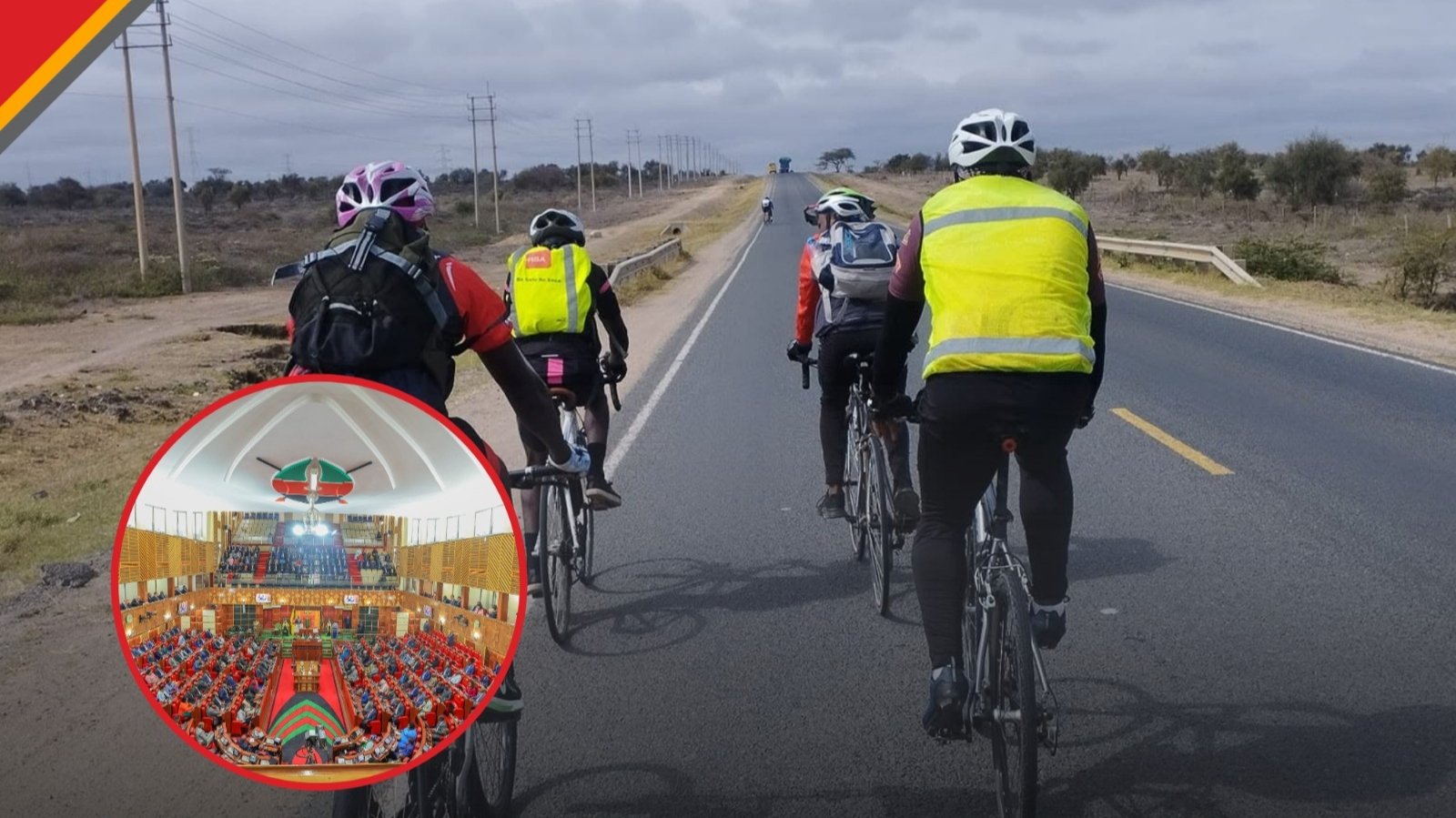

Members of Parliament have approved the Kenya Roads (Amendment) Bill, 2024, which seeks to make dedicated facilities for pedestrians and cyclists part of road design and construction in Kenya.
The Bill, sponsored by Samburu West MP Naisula Lesuuda, proposes amendments to the Kenya Roads Act to provide for designated tracks for non-motorised transport, including cycling lanes and pedestrian walkways.
Under the proposed changes, road agencies would be required to incorporate facilities for non-motorised transport on roads under their control. These would include dedicated cycling lanes, pedestrian walkways and pedestrian crossings.
The proposed infrastructure would be separated from lanes used by motorised traffic. The Bill also introduces definitions for terms including cycling lane, pedestrian walkway and non-motorised vehicles.
The Kenya National Highways Authority (KeNHA), Kenya Rural Roads Authority (KeRRA) and Kenya Urban Roads Authority (KURA) would be among the agencies affected by the proposed requirements.
The legislation also proposes a role for traffic police in enforcing the use of designated non-motorised transport facilities and ensuring that motorists do not use lanes reserved for pedestrians and cyclists.
The push for dedicated facilities comes amid longstanding concerns about the safety of vulnerable road users on Kenyan roads. Pedestrians and cyclists often share road space with vehicles where separate facilities have not been provided.
The Bill seeks to address that design issue by making non-motorised transport facilities part of road planning rather than leaving them as additions to individual projects.
Its provisions cover both new roads and existing roads under the control of the relevant road agencies. The extent and timing of any changes would depend on the final legislation and its implementation.
The Bill has been before Parliament since 2024. Its principal objective is to amend the Kenya Roads Act to provide for the design and construction of cycling lanes and pedestrian walkways.
Earlier proposals linked to the legislation estimated that providing non-motorised transport facilities on both sides of roads could cost about KSh10 million per kilometre. The estimate was made during an earlier stage of the proposal and should not be treated as the final cost of implementation.
The proposed framework would also prohibit motorised vehicles from using lanes designated for pedestrians and cyclists, with enforcement assigned to traffic police.
For Kenya's road construction sector, the changes would put greater emphasis on designing roads for different categories of users from the outset. Instead of concentrating road space almost entirely on motorised traffic, projects would have to account for walking and cycling as part of the transport network.
The Bill still has to complete the remaining legislative process before becoming law. If enacted, it would establish a clearer statutory requirement for dedicated pedestrian and cycling infrastructure across roads managed by the relevant road authorities.
The proposed changes could therefore affect how future road projects are planned, designed and constructed, particularly in urban areas where pedestrians, cyclists and motorists currently compete for limited road space.
Comments (0)
Leave a Comment
No comments yet. Be the first to share your thoughts!