
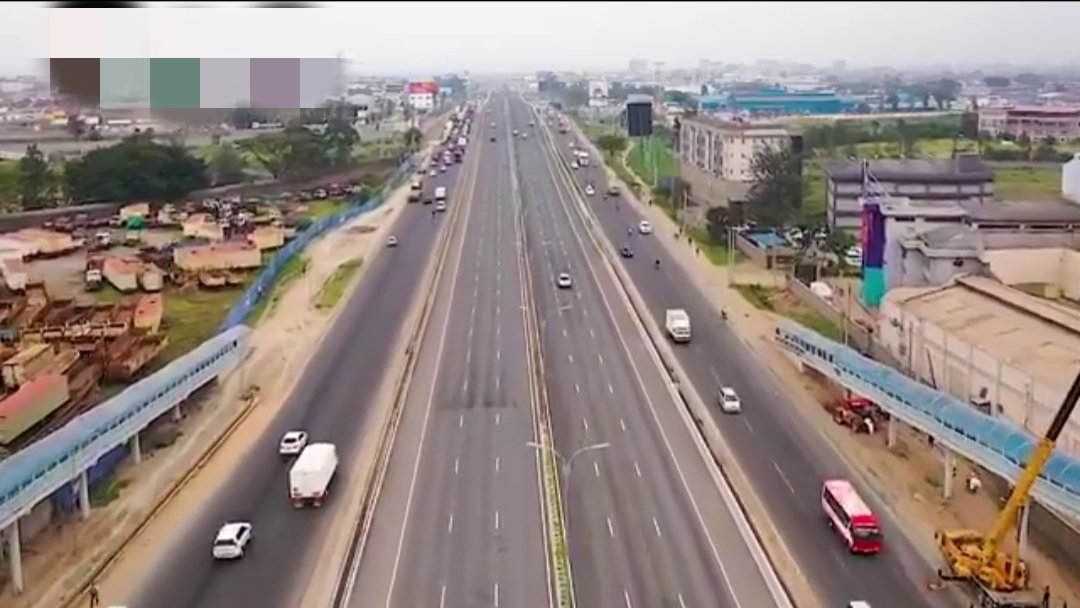

The Nairobi Expressway forms a critical piece of a larger infrastructure network stretching from the Port of Mombasa through Nairobi, the Rift Valley and onward to Malaba. The Public Private Partnerships Directorate described the route as part of the Northern Corridor, a strategic economic artery connecting the port to production centres, markets and logistics hubs across Kenya, Uganda and the wider region.
At the Coast, efforts to expand and modernise the ports of Mombasa and Lamu are progressing. These investments aim to increase capacity and ease the movement of cargo into the hinterland while strengthening the maritime gateway that anchors the corridor.
Further inland, the process of onboarding a private concessionaire for the Mombasa-Nairobi Expressway PPP project is underway. The project will create a vital link between the Port of Mombasa and Nairobi, connecting directly with the operational Nairobi Expressway.
Beyond Nairobi, construction is underway on the Nairobi-Nakuru-Mau Summit Highway PPP. Feasibility work on the proposed Mau Summit-Eldoret-Malaba Highway PPP is also progressing, extending the network towards Uganda and beyond.
Together, these projects connect Mombasa, Nairobi, Nakuru, Mau Summit, Eldoret and Malaba into an integrated Northern Corridor transport network. The aim is to facilitate the efficient movement of people and goods, support regional trade and strengthen Kenya’s position as a gateway to East and Central African markets.
Through public-private partnerships, the Government is combining infrastructure, private capital, technical expertise and long-term operational capacity. The objective is to make the Northern Corridor more efficient, competitive and resilient.
The Nairobi Expressway is presented as one completed element within this wider jigsaw. Complementary projects along the route are intended to unlock the corridor’s full potential for both domestic and cross-border traffic.
Officials highlighted the role of PPPs in delivering the remaining sections. The Mombasa-Nairobi Expressway concession process and the ongoing Nairobi-Nakuru-Mau Summit works form the most immediate priorities.
Feasibility studies for the western extension towards Malaba continue in parallel. The overall network is designed to support logistics efficiency and reduce transport costs for goods moving between the coast and the interior.
The Directorate released a documentary focusing on the Nairobi Expressway to illustrate how individual projects fit into the broader corridor strategy. Stakeholders in transport and logistics are expected to track progress on the outstanding PPP components.
Port modernisation at Mombasa and Lamu remains essential to handle growing cargo volumes. Without matching hinterland capacity, gains at the ports would be limited by road constraints further inland.
The sequenced approach, from the coast through Nairobi and into the Rift Valley, reflects an attempt to treat the corridor as a single system rather than isolated projects. PPPs are the chosen vehicle for several of the major road sections.
As the various components advance, the cumulative effect is expected to strengthen Kenya’s role as a regional transit hub. The Northern Corridor continues to serve as the primary route for trade with Uganda and neighbouring markets.
Comments (0)
Leave a Comment
No comments yet. Be the first to share your thoughts!