
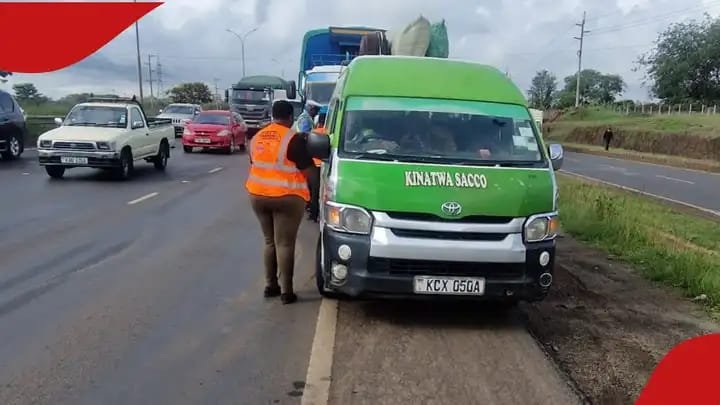

The National Transport and Safety Authority (NTSA) is operationalizing a modernized enforcement framework targeting minor traffic infractions across Kenyan roads. Under the new system, which updates the application of Section 117 of the Traffic Act, motorists facing minor charges will no longer be forced to appear in traffic courts immediately.
Instead, the regulatory body and police will issue a Police Notification of Traffic Offence.
Violations can be detected during routine physical checks by police officers or through automated infrastructure like digital traffic cameras.
Once verified, the authority will dispatch notifications through personal delivery, physical placement on the vehicle, or digital channels including SMS and email.
Drivers must ensure their contact data is completely updated within the regulatory registry to avoid missing these legal notices.
The statutory framework under the Traffic (Minor Offences) Rules outlines cash penalties alongside a demerit point system administered against driving licenses.
Motorists have two choices upon service: they can admit liability and pay the specified fine, or contest the claim in court.
Failing to respond within the designated timelines triggers an automatic escalation to court, where non-compliant individuals face significantly enhanced fines.
The explicit financial penalties for common infrastructure and road violations include:
* Obstructing roads with a vehicle in a manner that inconveniences other motorists or blocks traffic flow attracts a fine of Ksh. 10,000.
* Driving on or through a designated pedestrian walkway or pavement attracts a fine of Ksh. 5,000.
* Failure of a driver to obey official traffic signs on the road network attracts a fine of Ksh. 3,000.
* Driving a motor vehicle without valid identification plates affixed, or with plates placed incorrectly, attracts a fine of Ksh. 10,000.
* Driving while using a mobile phone attracts a fine of Ksh. 2,000.
* Failure to wear a seat belt while the vehicle is in motion attracts a fine of Ksh. 500.
* Operating a vehicle without functional seat belts attracts a fine of Ksh. 10,000 for every non-compliant or sub-standard seat.
* Exceeding the speed limit by 6 to 10 km/hr attracts a fine of Ksh. 500, while exceeding it by 11 to 15 km/hr attracts Ksh. 5,000, and a 16 to 20 km/hr surpass requires a Ksh. 10,000 levy.
* Driving a Public Service Vehicle (PSV) while being unqualified attracts a fine of Ksh. 7,000.
* A public service vehicle driver picking or dropping passengers at areas that are not designated bus stops attracts a fine of Ksh. 1,000.
* Touting for passengers attracts a fine of Ksh. 3,000.
* A motorcycle rider or passenger operating without proper protective gear attracts a fine of Ksh. 1,000.
The multi-agency framework involves the National Police Service (NPS), the Office of the Director of Public Prosecutions (ODPP), and the Judiciary.
This joint effort aims to reduce the heavy backlog of minor cases clogging traffic courts, while promoting transparency and structural accountability during daily enforcement operations on public roads.
Comments (0)
Leave a Comment
No comments yet. Be the first to share your thoughts!