
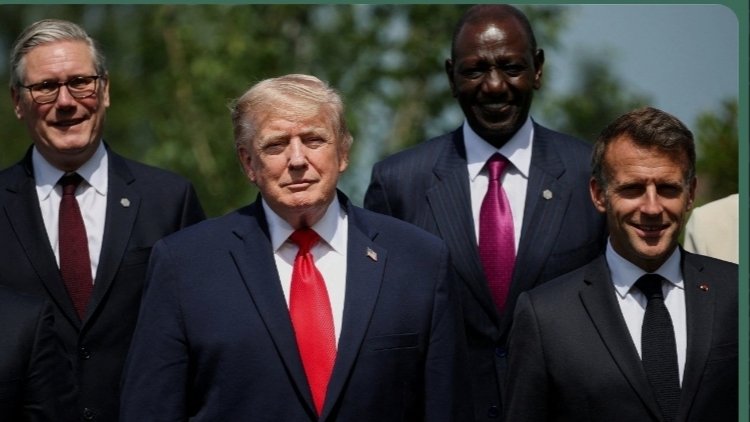

Kenya is close to finalising a critical minerals agreement with the United States. President William Ruto announced the development on the sidelines of the G7 summit.
The deal would allow Kenya to process its own resources domestically rather than exporting raw materials. It covers rare earths and other strategic minerals essential for modern technologies.
Ruto said discussions with US President Donald Trump and other G7 leaders proved productive. Both sides view the arrangement as mutually beneficial.
Kenya holds significant untapped deposits of niobium, lithium, graphite, copper and nickel. These minerals play growing roles in renewable energy, electronics and construction applications.
The agreement reflects a broader African push to capture more value from natural resources. Countries no longer want to simply export raw commodities for processing abroad.
For the construction sector the potential benefits are notable. Local processing could support domestic manufacturing of inputs used in infrastructure projects.
Batteries for electric equipment, steel alloys and other advanced materials might become more readily available. This could help control costs on major roads, housing and energy developments.
Ruto emphasised partnerships based on investment instead of aid. He called for a reset in Africa-West relations focused on job creation and industrial growth.
The president rejected models built solely on resource extraction. He advocated for shared returns and value addition within the continent.
G7 nations are seeking to reduce reliance on single suppliers for critical minerals. The Kenya deal fits into wider efforts to diversify supply chains amid global competition.
Ruto noted Kenya will pursue multiple partnerships rather than choosing sides. Recent trade deals with China complement potential deeper US and European engagement.
Access to capital remains a key barrier for African nations. Ruto urged G7 support for reforms that unlock domestic pension funds and reserves through guarantees and risk-sharing.
He highlighted institutions like the African Trade & Investment Development Insurance as areas for collaboration. Such steps could lower borrowing costs for large infrastructure projects.
The minerals agreement could mark a step toward greater self-reliance in Kenya’s built environment. Processing facilities would create jobs and technical skills in engineering and related fields.
Details of the final pact are still emerging. Its success will depend on implementation that balances investment with local capacity building.
Comments (0)
Leave a Comment
No comments yet. Be the first to share your thoughts!