
The Kenyan government faces a legal challenge over its alleged failure to regulate the motorcycle industry, commonly known as the boda boda sector. Nairobi lawyer Mugambi Laibuta has filed a petition at the High Court, naming several high-ranking state officials as respondents. The suit claims that the lack of oversight has led to a surge in road accidents, posing a direct threat to public safety and placing an undue burden on the national healthcare system.
In his filings, Laibuta argues that the Cabinet Secretary for Transport, the National Transport and Safety Authority (NTSA), and the Inspector General of Police have neglected their statutory duties. He contends that while the sector has grown into a vital part of the country's transport infrastructure, it operates in a state of near-anarchy. This legal action comes at a time when motorcycles have become the primary mode of transport for millions of Kenyans, yet they remain one of the most dangerous segments of the road network.
The petition details how the absence of effective regulation violates the rights of road users. According to the documents submitted to the court, the state has failed to enforce basic safety standards, including the mandatory use of protective gear, training requirements for riders, and the registration of commercial operators. Laibuta argues that these omissions are not merely administrative lapses but constitute a breach of the government's constitutional obligation to protect its citizens.
Central to the case is the economic and social impact of motorcycle-related injuries. Public hospitals, particularly the spinal injury and trauma units, are reportedly overwhelmed by the influx of patients involved in motorcycle crashes. The lawyer asserts that the cost of treating these injuries is a drain on public resources that could be mitigated if the transport ministry implemented and enforced the existing traffic laws. He points out that many riders operate without valid licenses or insurance, leaving victims with little to no recourse after an accident.
The lawsuit seeks to compel the government to formulate and implement a comprehensive regulatory framework for the industry. This includes the establishment of a database for all riders and the enforcement of strict licensing protocols. The petitioner is also asking the court to declare that the current state of the sector is a violation of the right to life and the right to the highest attainable standard of health.
Over the last decade, the boda boda industry has evolved from a rural transport solution into a massive urban enterprise as it provides employment for hundreds of thousands of young people and supports various supply chains. However, this rapid expansion has outpaced the government's ability to provide oversight. Previous attempts to register riders and introduce mandatory training through various state agencies have often met with resistance or stalled due to a lack of political will.
Safety experts have long warned that without a structured approach to urban mobility, the chaos seen in the motorcycle sector would eventually lead to a crisis. The NTSA has previously introduced various sets of regulations, but enforcement has been inconsistent. Police crackdowns are often temporary and reactive, usually occurring only after high-profile incidents. This legal challenge aims to move away from ad hoc policing and toward a permanent, structured system of governance for the sector.
The respondents in the case are expected to file their replies as the court determines the next steps for the hearing. If the court rules in favor of the petitioner, it could force a significant overhaul of how the Ministry of Transport handles non-conventional transport systems. For the construction and infrastructure sector, such a ruling would likely influence future road design policies, potentially requiring dedicated lanes or specific facilities to accommodate the millions of motorcycles currently sharing space with heavy vehicles and pedestrians.
State sued over regulatory failure in Kenya's motorcycle sector
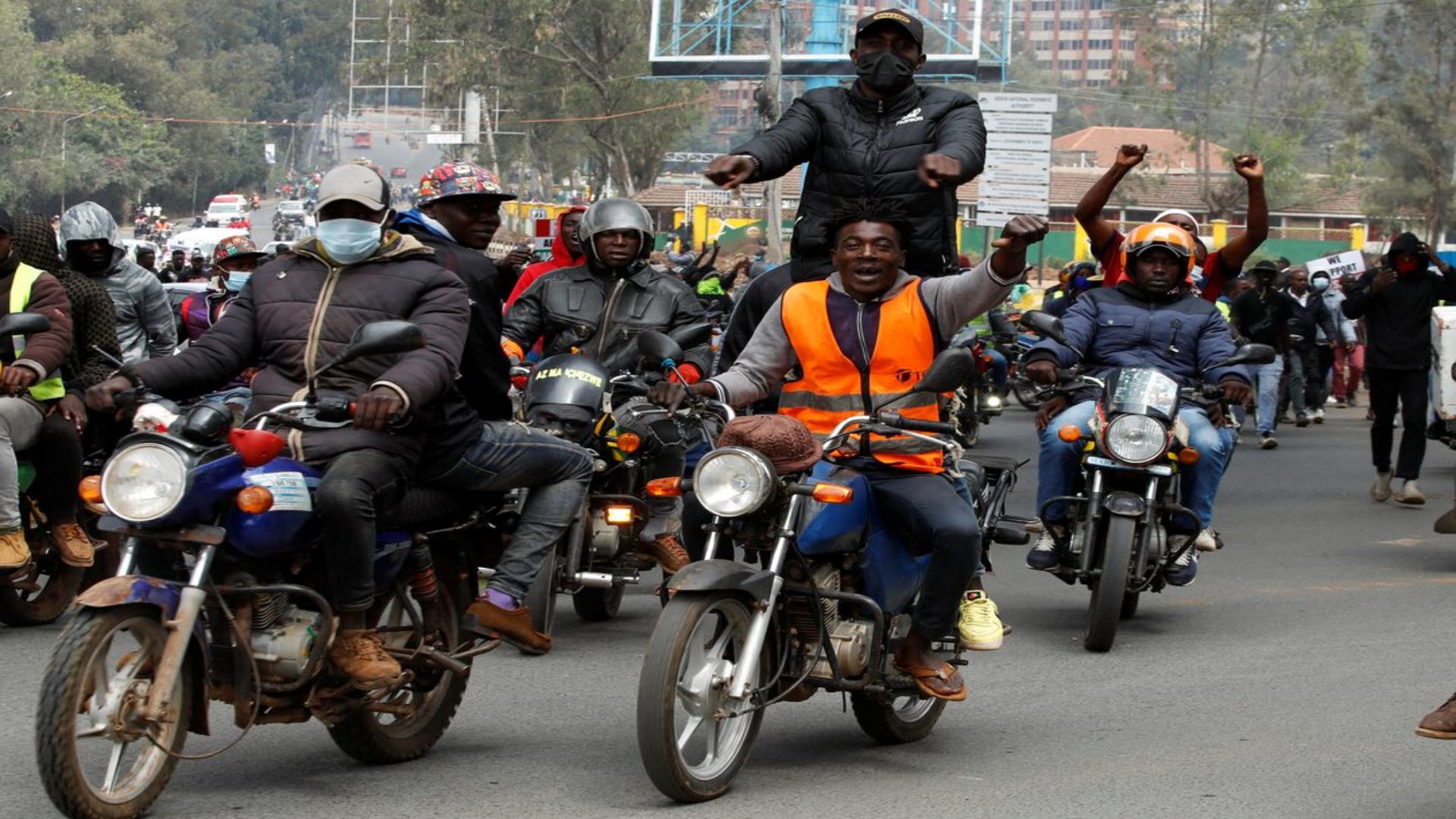
Motorcycle operators in Nairobi. A new High Court petition seeks to compel the government to enforce stricter regulations on the sector to improve road safety and public health
|
Reuters

A High Court petition highlights the government's failure to implement safety and licensing regulations for motorcycles, citing increased accidents and rising public health costs in Kenya.
Comments (0)
Leave a Comment
No comments yet. Be the first to share your thoughts!