
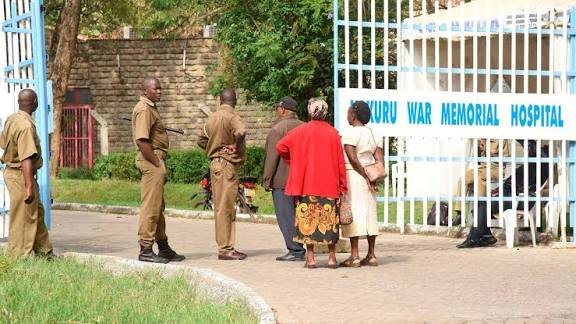

The silent corridors of the Nakuru War Memorial Hospital now serve as a warehouse for sophisticated medical machinery that, under normal circumstances, would be operating around the clock. Since the facility was shuttered following a protracted ownership dispute between a private management group and the Nakuru County government, the specialized infrastructure has remained dormant. For engineers and medical professionals, the primary concern is no longer just the immediate loss of service, but the technical degradation of hardware that was never designed for prolonged inactivity.
In the radiology and renal units, the stillness is particularly expensive. High-end diagnostic machines, including dialysis units and imaging equipment, require consistent power management and environmental controls to maintain calibration. When such systems are powered down indefinitely without professional decommissioning, the risk of moisture accumulation and component failure increases. This technical decay represents a significant loss of capital investment in a region where healthcare infrastructure is already under immense pressure.
The facility, which has been a landmark in the Rift Valley region for decades, has seen its operations grind to a halt amidst a flurry of court orders and physical takeovers. Armed police officers and private security now stand guard at the entrance, while inside, the tools intended for surgery and emergency care gather dust. This disruption has forced thousands of patients, many of whom were undergoing specialized long-term treatments, to seek alternatives in an already congested public health system.
From a structural and maintenance perspective, the closure of a hospital is far more complex than locking the doors of a standard commercial office. Hospital buildings are living entities that require constant ventilation, water circulation, and electrical monitoring to prevent the growth of pathogens and the corrosion of specialized piping. The longer the legal impasse continues, the higher the eventual cost of refurbishing the site to meet the stringent standards required for medical certification.
The local community has expressed growing frustration over the idle assets. Residents who previously relied on the hospital for oncology and dialysis services are now traveling further, often facing higher costs and longer wait times. The irony of the situation is not lost on observers; while the county struggles with equipment shortages in other public dispensaries, a fully-fitted theater and modern wards sit empty just a few blocks away.
Legal representatives for the hospital’s board have repeatedly raised alarms regarding the state of the equipment. They argue that the forced entry and subsequent occupation by county officials did not follow proper protocols for the protection of sensitive medical technology. Conversely, county authorities have maintained that their actions are focused on reclaiming public land, though the immediate result remains a shuttered gate and a deteriorating asset.
The financial implications extend beyond the physical machinery. There is the human-capital aspect, as hundreds of healthcare workers and support staff remain in professional limbo. In the construction and management of healthcare facilities, the synergy between the building, the technology, and the staff is what creates a functional environment. By severing these ties, the operational value of the Nakuru War Memorial Hospital is being systematically eroded.
As the case continues to move through the Kenyan judicial system, the physical infrastructure remains the most visible victim of the stalemate. If and when the hospital eventually reopens, the cost of bringing the idle equipment back online—testing for safety, recalibrating sensors, and replacing dead batteries or corroded parts—will likely run into millions of shillings. For now, the gates remain closed, and the high-tech heartbeat of the facility remains flatlined, serving as a stark reminder of how administrative conflict can paralyze essential infrastructure.
Comments (0)
Leave a Comment
No comments yet. Be the first to share your thoughts!