
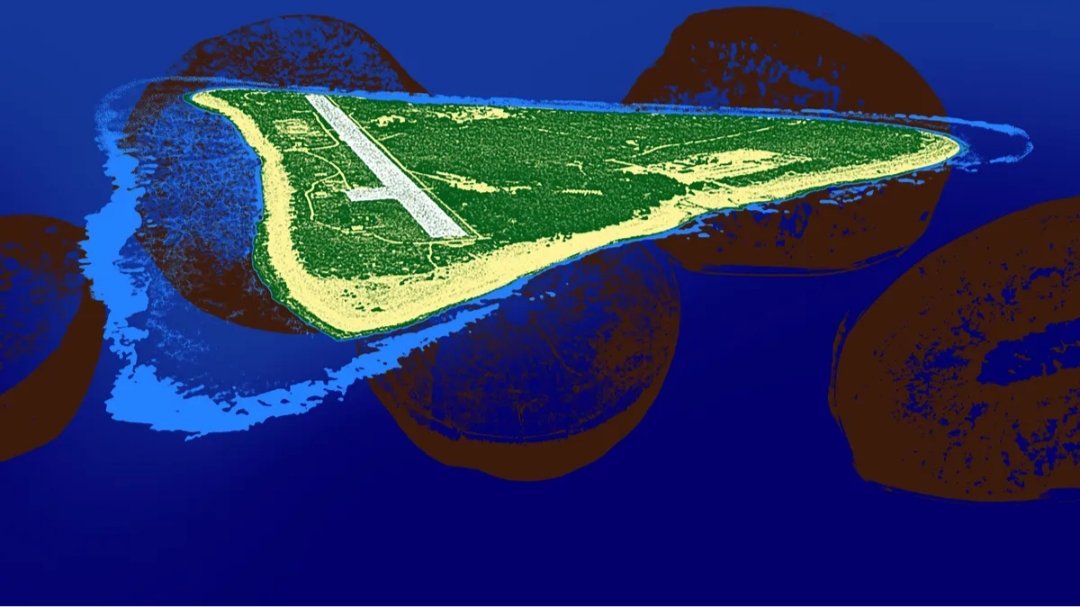

The United States and Japan are advancing plans for what would be the world’s deepest undersea mine. The project aims to recover rare earth elements from the seabed around Japan’s remote Minamitorishima island.
The deposits lie approximately 6,000 metres below the surface. A joint statement following a March meeting between US President Donald Trump and Japanese Prime Minister Sanae Takaichi highlighted the potential of the resources to meet centuries’ worth of industrial demand.
Minamitorishima is a small, isolated island more than 1,000 miles southeast of Tokyo. It hosts little more than a weather station and a runway. The surrounding deep-sea area contains significant rare earth deposits.
The initiative forms part of broader efforts by both countries to diversify critical mineral supplies. China currently dominates global rare earth production and processing.
Technical challenges associated with mining at such extreme depths remain substantial. The project would require specialised equipment capable of operating under immense pressure and in complex deep-ocean conditions.
Details of the timeline, financing and exact extraction methods have not been fully disclosed. The focus of public statements has centred on the strategic value of the deposits and the bilateral cooperation framework.
Rare earths are essential for electric vehicles, renewable energy technologies, electronics and defence systems. Securing alternative sources has become a priority for multiple industrialised nations.
The location of the deposits within Japan’s exclusive economic zone provides a jurisdictional foundation for the planned activities. Environmental considerations associated with deep-sea mining are expected to form part of future regulatory and operational planning.
Officials from both governments have framed the effort as a long-term contribution to supply chain resilience. The depth of 6,000 metres would set a new benchmark for commercial or strategic seabed extraction.
Further technical studies and bilateral discussions are anticipated as the concept moves beyond the initial political announcement. The remote nature of Minamitorishima adds logistical complexity to any large-scale operation.
The project sits at the intersection of resource security, advanced marine technology and geopolitical competition over critical minerals. Progress will depend on continued political support and technological feasibility assessments.
Comments (0)
Leave a Comment
No comments yet. Be the first to share your thoughts!