

CNN has published a selection of 24 of the world’s most unusual landscapes. The list focuses on natural formations shaped by geology, erosion, climate and time rather than human construction.
Among the sites featured is Kingley Vale in Sussex, United Kingdom, where some twisted yew trees date back at least 2,000 years. The Fairy Chimneys in Cappadocia, Turkey, appear as otherworldly rock towers created by the erosion of softer surrounding stone.
Giant’s Causeway in Northern Ireland, formed 50 to 60 million years ago, became the region’s first World Heritage Site in 1986. The Moeraki Boulders on New Zealand’s Koekohe Beach are spherical stones up to two metres high that hardened over five million years.
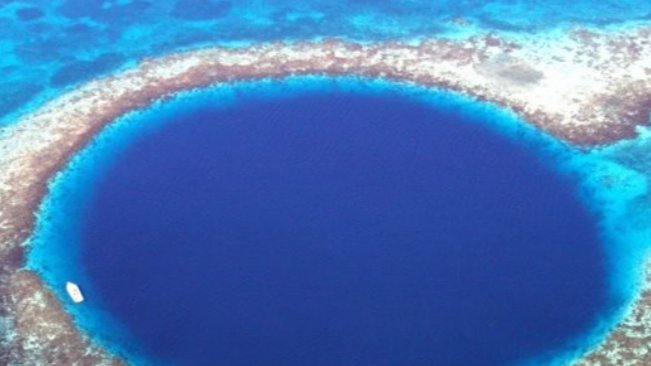
The Great Blue Hole off Belize measures 300 metres wide and around 125 metres deep. It forms part of the Belize Barrier Reef System. Caño Cristales in Colombia, known as the River of Five Colors, displays bright reds, yellows and greens between the wet and dry seasons.
Dead Vlei in Namibia sits among some of the world’s tallest sand dunes, with dead camel thorn trees preserved by extreme dryness. The Chocolate Hills in the Philippines consist of 1,268 conical limestone peaks that turn brown in the dry season.
Kilauea on Hawaii remains one of the most active volcanoes on Earth. Lake Hillier in Australia is noted for its pink water, attributed to algae and high salt concentrations. Devils Tower in Wyoming rises 385 metres above the surrounding landscape and holds cultural significance for several Native American tribes.
Dallol in Ethiopia is described as one of the hottest places on the planet, with average temperatures around 94 degrees Fahrenheit. The Eye of the Sahara in Mauritania, also called the Richat Structure, is a 40-kilometre-wide geological feature visible from space.
Other entries include the snow monsters of Mount Zao in Japan, the Valley of the Moon in Argentina, Vermilion Cliffs on the Utah-Arizona border, the Haukadalur geothermal field in Iceland, Trollkirka Caves in Norway, Bryce Canyon in Utah, the Dead Sea between Israel and Jordan, Spotted Lake in Canada, Blood Falls in Antarctica, the Zhangye Danxia landforms in China and the Darvaza Gas Crater in Turkmenistan.
The feature presents these locations as examples of nature’s creativity, ranging from colourful mineral deposits and unusual rock formations to extreme geothermal and volcanic sites. No construction or infrastructure projects are discussed.
The list was originally published in 2025 and updated in August 2026. It draws on photographs and brief geological or cultural notes for each site.
Comments (0)
Leave a Comment
No comments yet. Be the first to share your thoughts!