
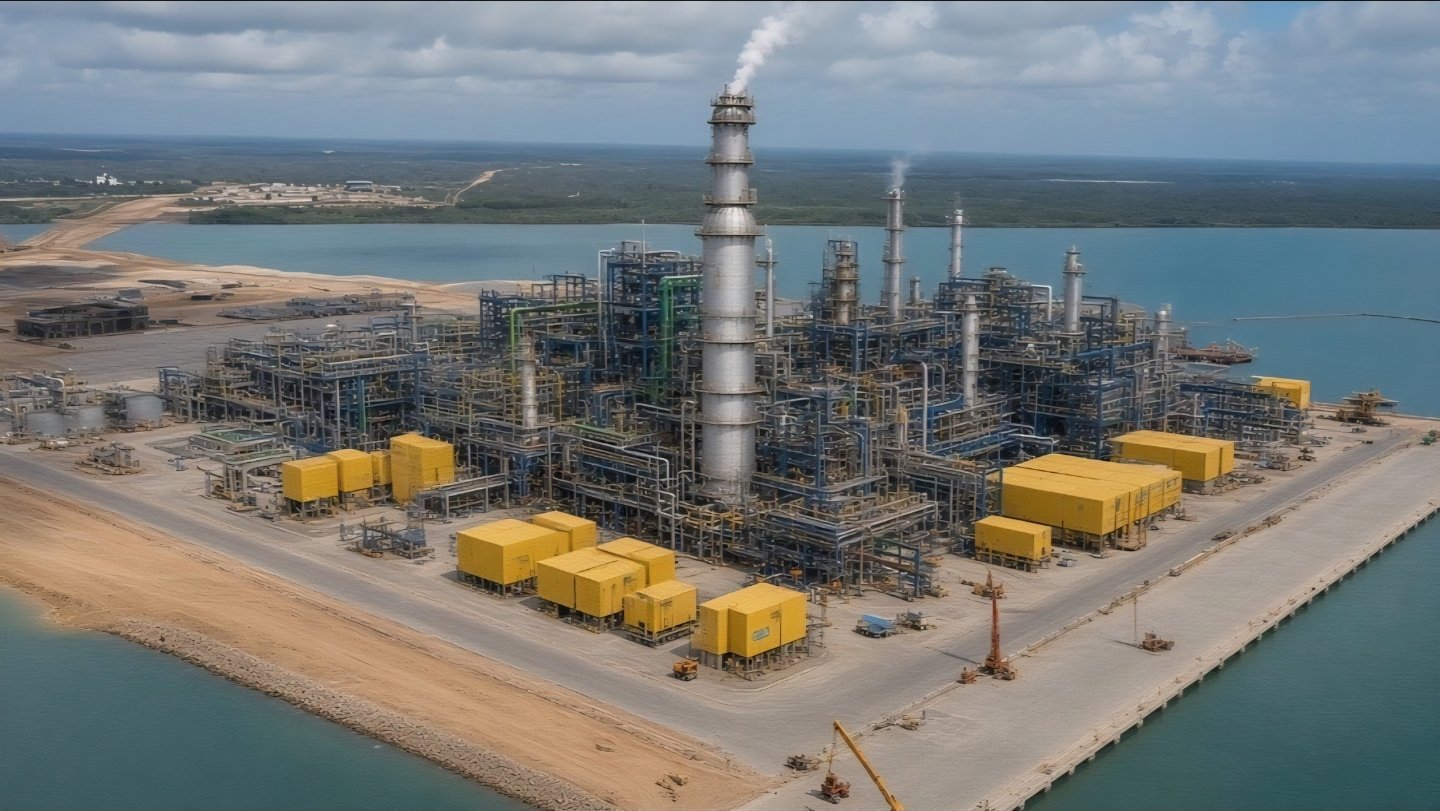

East Africa has become the center of major energy infrastructure announcements, with proposed projects across the region totaling 56 billion dollars.
Private investors and regional governments are positioning themselves to capture local refining capacity and petroleum distribution networks.
In Kenya, reports indicate that Dangote Group is planning a 16 billion dollar investment to construct a 700,000 barrels per day (bpd) mega-refinery in Lamu.
Construction plans for the proposed coastal facility are slated to begin this October, marking a massive entry into the domestic downstream oil sector.
Concurrently, Tanzania and Uganda are linked to a combined 20 billion dollar project alongside global energy trader Vitol.
The initiative aims to develop a regional energy hub centered in Tanga to handle bulk fuel imports and regional product distribution.
Ethiopia is also moving forward with its own energy infrastructure plans rather than relying solely on neighboring transit corridors.
Details surrounding the Ethiopian projects reflect a broader push by regional economies to secure independent fuel processing capabilities.
The surge in proposed projects across Kenya, Tanzania, Uganda, and Ethiopia highlights an escalating regional race for refining capacity.
Each country is seeking to reduce dependence on refined product imports and secure domestic energy supplies through large-scale capital investments.
If executed, these multi-billion dollar developments will fundamentally reshape fuel trade routes across the Greater Horn of Africa.
Industry observers continue to monitor financing commitments and regulatory approvals as these proposed projects move toward scheduled implementation dates.
Comments (0)
Leave a Comment
No comments yet. Be the first to share your thoughts!