

A version of this article appeared on Bloomberg News.
For many years, macroeconomists have expressed deep concern regarding the changing demographics of the United States. A steadily aging workforce and a declining national birth rate are traditionally viewed as dual threats that could severely depress future economic growth.
This demographic shift threatens to leave subsequent generations with diminished financial prospects and a smaller pool of active labor. Consequently, a new theory is gaining significant traction within global economic circles.
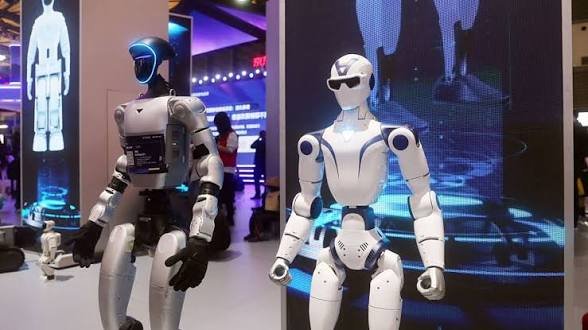
Optimists increasingly argue that the rapid development of Artificial Intelligence (AI) can serve as a powerful tool to innovate through this demographic decline. The primary assumption is that automation will smoothly fill critical labor gaps across various sectors.
Under this optimistic view, any shortage of physical workers can simply be resolved by deploying advanced digital systems. If older employees experience declines in productivity, technology will supposedly step in to preserve baseline output.
Similarly, a looming deficit in healthcare providers and senior caregivers is expected to be offset by automated infrastructure. Proponents suggest that these technological solutions will collectively absorb the economic shocks of an older population.
While it remains plausible that technology could eventually mitigate the long-term impacts of demographic contraction, managing both transitions simultaneously presents severe challenges. Economic experts warn that these forces may not cancel each other out as smoothly as anticipated.
Instead of achieving a perfect equilibrium, the near-term intersection of these trends is expected to be highly volatile. The simultaneous contraction of traditional labor and the acceleration of automation are likely to compound existing vulnerabilities.
This compounding effect risks further reducing overall stability in a labor market where many workers already feel profoundly insecure. The structural transition could amplify anxieties rather than provide an immediate economic cushion.
For major global infrastructure projects and large-scale industrial operations, tracking these labor dynamics is essential. Shifts in human resource availability and the parallel adoption of automated systems fundamentally alter project delivery timelines and labor procurement strategies.
Historically, major industrial transitions require decades to achieve stable integration across supply chains. Introducing highly advanced software systems while the core pool of experienced supervisors retires creates an unprecedented management challenge for modern enterprises.
Furthermore, the massive financial capital required to develop and implement these automated platforms remains exceptionally high. Organizations must balance the rising costs of advanced computing hardware with the escalating wages commanded by a shrinking pool of skilled technical experts.
This financial pressure is particularly acute as global supply chains face separate inflationary challenges. The expectation that digital tools will instantly lower operational overhead ignores the substantial upfront investment needed for training and deployment.
Ultimately, the path forward requires a realistic assessment of how human capital and machine systems interact. Relying entirely on technological intervention to solve systemic demographic shifts represents a high-risk gamble for the broader global economy.
Analysts emphasize that policymakers and industry leaders cannot treat these two macroeconomic shifts as isolated phenomena. True sustainability will only be achieved through balanced strategies that actively support the existing workforce while intentionally managing technological integration, even here in Kenya.
Comments (0)
Leave a Comment
No comments yet. Be the first to share your thoughts!