
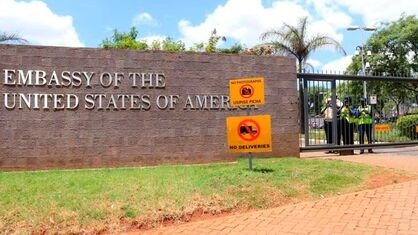

The United States has issued a fresh travel advisory for Kenya following protests in Nanyuki against the proposed Ebola quarantine facility at Laikipia Air Base. As reported by Kenyans.co.ke, the warning highlights risks of demonstrations expanding to other urban centres, including Nairobi.
Issued on June 1, the advisory urges American citizens to exercise caution. It notes that protests in Kenya frequently involve heavy police presence, leading to traffic jams and security issues.
"The U.S. Embassy is aware of a demonstration on June 1 in Nanyuki Town, in Laikipia County. Similar protests may occur in Nanyuki Town and other urban areas, including Nairobi, in the coming days," the statement read.
Residents marched through Nanyuki, chanting against the facility. They voiced fears over health risks to local communities and demanded the project be relocated. Hundreds participated in the June 1 action.
The advisory recommends monitoring local media for road conditions, keeping vehicle doors locked, and informing contacts of travel plans. No direct threats to US citizens were specified, but the embassy stressed vigilance amid unpredictable protest developments.
This comes days after President William Ruto defended approving the centre at the request linked to former US President Donald Trump. Ruto cited long-standing Kenya-US health cooperation spanning decades.
For the construction sector, the protests introduce immediate uncertainty to works at Laikipia Air Base. Military installations like this often host rapid retrofits for medical use, involving isolation wards, specialised ventilation, and secure access modifications.
Local opposition could delay site mobilisation, material deliveries, and contractor access. Air bases typically feature established infrastructure such as runways and support buildings, making them suitable for quick adaptation into quarantine centres. Yet community resistance adds layers of risk to timelines.
The facility is planned as a 50-bed unit focused on disease surveillance and emergency response. Similar centres already exist at Kenyatta National Hospital and other locations. Construction would likely prioritise biosafety features like negative-pressure rooms and decontamination areas.
Protests blocked roads near the site, with security forces intervening. A High Court order had earlier suspended aspects of the project pending consultation claims, though reports suggest preparatory activity continued.
In Kenya's infrastructure landscape, tying defence assets to civilian health needs is not new. Projects of this nature require contractors versed in both secure environments and medical standards. Material selections emphasise durability and infection control.
The advisory arrives as Kenya manages Ebola preparedness amid regional threats. Laikipia Air Base's location offers logistical benefits for rapid response, including air transport links. However, public sentiment has turned sharply against hosting the centre locally.
Broader implications for construction emerge clearly. Protests against major projects can cascade into supply chain interruptions and workforce safety concerns. In Laikipia, any escalation might affect not only this facility but other ongoing infrastructure works in the region.
The US Embassy pledged to monitor developments and update guidance. American citizens were advised to avoid crowds and follow local authority instructions.
This situation underscores tensions between national health infrastructure goals and community acceptance. For developers and contractors involved in similar sensitive builds, early stakeholder engagement proves critical to avoiding work stoppages.
Ruto had framed the Laikipia decision as part of reciprocal partnership, referencing US support in HIV programmes, COVID research, and outbreak readiness. Yet on the ground, fears over proximity to the base have fuelled resistance.
As protests potentially spread, construction stakeholders will watch for impacts on timelines and costs. Retrofitting airbase structures for medical quarantine demands precision, from HVAC systems to waste handling. Delays here could ripple into Kenya's wider disease preparedness efforts.
The episode highlights how quickly public pushback can influence project momentum, even for facilities backed by high-level bilateral agreements.
Comments (0)
Leave a Comment
No comments yet. Be the first to share your thoughts!