
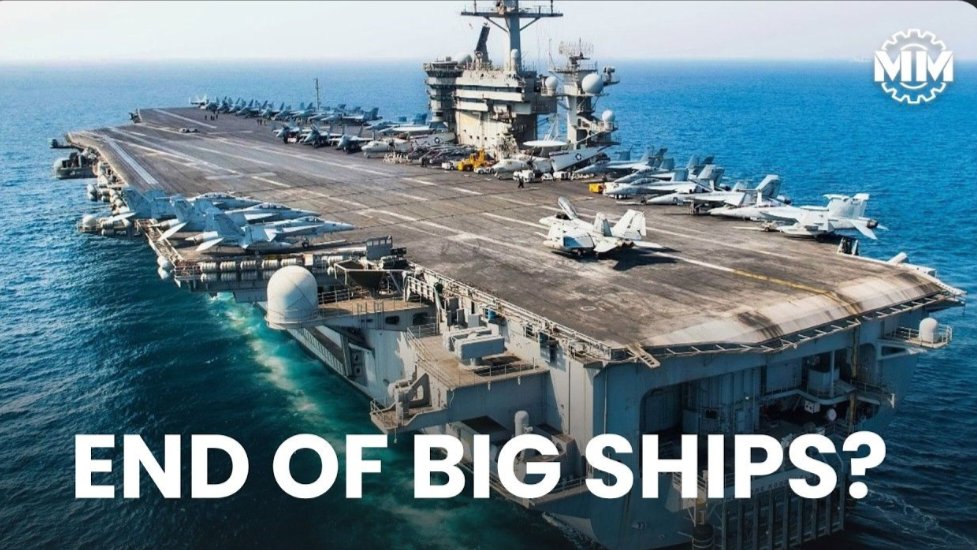

A significant shift is occurring within global maritime defense as the United States Navy official integrates unmanned vessels into its long-term shipbuilding strategy. The move reflects a broader realization that the next era of naval dominance may depend on distributed autonomous networks.
Recent conflicts in the Black Sea during 2023 and 2024 demonstrated how inexpensive autonomous sea drones could successfully force a major traditional navy to reposition vessels and strengthen defenses. This exposed vulnerabilities in relying solely on multi-billion-dollar assets.
Faced with industrial-scale naval expansion from China, the US Navy is moving toward a high-low force structure. This design pairs traditional capital ships with large numbers of unmanned systems to maintain maritime presence.
The strategy involves investing billions of dollars into Medium Unmanned Surface Vessels (MUSV) and Extra-Large Unmanned Underwater Vehicles (XLUUV). These platforms are transitioning from experimental projects into active fleet procurement.
Built around modularity, the MUSV utilizes swappable containerized payloads to allow rapid reconfiguration for changing mission profiles. This adaptability prevents the strategic rigidity common in fixed-purpose warships.
Commanders intend to deploy these autonomous systems alongside destroyers, frigates, and carrier strike groups. They provide attritable combat power, meaning they can enter heavily contested choke points without risking human lives.
Operations in the undersea domain present the steepest technical hurdles due to limited communication, distorted acoustics, and the absence of global positioning system signals. Despite this hostile environment, the XLUUV operates as a fully robotic submarine.
These large unmanned submarines are built for persistent intelligence, surveillance, reconnaissance, seabed mapping, and mine warfare. Such capabilities are crucial across the vast distances and narrow choke points of the Indo-Pacific.
To build this fleet, the military is moving away from its traditional 20-year acquisition cycles. The Navy is adopting rapid iteration models that mirror commercial technology sectors to keep pace with fast-evolving software and artificial intelligence.
This procurement shift is also intended to revitalize smaller tier-two and tier-three shipyards across America. By spreading production beyond a few giant shipyards, the strategy alters who builds naval power.
Ultimately, the integration of autonomous platforms alters the psychological calculation of risk in naval doctrine. It reduces the strategic and political consequences previously tied to losing a single high-end combat platform.
Comments (0)
Leave a Comment
No comments yet. Be the first to share your thoughts!