
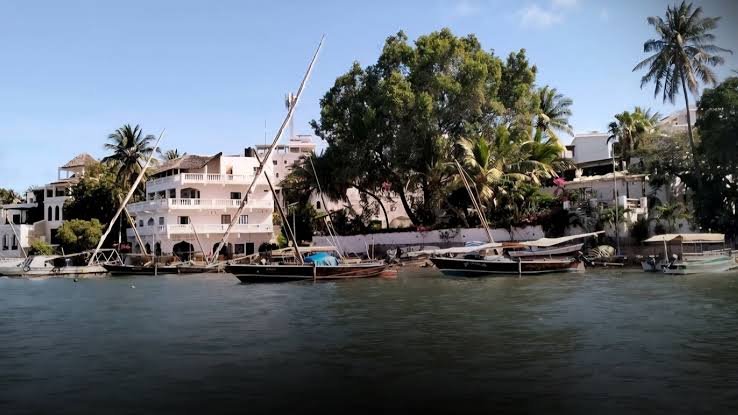

Marine safety standards along the Kenyan coastline face renewed scrutiny as artisanal fishers demand immediate regulatory and infrastructural interventions. Coastal crews operating traditional vessels are dealing with changing weather patterns that introduce unprecedented occupational hazards on the open sea, requiring immediate action from safety regulators.
Fishermen and sailors in Lamu are calling for the mandatory installation of lightning arresters on all marine vessels. The local seafaring community wants the Kenya Maritime Authority (KMA) to enforce this requirement, which aims to prevent fatalities, severe injuries, and structural damage during seasonal storms.
The urgent appeal from the sector follows several tragic incidents in the Indian Ocean, where lightning strikes have destroyed traditional fishing boats and dhows. These sudden atmospheric discharges have caused fires on board, leaving crews stranded in deep waters without communication or propulsion.
Local fishers are urging both the Lamu County government and the national government, through marine safety agencies, to provide sponsored programs for these safety installations. Many local boat owners cannot afford the modern mitigation equipment, which is necessary to protect their wooden hulls from sudden lightning strikes.
Salim Vae, a local fisherman, stated that the emerging frequency of lightning strikes has become a critical source of concern for everyone working at sea. He noted that the regional weather has become increasingly unpredictable, with intense downpours and electrical storms catching traditional wood vessels completely unprepared.
The most recent fatal incident occurred in March this year, when a 48-year-old fisherman, Kassim Badi Usama, lost his life at sea. Another crew member, identified as Mohamed Wako, suffered critical injuries, when their fishing vessel was struck by lightning in the Ingini area of the Indian Ocean.
The strike completely destroyed the vessel, which was a traditional wooden dhow. The electrical discharge initially struck the long vertical wooden mast that supports the lateen sail, before it rapidly spread across the deck to other sections of the boat, causing catastrophic hull failure.
The lightning strike split the solid wooden mast into multiple fragments, instantly killing one occupant. The surviving fisherman required emergency medical attention for severe trauma, highlighting the total vulnerability of traditional maritime designs, which lack proper grounding systems to divert high-voltage currents safely into the ocean.
This was not an isolated maritime emergency. In November last year, three other fishermen sustained severe injuries off the coast of Kizingitini, when their fishing dhow was hit by a similar lightning strike during an afternoon fishing expedition in the same coastal waters.
Vae explained that the Coast region is experiencing strange weather patterns. He emphasized that the KMA and the local county leadership must move quickly to co-fund the acquisition of marine-grade grounding gear, which can be retrofitted onto the existing fleet of artisanal wooden vessels.
He acknowledged that lightning protection on small wooden fishing boats is an entirely new concept for local builders, but argued that global climate change and abnormal Indian Ocean weather systems require immediate adaptation to ensure that small-scale fishermen survive their daily shifts.
Currently, thousands of small-scale operators rely on these traditional wooden vessels for their livelihood along the extensive Kenyan coast. Marine safety experts note that without official subsidies or clear policy directives from the KMA, compliance with advanced safety measures will remain low among low-income coastal communities.
Comments (0)
Leave a Comment
No comments yet. Be the first to share your thoughts!