
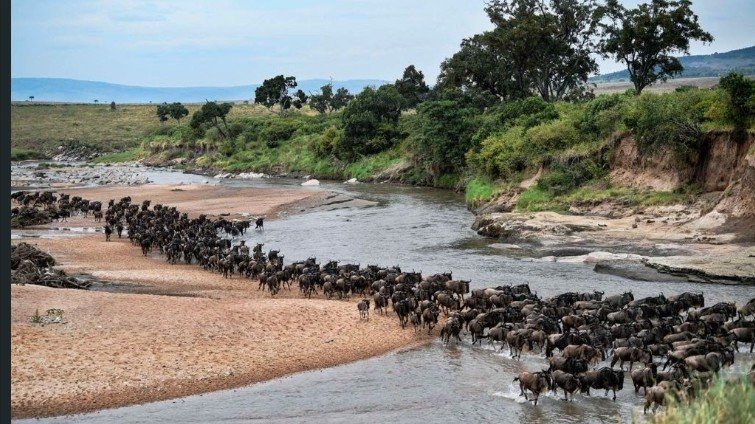

The annual wildebeest migration is underway in the Maasai Mara, bringing visitors to Kenya’s famous wildlife reserve to watch thousands of animals move across the Mara River and surrounding grasslands in search of fresh grazing areas.
The migration is one of the most anticipated wildlife events in the region, attracting local and international tourists between Kenya and Tanzania. The movement of wildebeest is accompanied by zebras and other grazing animals following the available grass and water.
This year, tourism operators in the Maasai Mara are also using a new model that gives visitors more ways to experience the migration. The approach combines traditional game drives with guided activities and other experiences around the reserve and nearby conservancies.
The new tourism model is designed to spread visitor activities beyond the busiest areas of the reserve. Tour operators and conservancies have been working to provide experiences that allow tourists to explore wildlife areas while reducing pressure on popular viewing locations.
The arrival of the migration has increased activity among hotels, lodges, camps, tour companies and local guides. Visitors have travelled to the Mara to follow the movement of the herds, with many booking accommodation and safari packages during the peak period.
The Maasai Mara remains one of Kenya’s best known wildlife destinations because of its large population of lions, elephants, cheetahs, leopards and other animals. The migration adds another attraction, particularly when large herds gather near river crossings.
Wildlife viewing during the migration depends heavily on weather and grazing conditions. The timing and location of the herds can change, meaning tourists may not always find them at the same crossing points or areas predicted by tour operators.
Local communities also play an important role in tourism around the Maasai Mara. Many conservancies work with landowners and tourism businesses, creating opportunities for guides, hospitality workers, drivers and other people involved in the tourism industry.
As the migration season continues, tourists are expected to keep visiting the Mara to watch the movement of the herds. The combination of wildlife viewing, community based tourism and new visitor experiences is giving travellers more options during their stay.
The wildebeest migration remains a natural event rather than a scheduled attraction, and its exact movements cannot be guaranteed. For visitors, this uncertainty is part of the safari experience as they follow changing wildlife patterns across the Maasai Mara.
Comments (0)
Leave a Comment
No comments yet. Be the first to share your thoughts!