
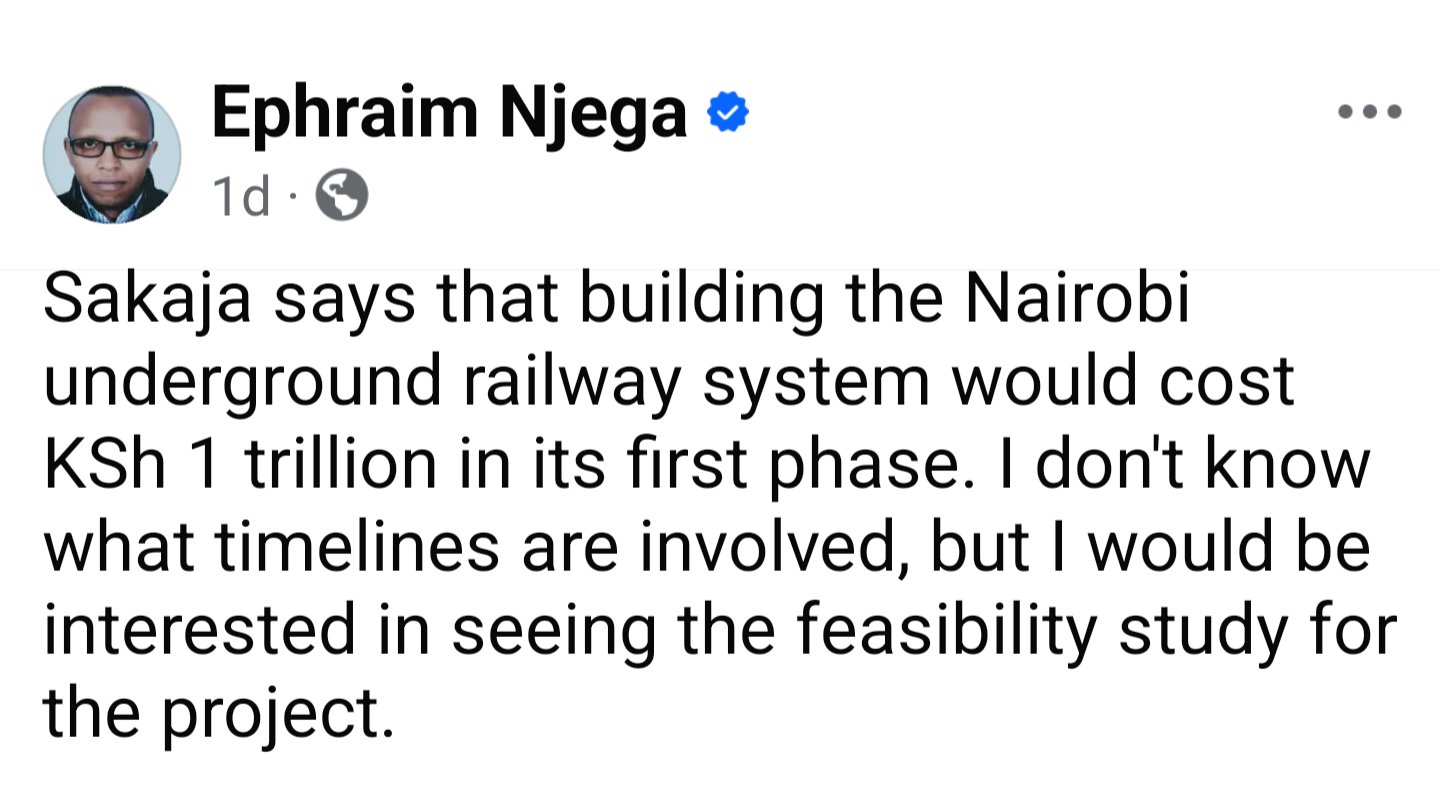

A version of this commentary was posted online by analyst Ephraim Njega.
The statement addresses claims made by Nairobi Governor Johnson Sakaja regarding a proposed underground railway system, which is estimated to cost KSh 1 trillion for its initial phase.
Njega questioned the clarity surrounding the project timelines, and he called for full public transparency regarding feasibility studies. He emphasized that access to foundational engineering documents is essential before evaluating such a capital-intensive transport undertaking.
While acknowledging that Nairobi urgently requires a mass transit system, Njega urged officials to design solutions tailored specifically to local requirements. He cautioned against copying external transport designs without evaluating actual domestic movement patterns first.
Nairobi currently has a population approaching six million residents, but many people operate primarily within their local residential estates. Njega noted that working from home has permanently altered commuting frequency, which changes how overall infrastructure demand should be calculated.
Accurate data on commuter demand can be gathered directly from Public Service Vehicles (PSVs) currently operating across the capital. These operators hold realistic insights regarding daily passenger routes, which can inform practical, data-driven planning decisions.
Rather than building an expensive underground network beneath the Central Business District (CBD), Njega suggested a phased infrastructure approach. He argued that the immediate focus should be directed toward establishing a functional Bus Rapid Transit (BRT) network.
Following the implementation of dedicated bus corridors, the city could transition toward a surface light rail network. Modernizing existing commuter rail lines to handle higher speeds would provide immediate traffic relief, and it requires lower initial capital expenditure.
Underground rail systems require intensive excavation, complex ventilation systems, and specialized underground passenger stations. Construction expenses in dense urban areas often escalate rapidly, which creates substantial financial risk for local government entities.
The analyst stressed that public transport projects must align with realistic revenue capacities and actual commuter habits. Overbuilding infrastructure in anticipation of unverified demand can divert limited municipal resources away from urgent civic priorities.
By prioritizing surface transport options like dedicated bus lanes, city planners can deliver faster results for daily commuters. Upgrading current rail tracks also utilizes existing transit corridors, which avoids prolonged and costly land acquisition processes.
Nairobi faces severe daily traffic gridlock, but financial experts urge caution when selecting mass transit technologies. Balancing ambitious long-term plans with practical surface solutions remains vital for maintaining sustainable urban development.
Transport planning must balance ambitious future vision with fiscal realities, especially when public debt levels remain elevated. Decision-makers should ensure that every project phase demonstrates cost efficiency, while serving the daily movement needs of urban commuters.
Civic oversight remains an essential component in evaluating large infrastructure proposals across Kenya. Independent scrutiny of government expenditure estimates helps safeguard public funds, and it ensures that chosen transit models deliver genuine, lasting utility.
As discussions around the underground project continue, urban development experts advocate for evidence-based transit policy. Establishing verifiable commuter statistics will remain the most reliable guide for future public investments in Nairobi.
Comments (0)
Leave a Comment
No comments yet. Be the first to share your thoughts!