
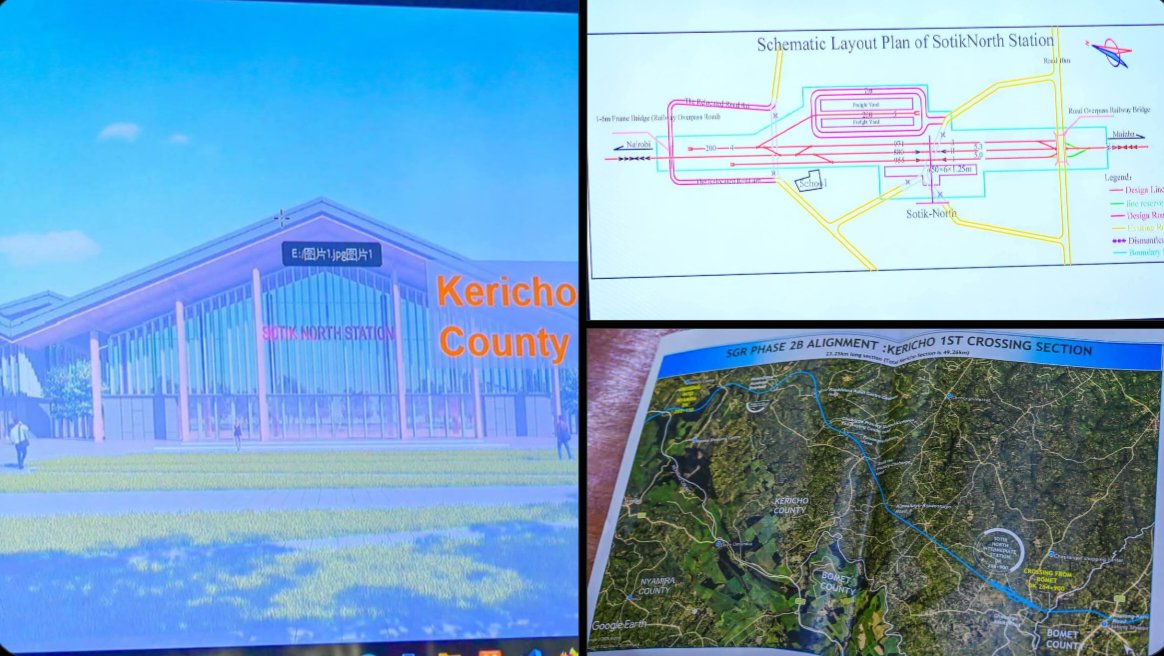

China Road and Bridge Corporation (CRBC) and China Communications Construction Company (CCCC) are constructing mid-size passenger stations in Kericho and Sotik as part of regional railway infrastructure development.
The decision comes after observations indicated that large passenger terminals across various counties frequently operate below capacity.
The project incorporates two primary passenger facilities, with one situated in Kericho and another located in Sotik, which serves to connect the line toward Nyamira County. The architectural framework reflects a deliberate shift away from expansive terminal layouts toward right-sized structures suited for regional passenger volumes.
Alongside the passenger facilities, the development plan includes two dedicated freight stations intended to support key agricultural supply chains. These cargo terminals will handle tea, coffee, and fertilizer movements across the regional network, addressing local logistical demands.
Transit planners identified that expansive county station facilities often remain underutilized, which influenced the shift toward scaled-down infrastructure. By building mid-size facilities, the contractors aim to match physical terminal capacity with actual operational demands in rural and agricultural hubs.
The Kericho station design features modern structural framing paired with dedicated access routes, while the broader alignment links agricultural zones directly to regional market corridors. Network mapping indicates that the Sotik layout manages both passenger transfers and localized agricultural transit requirements.
The integration of specific freight hubs for tea, coffee, and fertilizer targets the movement of high-volume commodities across western Kenya. Dedicated agricultural infrastructure allows regional producers to move bulk freight without relying solely on long-distance road transport.
Construction activity along the Kericho-Sotik alignment continues as structural designs for both passenger and freight terminals move through implementation phases. Site plans outline track layouts and access points tailored for both passenger boarding and bulk cargo handling.
The shift toward smaller station footprints highlights a growing emphasis on practical utility within rural transit construction. By aligning facility size with real demand, the project addresses long-standing challenges associated with underused public infrastructure in county locations.
Comments (0)
Leave a Comment
No comments yet. Be the first to share your thoughts!