
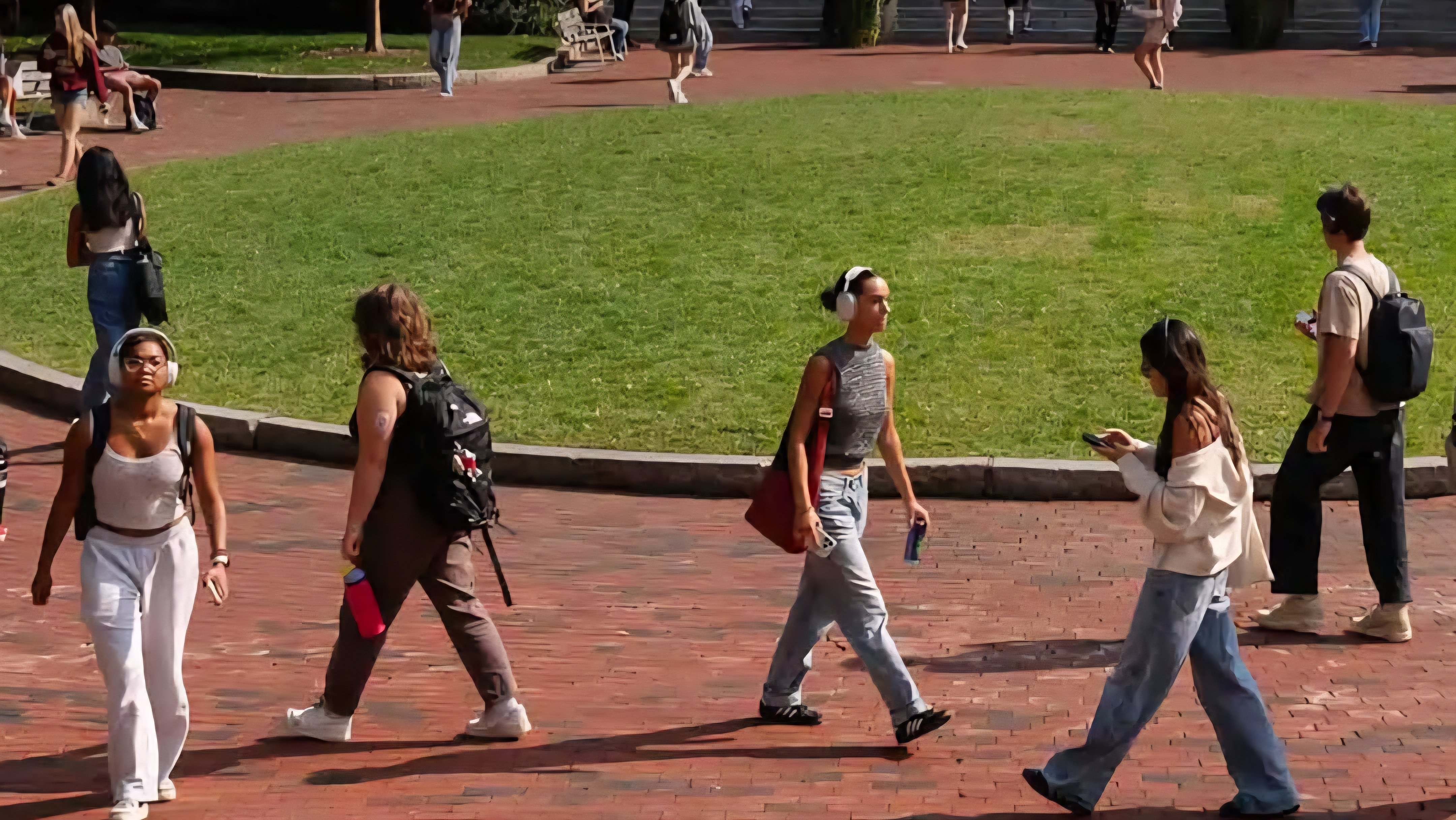

The Department of Homeland Security (DHS) announced a final regulation capping international student visa stays at four years. This decision ends a long-standing policy that permitted foreign scholars to remain in the United States (US) for the full duration of their academic programs.
Under the newly finalized rule, individuals holding student or exchange visas must obtain explicit federal approval to extend their stay. The rule introduces strict oversight, requiring formal applications to U.S. Citizenship and Immigration Services (USCIS) for any academic program exceeding the four-year threshold.
Immigration officials state that the reform targets a decades-old framework established in 1978. For nearly half a century, the previous system allowed foreign students to remain in the country indefinitely, provided they maintained their enrollment status at accredited institutions.
DHS Secretary Markwayne Mullin explained that the older policy compromised national security and encouraged systemic immigration fraud. He stated that thousands of visitors have avoided departure by perpetually enrolling in new courses, bypassing regular vetting procedures.
The new framework specifically targets nonimmigrant visa holders within the F, J, and I classifications. While F visas apply to full-time academic students, J visas cover exchange visitors, including university instructors and researchers participating in short-term cultural programs.
Foreign journalists holding I visas will face similar restrictions under the updated policy guidelines. They must now renew their legal status every 240 days, with Chinese media representatives facing an even shorter renewal period of 90 days.
Academic institutions and international education advocates have expressed strong opposition to the sudden regulatory shift. They argue that the policy injects unnecessary bureaucracy and fear into a system, which has historically supported global talent recruitment.
Fanta Aw, the chief executive officer of NAFSA: Association of International Educators, described the rule as an unnecessary government intrusion. She noted that international students are already among the most closely monitored nonimmigrant groups in the country.
Higher education data indicates that undergraduate and doctoral degrees frequently require more than four years to complete. Critics warn that these rigid time limits could disrupt critical academic research, forcing highly skilled individuals to abandon their studies early.
Beyond the four-year cap, the regulation implements tight restrictions on academic transitions. Students who wish to change their major, or transfer to another college, must secure a formal federal exemption based on documented extenuating circumstances.
The administration has also shortened the post-graduation departure window for international scholars. Graduates will now have just 30 days to prepare for departure, transfer schools, or change their legal status, down from the previous 60-day grace period.
To obtain an Extension of Stay (EOS), applicants must undergo rigorous screening processes. This transition shifts oversight from university administrative staff back to federal authorities, subjecting students to biometric vetting and detailed fraud screenings.
The policy is scheduled for official publication in the Federal Register. It will take full effect 60 days after publication, forcing current visa holders to transition automatically into the new fixed-term framework.
University leaders warn that these regulatory hurdles could severely impact international enrollment trends. They anticipate significant confusion for current students, who may struggle to navigate the complex new federal compliance demands.
Comments (0)
Leave a Comment
No comments yet. Be the first to share your thoughts!