
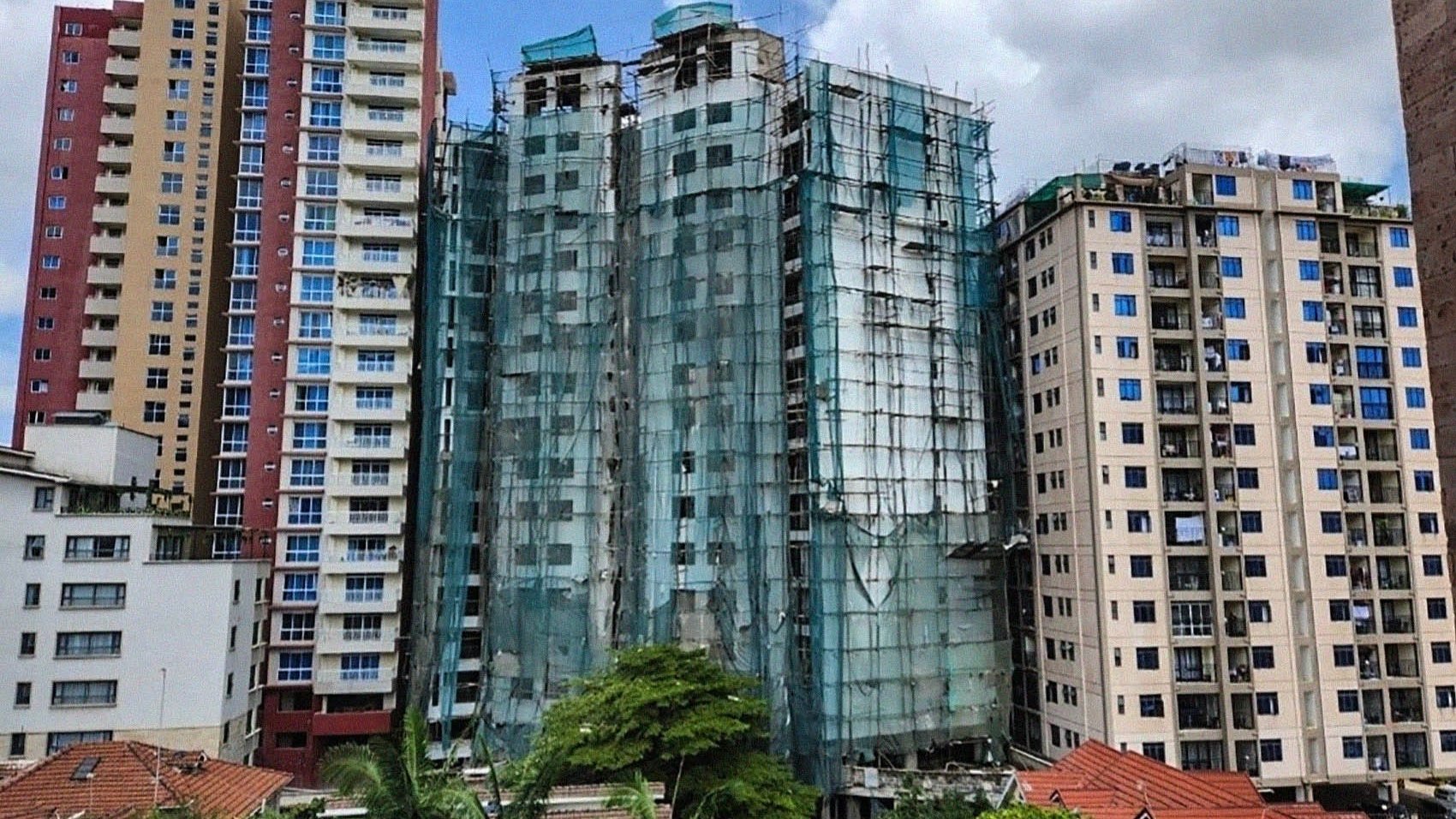

A version of this article appeared on LinkedIn, where Beacon Africa Director Nashon Okowa flagged data from the Economic Survey 2026 showing that private building completions in Nairobi County have nearly doubled over five years.
According to the survey, the number of reported building works completed in Nairobi City County rose from 13,350 units in 2021 to 25,090 units in 2025, a rise driven overwhelmingly by residential construction.
Residential completions climbed from 10,863 units in 2021 to 21,187 units in 2025, growing 18.2 percent in the final year alone, while non-residential building completions rose more modestly, from 2,487 units to 3,903 units over the same period.
The value of Nairobi buildings whose plans were approved also grew, rising from Sh149.9 billion in 2024 to Sh172.4 billion (approximately $1.3 billion) in 2025. Residential building values rose 17.6 percent to Sh146.9 billion, while non-residential values increased 2.3 percent to Sh25.5 billion.
Growth was not steady across the five year period. Completions rose each year from 2021 through 2023, reaching 22,093 units, before dipping slightly to 21,807 units in 2024 and then climbing again to the 2025 total.
Okowa argued that the surge in construction has not been matched by comparable investment in supporting infrastructure, describing the imbalance as a strain on the city that is becoming increasingly difficult to ignore.
Rapid residential construction in Nairobi has been most visible in areas such as Kilimani, Kileleshwa, Ruaka and Ruiru, where multi storey apartment blocks have replaced what were previously low density neighbourhoods, often outpacing upgrades to roads, water and sewer systems in the surrounding areas.
The Economic Survey figures are compiled from data submitted by the County Government of Nairobi City and are described as provisional for 2025, meaning the final figures could be subject to revision.
Kenya's construction sector has remained one of the more resilient contributors to gross domestic product in recent years, even as developers and residents in fast growing Nairobi suburbs have increasingly clashed over zoning, building heights and the pace of approvals.